
Living in Cork
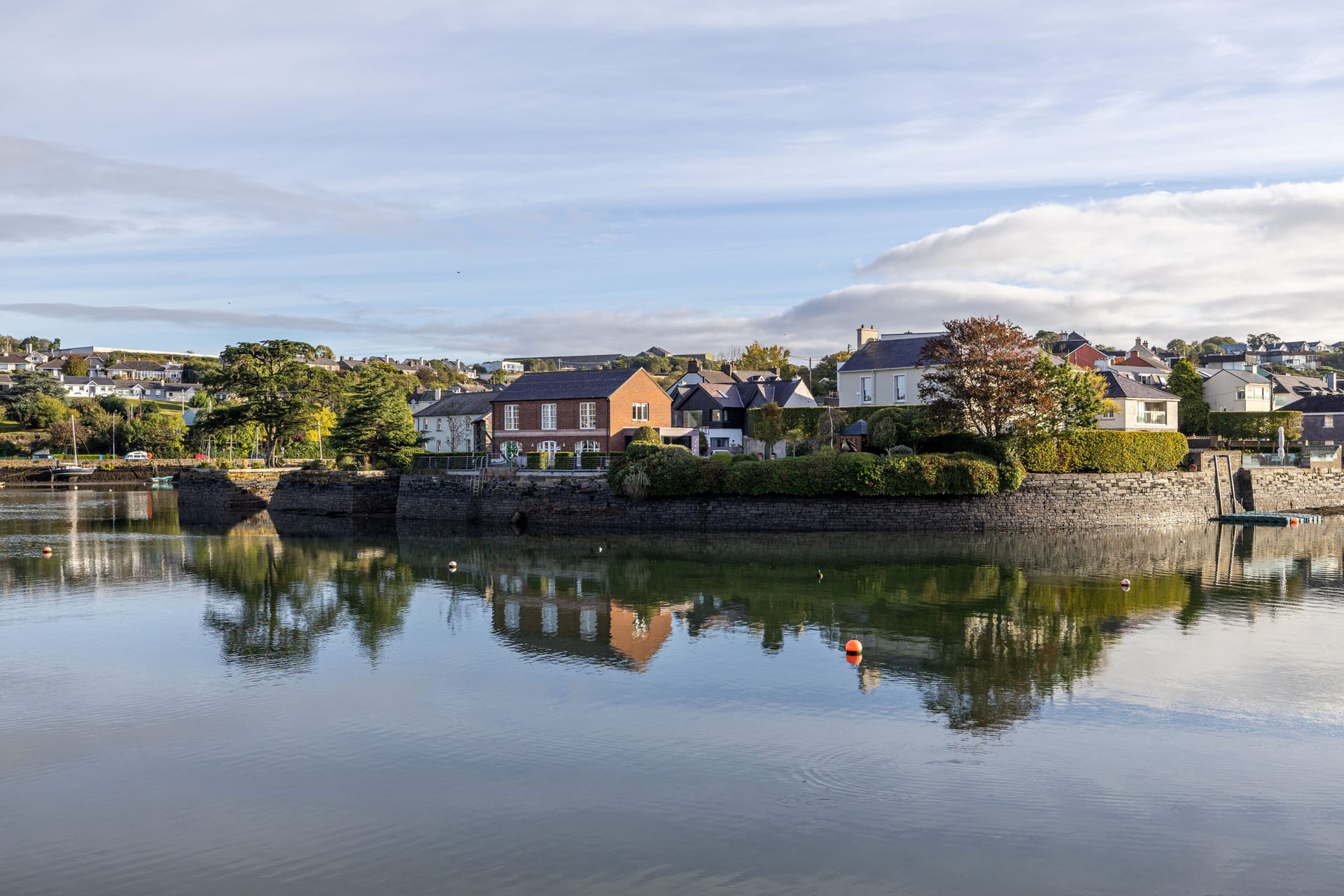
Cork feels closer to a large town than a capital, but its English-speaking job base can support an independent life. The climate stays mild, with about 120 bright days and 128 rainy-grey days a year, little summer heat, and low severe-weather risk. It suits people who can live with Atlantic damp.
Cork at a glance
Vital stats
Where Cork stands out
The metrics where Cork sits farthest from the middle worldwide, good and bad.
Cheap to arrive, expensive to stay?
A typical one-bedroom in Cork runs €1,248/mo. That is ~35% of one typical local employee’s mean net pay. This is a solo-newcomer stress test: sitting tenants, shared homes, subsidised housing and informal rents are deliberately outside the numerator.
The fastest way to test a shortlist is to go. A week on the ground tells you things no ranking can.
Partner link
Approved language-learning and international money resources for practical next steps.
Daily life in Cork
How Cork scores
Category by category
Affordability
62/100Cork's open-market one-bedroom rent on a new lease is about €1,248 per month. That is roughly 35% of one typical employee's mean net pay, a rent burden labelled tight alone.
Climate
wet & greyWeather is mild and rarely exposed to severe conditions, but the Atlantic pattern brings a persistently damp feel. The city gets about 120 bright days a year and roughly 130 rainy-grey days, with little winter light. Summers stay cool, muggy conditions are uncommon, and clean air is a real offset to the grey.
Nature access
leafyThe real draw is what sits just outside the city. Cork is a strong base for weekend escapes, with the West Cork coast, beaches, and walkable hills all within easy reach, and clean rivers running through and around town. Inside the city the green space is more modest, parks are decent but not abundant, so the appeal is the wider landscape rather than the immediate streetscape.
Urban form
small cityAt a metro population of roughly 137,000, Cork feels closer to a large town than a major metropolis. The centre supports walking and mixed-use living, but density and housing space are middling. It suits a calm daily rhythm, not people seeking constant big-city momentum.
Public life & spaces
59/100Cork is reasonably clean, with a tidy centre softened by a few shabby edges. The River Lee splits the compact core, and the covered English Market anchors its public life alongside modest riverside squares. Pubs, gigs and a warm street culture keep things sociable, though pricey Ireland blunts how cheap any of it feels.
Safety
81/100One of Cork's quiet strengths. Serious and violent crime are very low, the streets feel safe by day and largely fine after dark, and traffic is calm by city standards. Petty crime exists, as in any urban place, but stays at the mild end. Ireland's political stability adds to the sense of steadiness underneath it all.
Healthcare
66/100A mixed picture. Care is competent and, being entirely English-speaking, completely accessible to newcomers, with no language wall at the GP or hospital. The weaker side is supply: hospital and specialist access can be stretched and doctor availability is thinner than in larger European cities, so waits are a real factor. Routine cost exposure is reasonable.
Family life
62/100Cork suits families who value safety and the outdoors, both of which it delivers, with good schools and an unhurried, child-friendly feel. The harder parts are practical, childcare is expensive and not always easy to secure, and family-sized housing is tight and costly. Work-life norms lean humane, leaving room for actual family time.
Career
68/100For a city this size the job market is surprisingly healthy, anchored by pharma and a real tech presence, and unemployment is low. Working in English is effortless, which removes a barrier that trips up much of the continent. The ceiling is scale: the professional network and startup scene are smaller and more specialised than Dublin's, so depth varies sharply by field.
Culture & food
71/100Cork punches above its weight here, with a genuinely good restaurant and cafe scene, the well-known English Market at its heart, and a lively local culture proud of being its own thing rather than a smaller Dublin. Music, the arts, and nightlife are present and characterful if not on a capital scale. The international community is real but smaller than Dublin's.
Ease of integration
70/100Connecting here is about as low-friction as Europe gets. Everything runs in English, the social culture is famously talkative and welcoming to outsiders, and cultural adjustment for most newcomers is gentle. The flip side of a smaller, tighter city is that local circles can take time to fully break into, though openness to foreigners is high and Irish is spoken socially more than as a daily barrier.
Connectivity
47/100The weak link. Public transport is limited and bus-reliant, with no metro and thin intercity rail, so life often leans on a car. Cycling provision is underdeveloped and the airport, while handy, is small with limited direct routes. On the plus side, internet is fast and utilities are reliable, and traffic congestion, though present, is easier than Dublin's.
Social values
progressiveIreland has shifted markedly, and Cork reflects a liberal, secular, open society. Attitudes on gender, LGBTQ life, and welcoming foreigners are progressive, and old conservatism has largely receded. It is less internationally diverse than the biggest European capitals, so the cosmopolitan mix is gentler, but the underlying values are firmly tolerant.
Relocation ease
59/100Moving here is one of the smoother European options for an English speaker. There is effectively no language barrier, cultural adjustment is easy, and visa and work routes are relatively manageable. The genuine pain point is housing: finding a place is hard and competitive, much like the rest of Ireland. Banking and admin are middling, neither slick nor onerous.
The trade-offs
A year in Cork
Jul peaks around 19°C, Jan days top out near 8°C, and the year brings roughly 118 bright days.
Can you actually move here?
The hard limits people most often bring to a move, scored against Cork's data.
Moving with a pet
Bringing a pet to Cork is relatively straightforward, on par with the rest of Ireland and easier than much of continental Europe. As an island, the country enforces clear entry rules on vaccination and documentation, so plan the paperwork early but expect no unusual obstacles.
Who Cork works for
Answer the questionnaire and see where Cork lands for you.
Take the free questionnaireWhere else to look
Cork vs. comparable cities

The cities people weigh against Cork
Unexpected siblings
Far from Cork on the map, close across all 14 categories of daily life.

