
Living in Dublin
Dublin pairs a strong English-speaking job market with a climate that asks for tolerance rather than enthusiasm. It gets only about 128 bright days a year, while typical local employee pay is near the higher end and the local career base is among the city's clearest advantages.
Dublin at a glance
Vital stats
Where Dublin stands out
The metrics where Dublin sits farthest from the middle worldwide, good and bad.
Cheap to arrive, expensive to stay?
A typical one-bedroom in Dublin runs €1,859/mo. That is ~53% of one typical local employee’s mean net pay. That is 1 point above Edinburgh, its closest rival among nearby cities. This is a solo-newcomer stress test: sitting tenants, shared homes, subsidised housing and informal rents are deliberately outside the numerator.
The fastest way to test a shortlist is to go. A week on the ground tells you things no ranking can.
Partner link
Approved language-learning and international money resources for practical next steps.
Daily life in Dublin
How Dublin scores
Category by category
Affordability
57/100Dublin's open-market one-bedroom rent on a new lease is about €1,859 per month. That is roughly 53% of one typical employee's mean net pay, a rent burden labelled sharing likely.
Climate
wet & greyDublin has about 128 bright days a year against 132 rainy-grey days, so light is a persistent trade-off rather than a seasonal footnote. Summers are cool, humidity is high, yet muggy heat is almost absent. Air quality is clean and severe weather risk is low.
Nature access
coastalFor a capital its size, the coast is a genuine draw, with the sea close at hand and the Wicklow hills within easy reach for weekend walks and hikes. Mountains and open country are nearer than in most flat European capitals. Inside the city, parkland exists but green space per resident is on the thin side.
Urban form
mid-sizedDublin is small and low-slung, a walkable core wrapped in sprawling low-density suburbs where a car starts to matter. The pace is calmer than a major continental metropolis, more manageable, less relentless. Neighbourhoods are decent rather than exceptional, and the compact scale means most of the centre is coverable on foot.
Public life & spaces
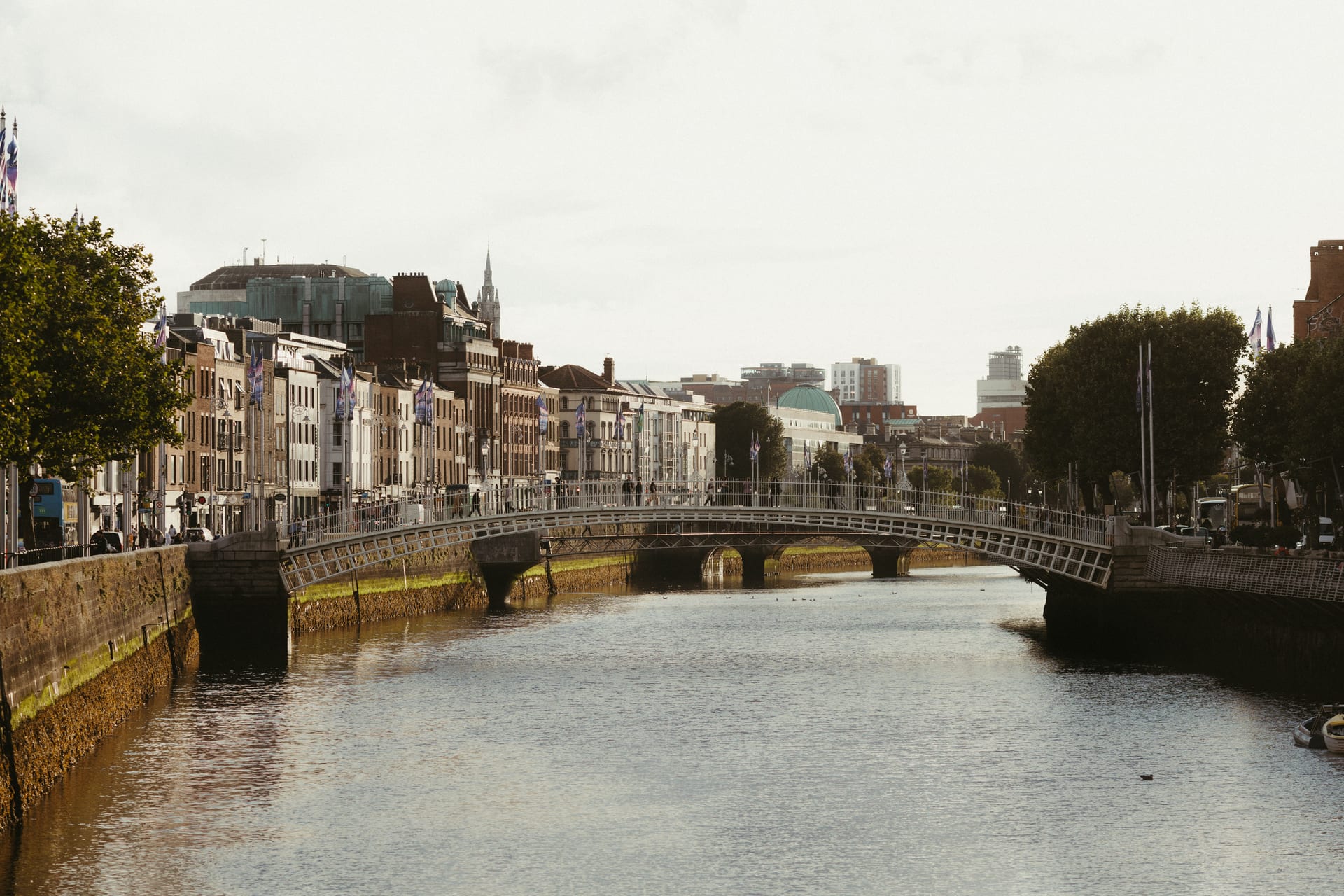
59/100Dublin's city centre is noticeably littered, its upkeep uneven from block to block. The built fabric redeems it: Georgian squares like Merrion, the Liffey quays, St Stephen's Green and free national museums and libraries. The real sting is cost, with very expensive daily living meaning even the free culture sits inside a pricey city.
Safety
72/100This is one of Dublin's stronger axes. Serious violent crime is rare and the roads are notably safe, helped by a stable, predictable political backdrop. Pickpocketing and street hassle in parts of the centre keep it from being spotless, and walking alone late at night feels middling rather than reassuring, but the baseline is solid.
Healthcare
67/100The headline advantage is that care happens in English, with no translation gap to navigate. Underneath that, the system strains: hospital access and the supply of doctors lag, emergency care is reliable but stretched, and out-of-pocket exposure runs higher than on the continent. Competent care is available, getting to it can mean waiting.
Family life
60/100A safe city for children with sound schools and plenty of parks and outdoor childhood on offer, plus a reasonably humane work-life rhythm. The strain shows in the practicalities: childcare is costly and scarce, and finding affordable family-sized housing is genuinely tough. The fundamentals are kind, the logistics demanding.
Career
81/100Dublin is one of the stronger cities for a local career. The market is deep, English-language work is straightforward to access, and professional networks are strong, with a solid technology base adding breadth. Typical local employee pay is near the higher end, while unemployment is close to the group norm.
Culture & food
76/100Dublin punches above its modest size, with a strong pub and live-music culture, good cafes, and a dining scene that has grown well beyond stereotype. Museums, galleries and a genuine literary heritage give it real depth, and everything runs in English with a large international crowd already settled in. Local character here is unmistakable.
Ease of integration
74/100Few places make breaking in this painless for an English speaker. The language barrier is essentially nil, locals rank among the more welcoming in Europe toward newcomers, and the social culture of pubs and conversation lowers the bar to meeting people. Cultural adjustment is gentle, and a large foreign-born population means few arrive feeling like the only outsider.
Connectivity
58/100Getting around is the practical headache. There is no metro, the bus and tram network is patchy, intercity rail is thin, and road congestion ranks among the worst for a city this size. Cycling provision lags too. The airport, by contrast, is well connected, digital infrastructure is sound, and utilities hold up reliably.
Social values
progressiveSocially Dublin is progressive and open, with a strongly liberal public mood, solid standing on gender equality and LGBTQ acceptance, and clear warmth toward foreigners. The old religious conservatism has receded markedly in recent decades. It is welcoming and diverse without being quite as militantly secular as Berlin.
Relocation ease
59/100On paper a smooth move for English speakers: no language barrier, easy cultural fit, and visa and work routes that are manageable. The catch is housing. The rental market is one of the most brutal in Europe, with scarce supply and fierce competition, so securing somewhere to live is the real obstacle. Banking and bureaucracy are middling.
The trade-offs
A year in Dublin
Jul peaks around 18°C, Jan days top out near 7°C, and the year brings roughly 128 bright days.
Can you actually move here?
The hard limits people most often bring to a move, scored against Dublin's data.
Moving with a pet
Bringing a pet to Dublin is relatively straightforward as an EU destination, easier than into many neighbouring capitals, though Ireland's island rabies controls mean microchip, vaccination and timing rules must be followed carefully before arrival.
Who Dublin works for
Answer the questionnaire and see where Dublin lands for you.
Take the free questionnaireWhere else to look
Dublin vs. comparable cities

The cities people weigh against Dublin
Unexpected siblings
Far from Dublin on the map, close across all 14 categories of daily life.

