
Living in Milan
Milan is a compact, ambitious city with a solid professional market and strong industry fit. Local pay is on the stronger side of this comparison, but the advantage comes with high housing costs and a dim, polluted climate that is less forgiving than the city's polished public image.
Milan at a glance
Vital stats
Where Milan stands out
The metrics where Milan sits farthest from the middle worldwide, good and bad.
Cheap to arrive, expensive to stay?
A typical one-bedroom in Milan runs €978/mo. That is ~44% of one typical local employee’s mean net pay. That is 3 points above Florence, its closest rival among nearby cities. This is a solo-newcomer stress test: sitting tenants, shared homes, subsidised housing and informal rents are deliberately outside the numerator.
The fastest way to test a shortlist is to go. A week on the ground tells you things no ranking can.
Partner link
Approved language-learning and international money resources for practical next steps.
Daily life in Milan
How Milan scores
Category by category
Affordability
66/100Milan's open-market one-bedroom rent on a new lease is about €978 per month. That is roughly 44% of one typical employee's mean net pay, a rent burden labelled tight alone.
Climate
temperateMilan gets about 230 bright days a year, but the climate still feels less pleasant than that headline suggests. Winters are damp and dim, summers are hot and muggy, and the Po Valley's air quality is a persistent drawback.
Nature access
alpineGreen space inside the city is thin and the sea is a real trip away, so day-to-day Milan can feel short on nature. The redemption is what sits beyond it: the Alps and the Italian lakes are close enough for a genuine weekend, putting skiing, hiking and lakeside towns within easy reach in a way Rome cannot match.
Urban form
large cityCompact and properly walkable, with a strong tram and metro network that makes a car more burden than help. The fabric is dense and mixed, shops and cafes folded into residential blocks, so daily life happens on foot. The trade-off is space at home, where apartments run small.
Public life & spaces
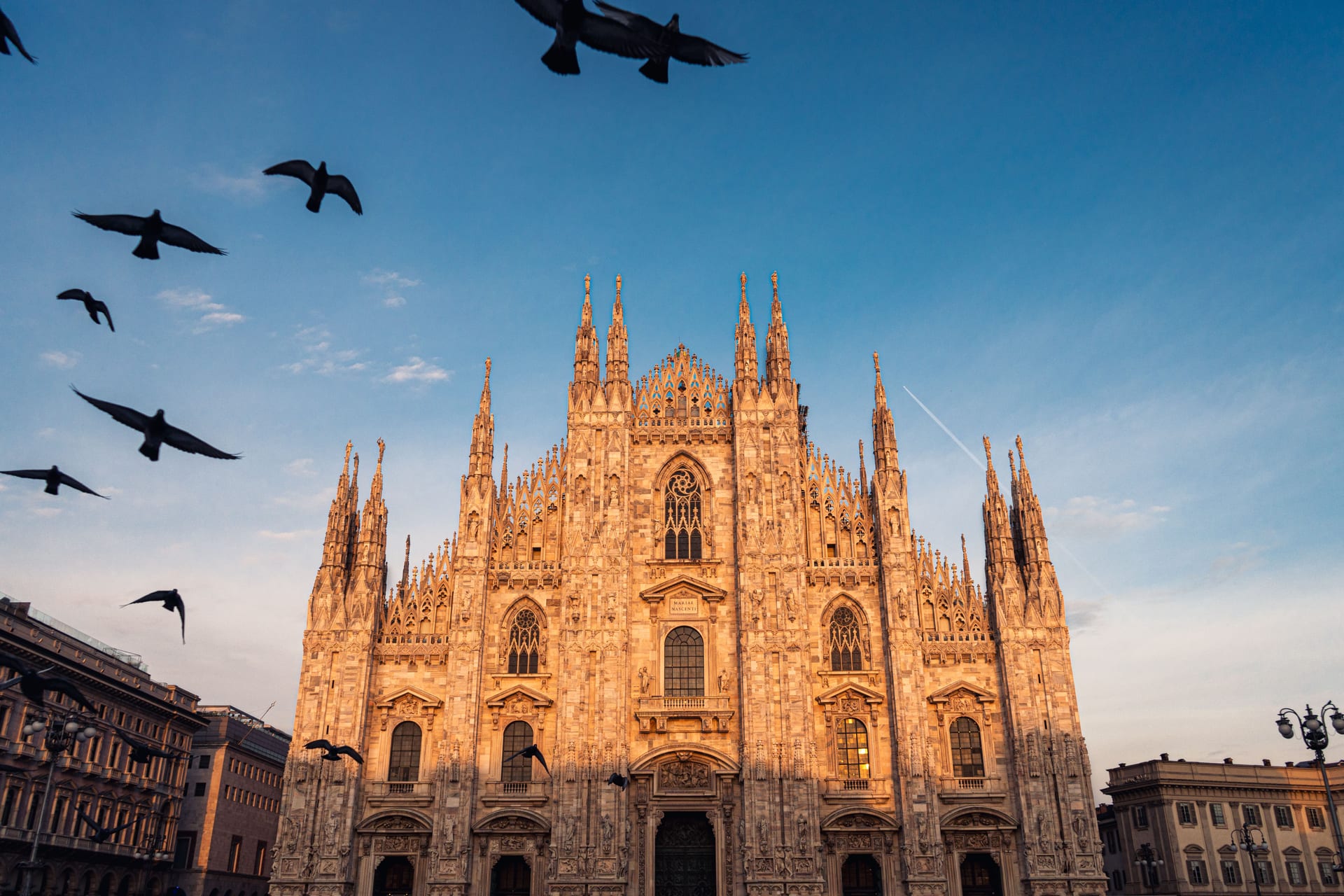
70/100Milan is orderly and wealthy, cleaner than southern Italy though no one's idea of pristine. The public realm is elegant and walkable — the Duomo square, the Galleria, the Navigli canals. The honest catch is cost: this is the fashion capital, and much of its life is a pricey, dressed-up scene rather than a free one.
Safety
68/100Serious violent crime is rare and the streets feel calm in that respect. The everyday worry is petty theft: pickpocketing and bag-snatching around stations, transit and tourist crowds keep newcomers on guard, and late-night ease in some areas lags what you would feel in quieter Italian cities.
Healthcare
68/100Care quality is genuinely strong, with some of Italy's best hospitals and specialists concentrated here, and out-of-pocket costs stay manageable under the public system. Finding a doctor can take patience, and English in clinical settings is hit or miss, so a bit of Italian smooths the experience.
Family life
56/100Schools and child safety are solid and the city is reasonably set up for raising kids, with decent parks and childcare. The harder parts are the long, demanding work culture that eats into family time, and family-sized apartments that are both scarce and expensive.
Career
72/100Milan has a solid local market, with strong industry fit across finance, fashion, and design. Professional networks are a real asset, but unemployment remains elevated and English-only or remote roles are less abundant than in the biggest international hubs. Typical local pay is on the stronger side of this comparison.
Culture & food
78/100A heavyweight on food and culture, with serious restaurants, an espresso culture woven into the day, and a calendar of design, fashion and art that few cities can match. Aperitivo is practically a civic ritual. Nightlife and the music scene are lively, if more polished than wild.
Ease of integration
67/100Italian runs daily life and English only goes so far, so newcomers who pick up the language integrate far faster. Milan is the most international and outward-looking city in Italy, used to foreign professionals, though warm acquaintances turn into real friendships slowly. Locals can read as reserved at first.
Connectivity
62/100Transit is the strong suit: a dependable metro and tram system, an airport hub with broad connections, and fast trains that stitch Milan to the rest of Italy and beyond. The weak spots are unglamorous but real, with patchy home internet speeds, heavy road congestion, and public services slow to digitize.
Social values
progressiveAmong the more liberal and secular corners of Italy, comfortable with diverse and international life and generally easygoing on questions of identity. By the standards of the northern capitals it still skews a touch more traditional, and progress on gender equality has been uneven.
Relocation ease
47/100Settling in tests the patience. Italian bureaucracy is famously slow and paper-heavy, the housing hunt is competitive and opaque, and opening accounts or sorting taxes can drag. EU citizens have it easy; everyone else should expect a grind, and a bit of Italian helps at every counter.
The trade-offs
A year in Milan
Jul peaks around 31°C, Jan days top out near 9°C, and the year brings roughly 230 bright days.
Can you actually move here?
The hard limits people most often bring to a move, scored against Milan's data.
Moving with a pet
Bringing a pet to Milan is straightforward, especially from within the EU, where a pet passport and up-to-date rabies vaccination usually cover it. Arrivals from further afield face standard paperwork and vet checks, but nothing unusually onerous.
Who Milan works for
Answer the questionnaire and see where Milan lands for you.
Take the free questionnaireWhere else to look
Milan vs. comparable cities
The cities people weigh against Milan
Unexpected siblings
Far from Milan on the map, close across all 14 categories of daily life.
