
Living in Florence
A small Renaissance city in Tuscany where the historic centre is the whole point: walkable, art-soaked, and lived-in at a slower tempo than Rome or Milan. The art and food are world-class. The trade-off is a thin job market, heavy bureaucracy, and streets that fill with tourists.
Florence at a glance
Vital stats
Where Florence stands out
The metrics where Florence sits farthest from the middle worldwide, good and bad.
Cheap to arrive, expensive to stay?
A typical one-bedroom in Florence runs €779/mo. That is ~41% of one typical local employee’s mean net pay. This is a solo-newcomer stress test: sitting tenants, shared homes, subsidised housing and informal rents are deliberately outside the numerator.
The fastest way to test a shortlist is to go. A week on the ground tells you things no ranking can.
Partner link
Approved language-learning and international money resources for practical next steps.
Daily life in Florence
How Florence scores
Category by category
Affordability
67/100Florence's open-market one-bedroom rent on a new lease is about €779 per month. That is roughly 41% of one typical employee's mean net pay, a rent burden labelled tight alone.
Climate
temperateFlorence has a proper four-season feel rather than an effortless Mediterranean one. July averages 26.2°C and summer heat can feel heavy in the valley. About 225 bright days keep the year from feeling gloomy, but winter remains cool, damp, and relatively dark.
Nature access
forestedThis is a city of stone, not greenery, and parkland inside the centre is genuinely scarce. What saves the nature score is everything within reach: the Tuscan hills, vineyards, and hill towns make for strong weekend escapes, and hiking nearby is better than around Rome. The coast and big open water are a drive away.
Urban form
mid-sizedSmall and almost entirely walkable, with the kind of dense, mixed-use core where daily life happens on foot rather than by car. Neighbourhoods have real character and car dependency is low. The flip side of the compact scale is modest apartment sizes and a quieter pace than Rome or Milan.
Public life & spaces
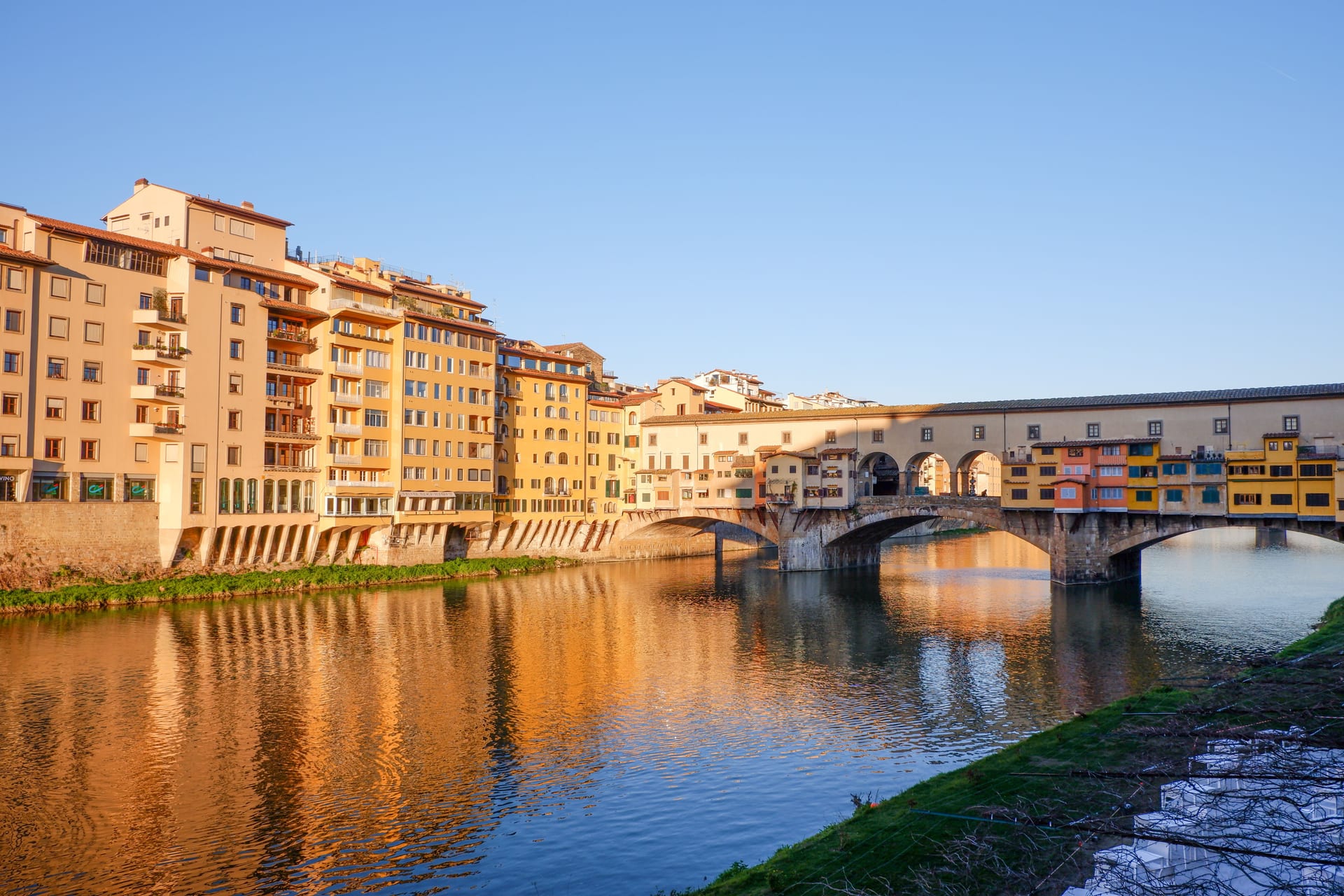
67/100Florence is tourist-worn but cared-for, its Renaissance core kept despite the crowds and grime. The public realm is the prize — piazzas, the Ponte Vecchio and the Arno banks make a dense, walkable open-air museum. The catch is cost: it is a pricey hub, though the piazzas and churches stay gloriously free.
Safety
69/100Serious and violent crime is very low, and the city feels calm day and night by any reasonable measure. The real nuisance is petty theft, pickpocketing and bag-snatching that come with heavy tourist traffic, concentrated around the busiest sights. Sensible street awareness handles most of it.
Healthcare
69/100Care is solid and broadly comparable to Rome, with reasonable hospital access and low out-of-pocket exposure under the public system. It sits a notch below what northern Europe offers, and doctor availability is only middling. English-speaking care exists but cannot be assumed outside private clinics.
Family life
59/100A safe, outdoor-friendly place to raise children, with the human scale and easy access to nature that suit family life. Schools and child safety are reasonable. The harder parts are childcare, which is neither cheap nor plentiful, and finding affordable family-sized housing in or near the centre.
Career
52/100Florence offers a livable base for people who bring work with them, but local progression is harder. Typical local pay is relatively solid, while the market is narrow, English-only roles and professional networks are limited, and remote work remains workable for people with portable income.
Culture & food
79/100This is where the city is unmatched: a concentration of museums, galleries, and Renaissance heritage that rivals anywhere in Italy, paired with deep, proudly local food and cafe culture. Tuscan cooking and the wine country at the doorstep are reason enough for many. Nightlife is gentler than Rome, and far quieter than Berlin.
Ease of integration
56/100Italian runs daily life, and while English goes a fair way in the tourist core, building local roots means learning the language. There is a steady international set drawn by the universities and art programmes, which softens the landing. Locals are warm but the social fabric is traditional, so genuine integration takes time and effort.
Connectivity
57/100Practical infrastructure is the soft spot. Public transport is limited, cycling provision is thin, and the airport is small enough that many flights route through other hubs. The redeeming feature is fast intercity rail, which links Florence cleanly to Rome, Milan and Bologna. Digital connectivity and bike lanes both lag northern Europe.
Social values
progressiveSocially moderate and rooted in tradition, in line with central Italy generally. Attitudes are more open than closed and broadly tolerant, but secular public life and progressive social norms are less pronounced than in Lisbon or the big northern European capitals. Newcomers from more liberal cities will notice a more conservative baseline.
Relocation ease
48/100Settling in is the grind. Italian bureaucracy is heavy and slow, the housing search can be frustrating, and banking and admin take patience. Visa and residence paths are manageable for the EU and comparable to elsewhere in Italy, and the language barrier is workable rather than severe. Budget time for the paperwork.
The trade-offs
A year in Florence
Jul peaks around 30°C, Jan days top out near 9°C, and the year brings roughly 225 bright days.
Can you actually move here?
The hard limits people most often bring to a move, scored against Florence's data.
Moving with a pet
Bringing a pet to Florence is straightforward by EU standards, with clear and well-trodden import rules. Expect the standard microchip, rabies vaccination, and paperwork rather than quarantine or unusual hurdles.
Who Florence works for
Answer the questionnaire and see where Florence lands for you.
Take the free questionnaireWhere else to look
Florence vs. comparable cities
The cities people weigh against Florence
Unexpected siblings
Far from Florence on the map, close across all 14 categories of daily life.

