
Living in Bologna
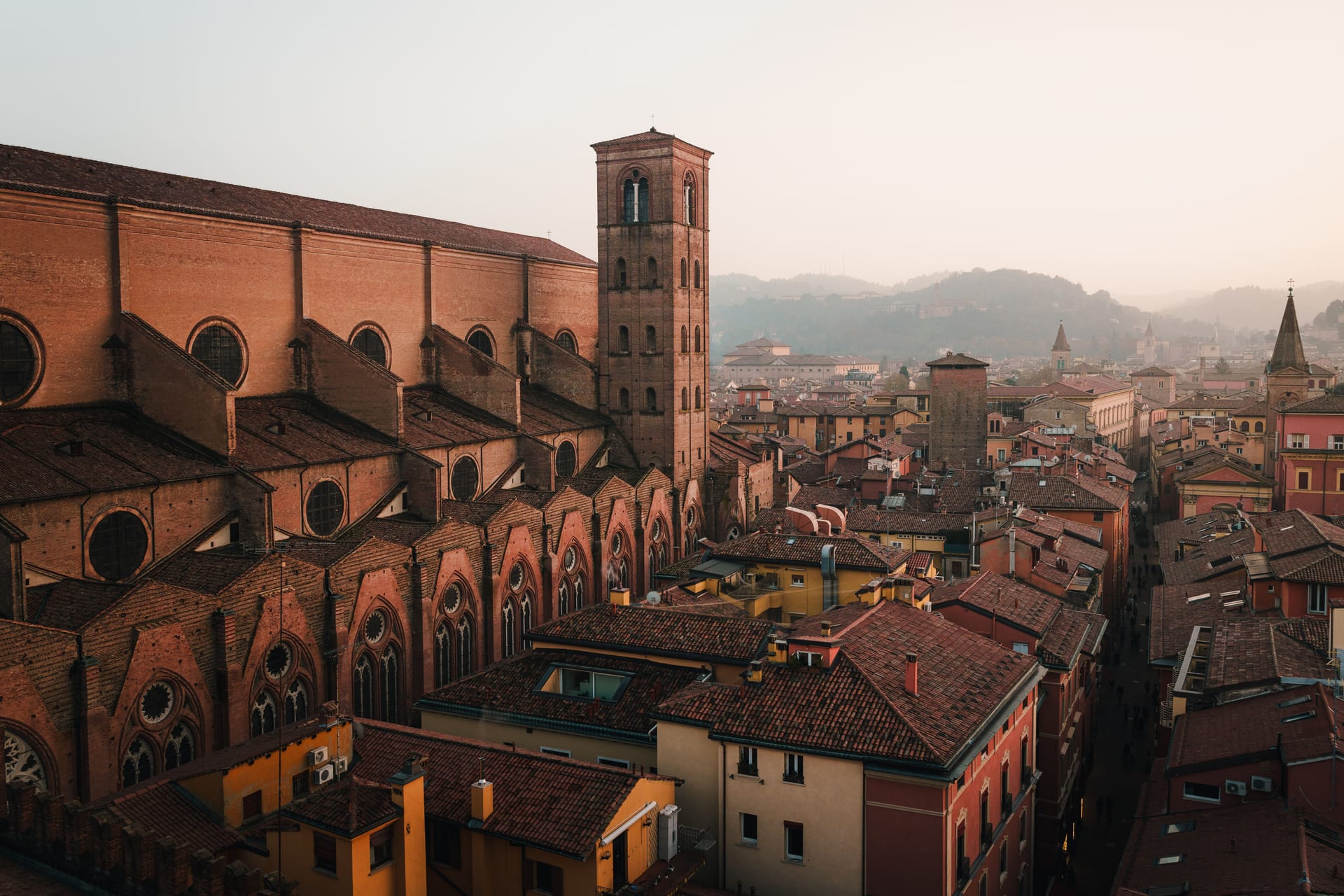
Bologna is a mid-size university city in northern Italy, famous for its food and its long arcaded streets, where daily life runs on walking and conversation rather than the rush of Milan or the tourist crush of Rome. It feels lived-in and unhurried, more affordable than either, with a left-leaning, student-heavy character that keeps it lively year-round.
Bologna at a glance
Vital stats
Where Bologna stands out
The metrics where Bologna sits farthest from the middle worldwide, good and bad.
Cheap to arrive, expensive to stay?
A typical one-bedroom in Bologna runs €694/mo. That is ~32% of one typical local employee’s mean net pay. This is a solo-newcomer stress test: sitting tenants, shared homes, subsidised housing and informal rents are deliberately outside the numerator.
The fastest way to test a shortlist is to go. A week on the ground tells you things no ranking can.
Partner link
Approved language-learning and international money resources for practical next steps.
Daily life in Bologna
How Bologna scores
Category by category
Affordability
69/100Bologna's open-market one-bedroom rent on a new lease is about €694 per month. That is roughly 32% of one typical employee's mean net pay, a rent burden labelled manageable solo.
Climate
temperateExpect a real seasonal rhythm. July averages 26.3°C and summers can turn sticky, but the heat is not the whole year. About 237 bright days soften the cool, damp winter, while grey and rainy spells remain a regular part of life.
Nature access
forestedBologna sits at the edge of the Apennines, so hills, hiking trails and weekend walks in the forest are genuinely within reach, and cyclists do well in the foothills. Inside the city, green space is thinner on the ground, with relatively few large parks. There's no coast or major lake nearby, so water and beach days mean a deliberate trip.
Urban form
mid-sizedWith a metro population of about 457,000, Bologna is a compact city rather than a major metropolis. Its mixed-use core supports daily life on foot and keeps car dependence low, though homes tend to offer limited space. The scale feels intimate rather than sprawling.
Public life & spaces
70/100Bologna's porticoed centre is charming but worn, a little grime under the arcades. The payoff is the public realm itself: kilometres of covered walkways, Piazza Maggiore and dense, sociable streets you live outdoors in. A student city, it stays cheap — good food, free piazza life and festivals run all year.
Safety
74/100Serious violent crime is rare and the city feels broadly secure, with safe roads and a calm civic temperament. The weaker spot is petty crime, pickpocketing and opportunistic theft, the sort that comes with a busy student and visitor population, so ordinary street awareness pays off. Night-time and overall perceived safety land solidly in the middle.
Healthcare
69/100Italy's public system gives Bologna good hospital access and solid quality of care, and the Emilia-Romagna region is among the country's better-run for medicine. Out-of-pocket exposure stays low. Finding a doctor can take patience, and navigating insurance or care in English is hit-or-miss, so a working grasp of Italian smooths the experience considerably.
Family life
63/100Families do well here. Child safety is strong, schools and childcare are reasonable, and the walkable, low-car layout means kids can move around outdoors with real freedom. Work-life rhythms lean humane. The main pressure point is family-sized housing, which can be tight and costly to find relative to the city's otherwise affordable rents.
Career
60/100Bologna has a reasonably broad local base, but it is not a high-growth market. English-only roles and startup opportunities are limited, while typical local pay is comparatively strong for local employees. Italian speakers have a clearer path into local work, and remote work is a workable fallback.
Culture & food
78/100Food is the headline, and deservedly so: Bologna is arguably Italy's richest eating city, with a tradition of fresh pasta, cured meats and trattoria cooking that locals take seriously. Beyond the table, a large student body fuels a strong music, art and nightlife scene, plenty of cafes, and a genuinely Italian local culture rather than a tourist-facing one.
Ease of integration
67/100Italian is the everyday language, and while English is around, real integration runs through learning some of it. The upside is an open, sociable, left-leaning city with a young population and a welcoming streak toward newcomers and outsiders, which makes connection easier than in stiffer places. Patience with the language is the price of admission to local life.
Connectivity
62/100The standout is rail: Bologna is a major hub on Italy's high-speed network, putting Florence, Milan and beyond within an easy train ride, and the airport is well connected. Local transit and cycling infrastructure are merely adequate. The real frustrations are digital, with patchy connectivity and notably analog, slow public bureaucracy.
Social values
progressiveBologna is one of Italy's most progressive cities, with a long left-wing political tradition, a secular and socially liberal public culture, and a comparatively open attitude toward LGBTQ people and foreigners. Traditionalist conservatism is weak here. It reads as tolerant and outward-looking, more so than much of the country, even if civic orderliness is fairly ordinary.
Relocation ease
49/100Moving here as an EU citizen is straightforward; non-EU arrivals face the usual visa and work-authorization steps, which are manageable but not quick. The persistent headaches are Italian bureaucracy and banking admin, both slow and paper-heavy, plus housing search and the language barrier. Cultural adjustment itself tends to be the gentle part.
The trade-offs
A year in Bologna
Jul peaks around 32°C, Jan days top out near 9°C, and the year brings roughly 237 bright days.
Can you actually move here?
The hard limits people most often bring to a move, scored against Bologna's data.
Moving with a pet
Bringing a pet to Bologna is straightforward. Italy follows standard EU import rules, so a microchip, rabies vaccination and the right paperwork cover most arrivals, and the practical friction is low once documents are in order.
Who Bologna works for
Answer the questionnaire and see where Bologna lands for you.
Take the free questionnaireWhere else to look
Bologna vs. comparable cities
The cities people weigh against Bologna
Unexpected siblings
Far from Bologna on the map, close across all 14 categories of daily life.

