
Living in Palma de Mallorca
The capital of Mallorca, Palma is an island city with a Mediterranean climate, a walkable old centre, and easy beach access. Life here runs slower and smaller than on the Spanish mainland, closer in feel to a relaxed coastal town than to Madrid or Barcelona, and the foreign population is large for a city this size.
Palma de Mallorca at a glance
Vital stats
Where Palma de Mallorca stands out
The metrics where Palma de Mallorca sits farthest from the middle worldwide, good and bad.
Cheap to arrive, expensive to stay?
A typical one-bedroom in Palma de Mallorca runs €972/mo. That is ~47% of one typical local employee’s mean net pay. That is 5 points above Madrid, its closest rival among nearby cities. This is a solo-newcomer stress test: sitting tenants, shared homes, subsidised housing and informal rents are deliberately outside the numerator.
The fastest way to test a shortlist is to go. A week on the ground tells you things no ranking can.
Partner link
Approved language-learning and international money resources for practical next steps.
Daily life in Palma de Mallorca
How Palma de Mallorca scores
Category by category
Affordability
68/100Palma de Mallorca's open-market one-bedroom rent on a new lease is about €972 per month. That is roughly 47% of one typical employee's mean net pay, a rent burden labelled tight alone.
Climate
mediterraneanPalma gets a long, bright season, with about 279 bright days and few rainy-grey spells. Winters are mild, but July averages 26.6°C and summer humidity can wear on people. The less obvious caveat is wildfire smoke, a seasonal risk that complicates an otherwise comfortable climate.
Nature access
coastalThe coastline is the headline, with swimming beaches and coves a short trip away and the Serra de Tramuntana mountains rising along the island's north. Hiking, cycling routes, and weekend escapes are all within reach. Inside the city itself green space is thin, so the outdoors here means leaving the centre rather than strolling a local park.
Urban form
mid-sizedPalma is compact and easy to cover on foot, with a dense old quarter of narrow streets and a quality seafront. It is a genuinely small city, far more so than Madrid or Barcelona, and the pace reflects that. Neighbourhoods feel lived-in and mixed, though homes tend to run smaller than space-hungry newcomers might want.
Public life & spaces
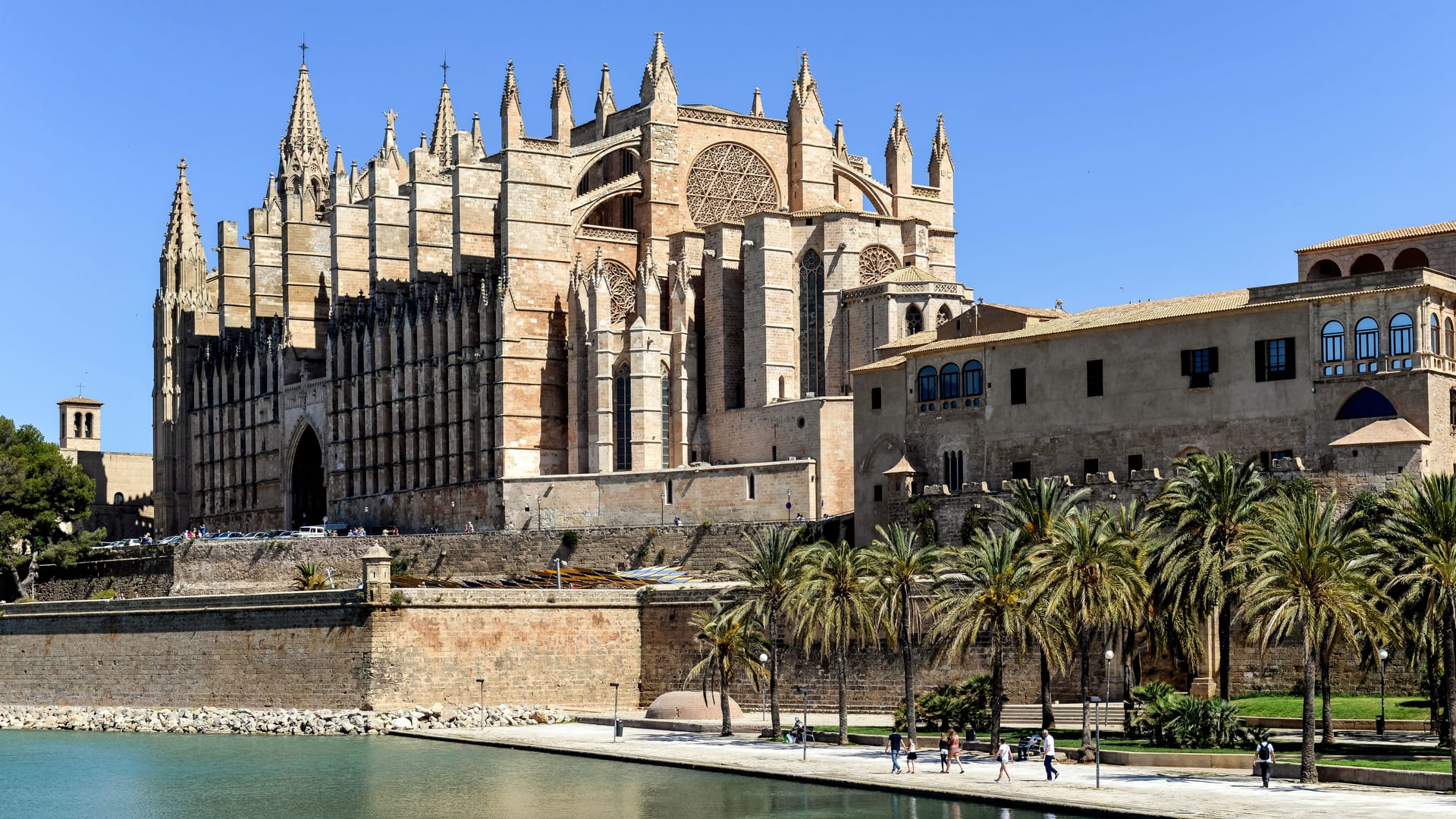
74/100Palma keeps its old town tidy and its seafront well-tended, the cathedral and the Passeig along the water framing genuinely fine public space. Spanish street life spills into the plazas and the paseo at little cost. But this is a tourist island, and food, drinks and most outings carry a holiday premium.
Safety
73/100Among the safer places to land in Spain. Serious violent crime is very low and the roads are well managed, so walking at night feels comfortable in most parts of town. The one real nuisance is petty theft, particularly pickpocketing in tourist-heavy areas during high season, which calls for ordinary caution.
Healthcare
70/100Solid and dependable rather than cutting-edge. The Spanish system delivers good quality care at low out-of-pocket cost, with reliable hospitals and emergency services on the island. Finding an English-speaking doctor is workable, and the paperwork to get set up is no worse than elsewhere in the country.
Family life
65/100A gentle place to raise children, with a strong safety record, an outdoor-leaning childhood of beaches and warm weather, and a humane work-life rhythm. Schools and childcare are decent. The sticking point is family-sized housing, which is scarce and pricey, so finding the right home with enough room takes patience.
Career
50/100Typical local pay is relatively solid, but the local market remains the limiting factor. Jobs cluster in a narrow range of industries, while English-only openings and startup opportunities are limited. High unemployment makes remote work the stronger route for people whose income is earned elsewhere.
Culture & food
72/100Punches above its size on food, with a good restaurant scene, plenty of cafes, and a Mediterranean kitchen built on seafood and local produce. The international crowd is unusually large for a city this small, which keeps things cosmopolitan. For deeper museum culture or a big music scene, mainland cities still offer more.
Ease of integration
74/100Spanish is the everyday language and Catalan is widely used too, but English and German are common enough that newcomers can find their feet, helped by one of the largest foreign communities of any small European city. Locals are fairly open to outsiders, and the long-established expat networks make landing soft. Real integration still rewards learning Spanish.
Connectivity
57/100Good where it counts for island life. The airport is well connected to Europe, road traffic is manageable, and utilities and internet are reliable. Public transport and cycling provision are middling. The obvious limit is geography: there are no intercity trains off the island, so reaching the mainland means flying or taking the ferry.
Social values
progressiveLiberal and open in the relaxed Spanish manner, with a secular public culture, strong LGBTQ acceptance, and a notably international, diverse feel for its size. Newcomers tend to be welcomed easily. It leans modern rather than traditional, in step with the broadly progressive outlook found across much of urban Spain.
Relocation ease
55/100Moving here as an EU citizen is straightforward, and the cultural adjustment is gentle given how used to foreigners the island is. The bureaucracy carries the usual Spanish friction. The real headache is housing: a tight, seasonal rental market makes finding a long-term place the hardest part of settling in.
The trade-offs
A year in Palma de Mallorca
Jul peaks around 30°C, Jan days top out near 14°C, and the year brings roughly 279 bright days.
Can you actually move here?
The hard limits people most often bring to a move, scored against Palma de Mallorca's data.
Moving with a pet
Bringing a pet to Mallorca is among the easier moves, especially from within the EU, where the pet passport and microchip rules are well trodden. Arrivals from further afield face the standard Spanish vaccination and documentation steps with no unusual island restrictions.
Who Palma de Mallorca works for
Answer the questionnaire and see where Palma de Mallorca lands for you.
Take the free questionnaireWhere else to look
Palma de Mallorca vs. comparable cities
The cities people weigh against Palma de Mallorca
Unexpected siblings
Far from Palma de Mallorca on the map, close across all 14 categories of daily life.