
Living in Barcelona
Barcelona is the Mediterranean counterweight to Madrid: less buttoned-up, built around the beach, and lived largely outdoors. The food, design, and street life are world-class, and daily costs stay gentler than Northern Europe. The catch is housing, which has grown tight and expensive enough to shape where and how people end up living.
Barcelona at a glance
Vital stats
Where Barcelona stands out
The metrics where Barcelona sits farthest from the middle worldwide, good and bad.
Cheap to arrive, expensive to stay?
A typical one-bedroom in Barcelona runs €832/mo. That is ~36% of one typical local employee’s mean net pay. This is a solo-newcomer stress test: sitting tenants, shared homes, subsidised housing and informal rents are deliberately outside the numerator.
The fastest way to test a shortlist is to go. A week on the ground tells you things no ranking can.
Partner link
Approved language-learning and international money resources for practical next steps.
Daily life in Barcelona
How Barcelona scores
Category by category
Affordability
70/100Barcelona's open-market one-bedroom rent on a new lease is about €832 per month. That is roughly 36% of one typical employee's mean net pay, a rent burden labelled tight alone.
Climate
mediterraneanBarcelona gets mild winters and a long bright season, with few rainy-grey days to break the outdoor rhythm. Summer is less effortless: July averages about 26°C, and coastal humidity brings sticky heat that lingers. Air quality is only middling for a Mediterranean city, so the climate's main strength is light rather than cool comfort.
Nature access
coastalThe beach is the headline, right at the city's edge, and weekends open onto hills, the Collserola range, and coastline within easy reach. Hiking and day trips are genuinely good. Inside the city, though, green space per resident is thin, and lakes or rivers barely figure, so everyday nature leans on parks and the sea rather than woodland.
Urban form
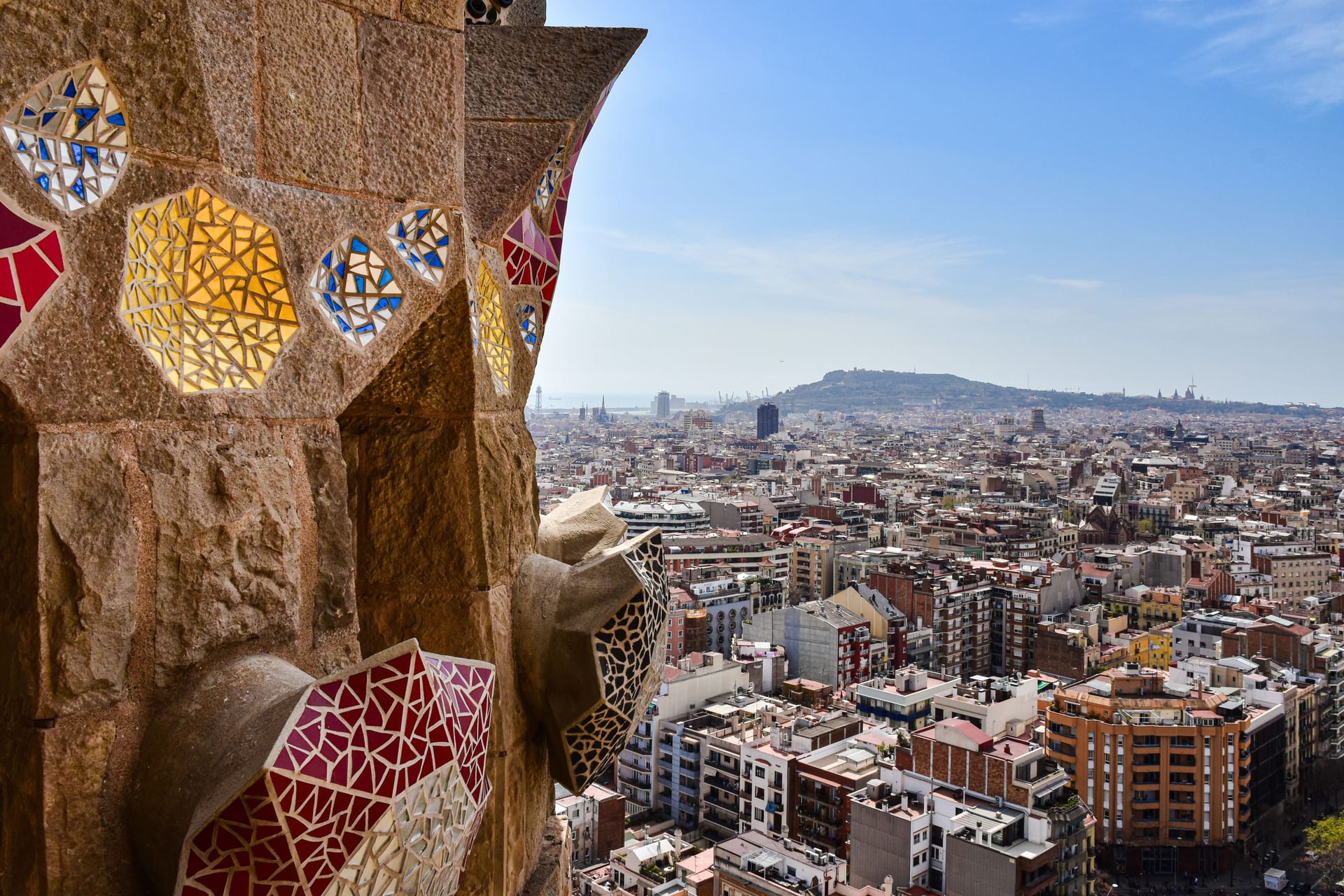
large cityThis is one of Europe's more walkable big cities, dense and mixed-use, where errands, cafes, and work often sit within a few blocks and a car is more burden than help. The grid of the Eixample is a model of livable density. The trade-off shows up indoors: apartments tend to be small, and housing space is among the tighter aspects of city life.
Public life & spaces
78/100Barcelona is lively and litter-prone, worn at the edges in its densest central blocks. What carries it is the Mediterranean public realm: the beach, Las Ramblas, Plaça Reial, Gaudí's parks. Much of daily pleasure here is free or cheap, from the sand to the plaza terraces, though the grime is part of the deal.
Safety
67/100Violent crime is low and serious crime rarer still, with safe streets day and night by the standards of a major city. The real nuisance is petty theft. Pickpocketing in tourist-heavy areas and on transit is persistent and well-known, the kind of low-level risk that asks for everyday vigilance rather than genuine fear.
Healthcare
76/100Healthcare is a strong point, with good public hospitals, capable specialists, and out-of-pocket costs that stay reasonable. The public system carries the load well, and many top up with affordable private cover for speed. Finding English-speaking care is workable in a city this international, if not guaranteed everywhere.
Family life
70/100For families the outdoor, walkable rhythm is a real asset, and child safety and a child's daily life outdoors both rate well. Schools and childcare are solid without being standout. The main strain is housing: family-sized apartments are scarce and pricey, which is often the hardest piece of settling in with kids.
Career
72/100Barcelona has a workable professional market, helped by its technology and startup base and a strong remote-work culture. English-language roles are available, though unemployment is high and the local market can be uneven. Local employee pay sits above the corpus midpoint, giving local earners a stronger base than the city's employment picture alone suggests.
Culture & food
86/100This is where Barcelona simply delivers. The eating runs from neighbourhood tapas to serious modern kitchens, the cafe and nightlife culture is deep, and the art, music, and museum scene rewards staying past the tourist circuit. A strong international community sits alongside a proud, distinct local Catalan culture, giving the city a texture few of its Spanish peers match.
Ease of integration
70/100Spanish gets a newcomer through daily life, and English goes a long way in the international and professional crowd, though Catalan is woven into local culture and signals real commitment to those who learn it. The city is open to outsiders, socially liberal, and used to people arriving from everywhere, which makes a first foothold easier than the language mix might suggest.
Connectivity
72/100The metro, buses, and trains are extensive and dependable, the airport is well-connected across Europe, and digital and utility infrastructure hold up. Getting around without a car is straightforward. The friction is administrative: dealing with public offices still leans paper-heavy and slow, and the online side of bureaucracy lags behind the transport.
Social values
progressiveSocially the city is open and forward-leaning, with a notably welcoming environment for LGBTQ residents and a secular, liberal public culture. Traditionalism is light here, and the international, mixed population is taken as normal. It reads as one of the more progressive corners of Spain, comfortable for people who want that.
Relocation ease
55/100Spanish visa and permit processes are manageable, and cultural adjustment is gentle for a Mediterranean city this used to newcomers. The hard parts are concrete. Finding an apartment is genuinely tough in a squeezed market, and Spanish bureaucracy is slow and frustrating, so the early months often mean patience with paperwork and the housing hunt.
The trade-offs
A year in Barcelona
Jul peaks around 28°C, Jan days top out near 12°C, and the year brings roughly 249 bright days.
Can you actually move here?
The hard limits people most often bring to a move, scored against Barcelona's data.
Moving with a pet
Bringing a pet into Spain is straightforward: as an EU country it follows the standard EU rules, with microchip, rabies vaccination, and the right paperwork covering most cats and dogs without serious hurdles.
Who Barcelona works for
Answer the questionnaire and see where Barcelona lands for you.
Take the free questionnaireWhere else to look
Barcelona vs. comparable cities
Objective scores (0–100) for Barcelona and its 4 nearest comparable cities.
The cities people weigh against Barcelona
Unexpected siblings
Far from Barcelona on the map, close across all 14 categories of daily life.