Affordability
69/100Riga's open-market one-bedroom rent on a new lease is about €675 per month. That is roughly 45% of one typical employee's mean net pay, a rent burden labelled tight alone.
Climate
continentalRiga's summers are mild and largely free of oppressive heat, but winter is a serious adjustment. The city gets 139 bright days and 115 rainy-grey ones a year, with short daylight and seasonal darkness making the colder months feel long. Air quality is reasonably good, and severe weather is uncommon.
Nature access
leafyThe Baltic coast and the beaches around Jurmala sit close, and pine forest, lakes and rivers are never far, more so than for the landlocked capitals further south. Riga has a generous spread of city parks. What it lacks is mountains, so anyone after alpine terrain will need to travel well beyond Latvia.
Urban form
mid-sizedA compact, low-rise capital that feels smaller and quieter than Warsaw, with a walkable historic core and a calm, unhurried rhythm. Density is low and the city spreads out, so a car still helps in the outer districts. Neighbourhood quality is solid without being polished.
Public life & spaces
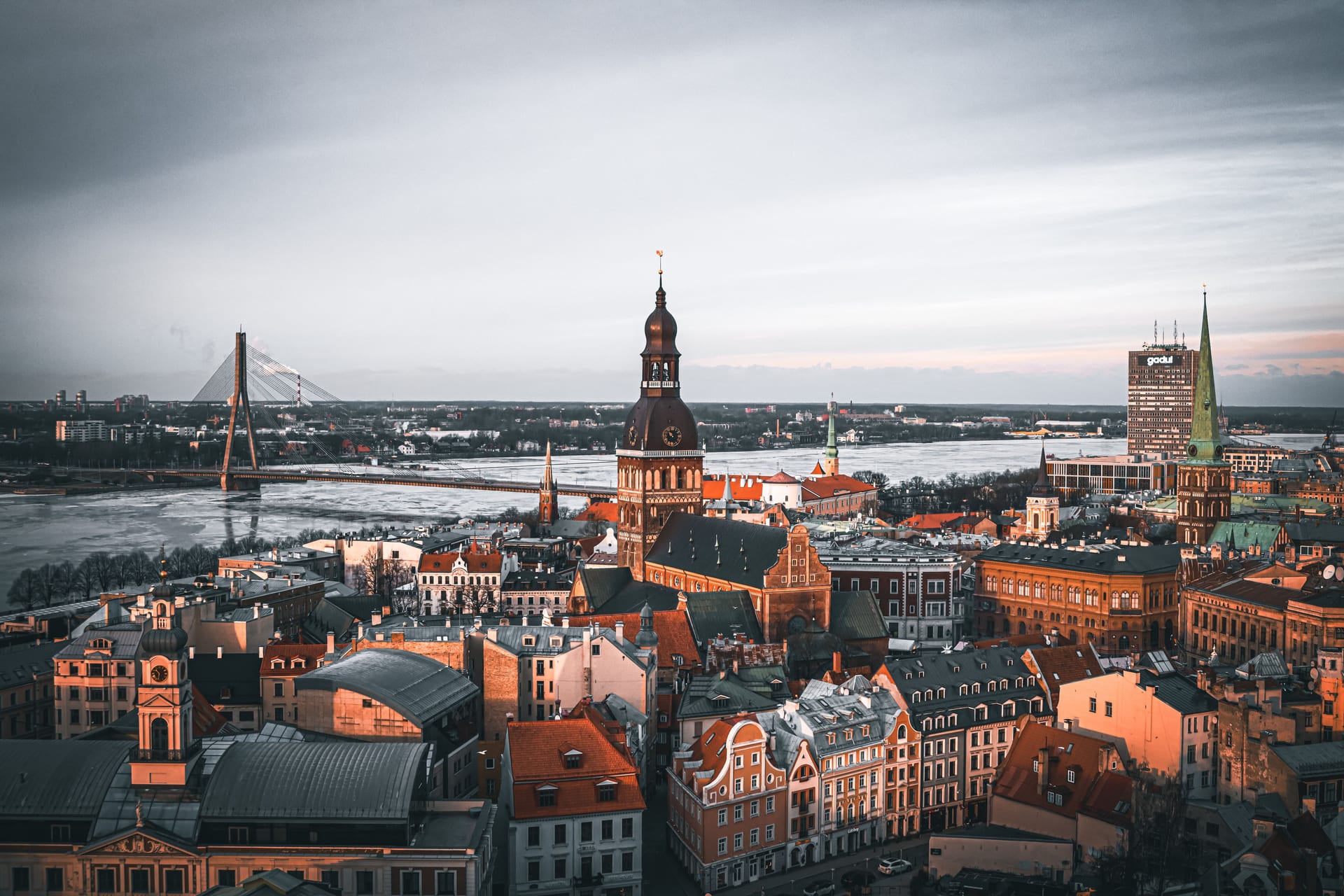
67/100Riga has a decent, kept core, though Soviet-era edges still look neglected. The public realm is its strength: the medieval Old Town, the famous Art Nouveau streets and the riverside parks along the Daugava. Affordability seals it, with cheap living and free culture making for an easy, low-cost daily life.
Safety
71/100Generally safe, with low day-to-day risk and a settled feel, though it sits a notch below the near-spotless reputation of the Nordic cities across the gulf. Most residents move around comfortably after dark in central areas. Traffic is the weaker point, with road safety lagging behind Helsinki and Prague.
Healthcare
58/100Healthcare is functional rather than a strength. Public hospitals and emergency care cover the basics but trail the standards of Prague or Helsinki, and doctors can be thin on the ground. English is spoken in parts of the system, less reliably than in the Nordic capitals, so many newcomers lean on private clinics.
Family life
62/100A workable place to raise children, with reasonable childcare, parks and playgrounds, and generous parental leave by regional norms. Schools and child services are decent without matching Helsinki's level. Family-sized housing is more attainable here than in pricier capitals, which eases the practical side of settling in with kids.
Career
56/100The local career market is the weak point. Local pay is modest, unemployment is high at 6.6%, and both the professional network and startup base are limited. Remote work is the clearest advantage for people whose income is not tied to local employers.
Culture & food
68/100A real cultural life for a city this size, anchored by a strong cafe culture, regular museums and concerts, and a distinct Latvian character you will not find replicated elsewhere. The restaurant and nightlife scene is steady rather than expansive, quieter than Prague's. The international crowd stays comparatively small.
Ease of integration
56/100Latvian is the local language, with Russian widely understood and English common among younger residents and in the centre. Latvians can read as reserved at first, and the foreign community is modest, so building a local circle takes time and effort. Once trust is earned, friendships tend to run deep.
Connectivity
55/100Solid, dependable infrastructure for a mid-sized capital. Public transport covers the city well, internet speeds are genuinely fast, utilities are reliable and dealing with the state online is straightforward. The softer spots are cycling lanes and intercity rail, where the Baltic network still trails western Europe.
Social values
mixedPublic life is fairly secular and orderly, but social attitudes lean more traditional than in the Nordic countries or Prague. Acceptance of LGBTQ people and openness toward newcomers run lower than further west, closer to the regional norm shared with the other Baltic states. The direction of travel is gradually liberalising.
Relocation ease
61/100As an EU and Schengen member, the legal side is comparatively smooth, with manageable visa, work and banking paperwork and a housing market that is easier to crack than Warsaw's or Prague's. The genuine hurdle is Latvian, a hard language for outsiders, though daily life can be navigated in English and Russian while learning it.