
Living in Montevideo
Uruguay's capital offers a calm, temperate life with plenty of bright days and relatively little severe weather. The main compromise is economic: the local market is narrow, typical local pay is below the level found in many comparable cities, and a move works best for people whose income is not tied to local jobs.
Montevideo at a glance
Vital stats
Shown in USD: the local currency (UYU) moves too fast for stable monthly figures.
Where Montevideo stands out
The metrics where Montevideo sits farthest from the middle worldwide, good and bad.
Cheap to arrive, expensive to stay?
A typical one-bedroom in Montevideo runs $760/mo. That is ~83% of one typical local employee’s mean net pay. This is a solo-newcomer stress test: sitting tenants, shared homes, subsidised housing and informal rents are deliberately outside the numerator.
The fastest way to test a shortlist is to go. A week on the ground tells you things no ranking can.
Partner link
Approved language-learning and international money resources for practical next steps.
Daily life in Montevideo
How Montevideo scores
Category by category
Affordability
62/100Montevideo's open-market one-bedroom rent on a new lease is about $760 per month. That is roughly 83% of one typical employee's mean net pay, a rent burden labelled solo unlikely.
Climate
mediterraneanThe climate is generally easy, with warm summers and cool winters. Bright days are plentiful and grey, rainy stretches are relatively limited. Humidity is noticeable and muggy weather recurs, but extreme weather is uncommon and air quality is broadly middling.
Nature access
coastalThe draw here is the coast, with a long string of city beaches and the rambla running for kilometres along the water, plus good cycling and running routes. Inland nature is thinner: Uruguay is famously flat, so there are no mountains and little forest or hiking close by. Green space inside the city is limited, though weekend trips toward the coast open things up.
Urban form
large cityThis is a small, low-density capital by regional standards, far more compact and quiet than the Argentine or Brazilian megacities nearby. The central, walkable neighbourhoods are pleasant and you can manage without a car in much of the city. The pace is slow, which suits some and frustrates others, and suburban quality is uneven.
Public life & spaces
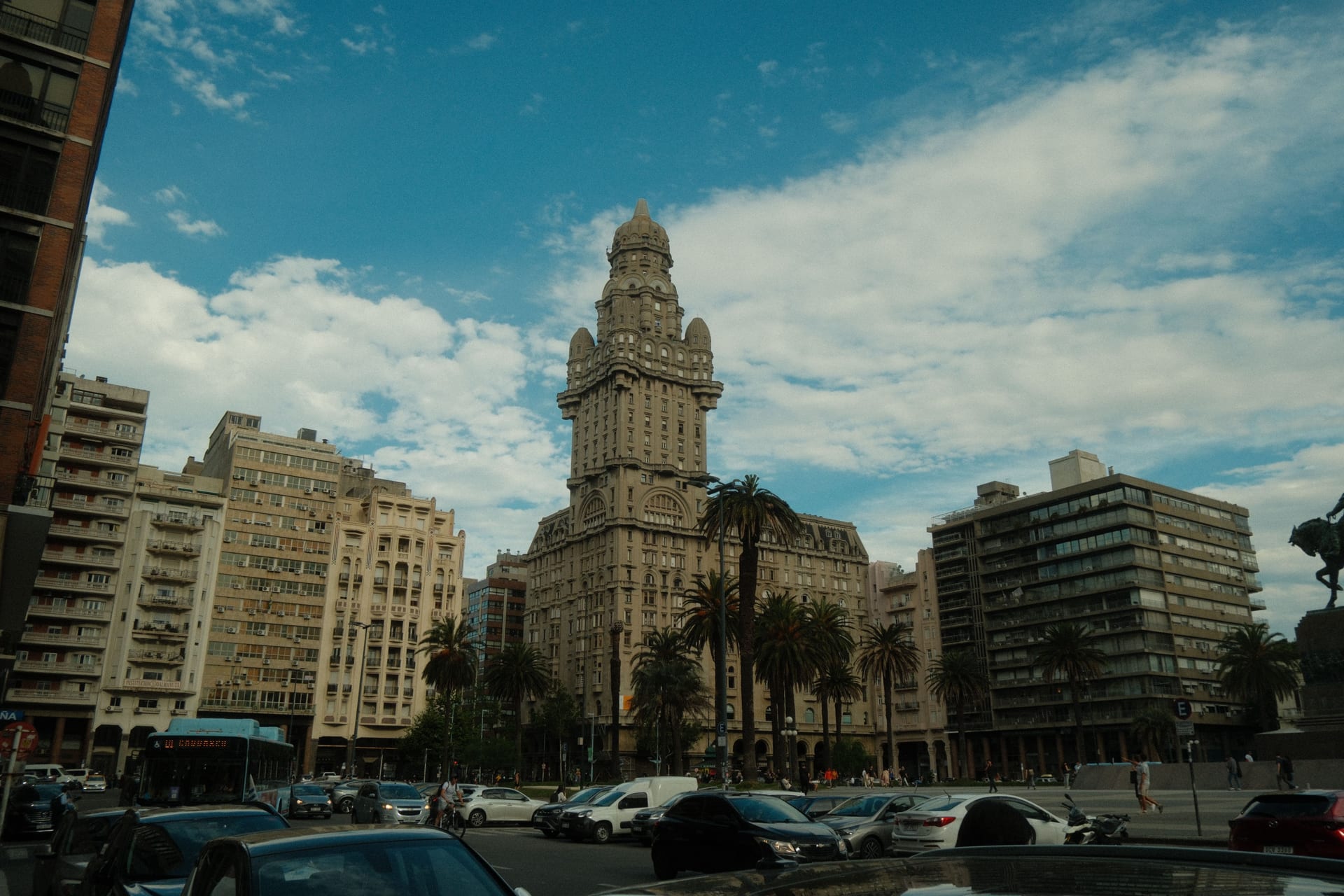
63/100Montevideo is calm and orderly, better-maintained than most of the region, its long rambla curving for miles along the water past Ciudad Vieja's plazas. The beaches, the promenade and the festivals are all free. It costs more than its neighbours, the trade for that easy, well-kept civic feel.
Safety
63/100Montevideo is one of the safer big cities in Latin America, with a low homicide rate and reassuring political stability in a country known for steady institutions. Day-to-day, violent crime is comparatively rare. Petty theft and the feel of certain areas after dark are the more realistic concerns, on par with peer capitals in the region.
Healthcare
61/100Healthcare is solid and accessible by regional measures, with reasonable hospital coverage, available doctors, and manageable costs. Quality and emergency reliability sit at a respectable middle level rather than the top tier. English-speaking care is limited, so handling medical matters in Spanish helps considerably.
Family life
62/100Family life is steady, with safe-enough surroundings, outdoor childhood close to beaches and parks, and a generally relaxed work-life culture. Schools and childcare are middling, and family-sized housing is workable but not abundant. It is a calm place to raise children rather than a high-octane one.
Career
59/100Montevideo's local market is small, professional networks are thin, and unemployment is high. Typical local pay is below the level found in many comparable cities. Remote work is a better fit, while the startup scene is modest and English-language roles are limited.
Culture & food
65/100The cultural scene is intimate rather than vast, with a respectable music and arts life, neighbourhood cafes, an asado-centred food culture, and the ritual of mate everywhere. Restaurant variety and vegetarian options are moderate, and the international community is small. Living comfortably leans heavily on Spanish, as English does not go far.
Ease of integration
59/100Spanish is essential for real integration, since English is not widely spoken in daily life and Portuguese only helps near the Brazilian side. Uruguayans are reasonably open to newcomers and the society is secular and easygoing, which smooths first connections. Building a deep local circle still takes language effort and patience.
Connectivity
49/100Infrastructure is the city's soft spot. Public transport relies on an aging bus network, there are no passenger rail links worth speaking of, and the single airport offers limited international reach. Utilities are dependable and traffic is light by big-city standards, but digital connectivity and cycling provision trail the cities a relocator might compare it to.
Social values
progressiveUruguay is among the most socially liberal and secular countries in the region, with progressive laws on personal freedoms and a notably welcoming stance toward LGBTQ residents. Public life is markedly non-religious and civic trust runs high. Diversity and international mix are modest, reflecting a small, fairly homogeneous society.
Relocation ease
60/100Moving here is comparatively smooth: residency and work authorization are among the more attainable in the region, and bureaucracy, while present, is navigable. The main frictions are the long distance from Europe or North America and the language barrier, since real daily life happens in Spanish. Banking and housing searches take some patience.
The trade-offs
A year in Montevideo
Jan peaks around 24°C, Jul days top out near 12°C, and the year brings roughly 250 bright days.
Can you actually move here?
The hard limits people most often bring to a move, scored against Montevideo's data.
Moving with a pet
Bringing a pet to Uruguay is relatively straightforward, with standard vaccination and veterinary paperwork rather than long quarantine. Sorting the import certificates ahead of travel keeps the process manageable.
Who Montevideo works for
Answer the questionnaire and see where Montevideo lands for you.
Take the free questionnaireWhere else to look
Montevideo vs. comparable cities


Objective scores (0–100) for Montevideo and its 4 nearest comparable cities.
The cities people weigh against Montevideo
Unexpected siblings
Far from Montevideo on the map, close across all 14 categories of daily life.
