
Living in Bordeaux
Bordeaux is a handsome, mid-sized French city built on wine, stone architecture and a slower rhythm than Paris. Day-to-day living costs far less than the capital, the centre is genuinely walkable, and the Atlantic coast sits close. Careers and the local job market are the trade-off, and life runs in French.
Bordeaux at a glance
Vital stats
Where Bordeaux stands out
The metrics where Bordeaux sits farthest from the middle worldwide, good and bad.
Cheap to arrive, expensive to stay?
A typical one-bedroom in Bordeaux runs €600/mo. That is ~26% of one typical local employee’s mean net pay. This is a solo-newcomer stress test: sitting tenants, shared homes, subsidised housing and informal rents are deliberately outside the numerator.
The fastest way to test a shortlist is to go. A week on the ground tells you things no ranking can.
Partner link
Approved language-learning and international money resources for practical next steps.
Daily life in Bordeaux
How Bordeaux scores
Category by category
Affordability
69/100Bordeaux's open-market one-bedroom rent on a new lease is about €600 per month. That is roughly 26% of one typical employee's mean net pay, a rent burden labelled manageable solo.
Climate
temperateBordeaux has mild winters, warm summers and a broadly moderate sky, with about 193 bright days and 104 rainy-grey days each year. Humidity remains noticeable, especially in the cooler season, though heat is rarely oppressive. Air quality is clean, but seasonal wildfire smoke is a less comfortable part of the picture.
Nature access
leafyPine forests, the Atlantic dunes and the Garonne estuary give Bordeaux strong easy-access nature, and the cycling and running routes along the river are a real draw. Beaches near Arcachon are an hour out, more open water than Paris ever offers. Mountains are the gap, with the Pyrenees a long drive rather than a quick escape.
Urban form
mid-sizedA compact, low-rise city where the limestone old town is one of the most walkable in France and daily errands rarely need a car. Neighbourhoods are well defined and mixed in use, with shops, cafes and homes layered together. The pace is calm and unhurried, far quieter than Paris, which suits some and underwhelms others.
Public life & spaces
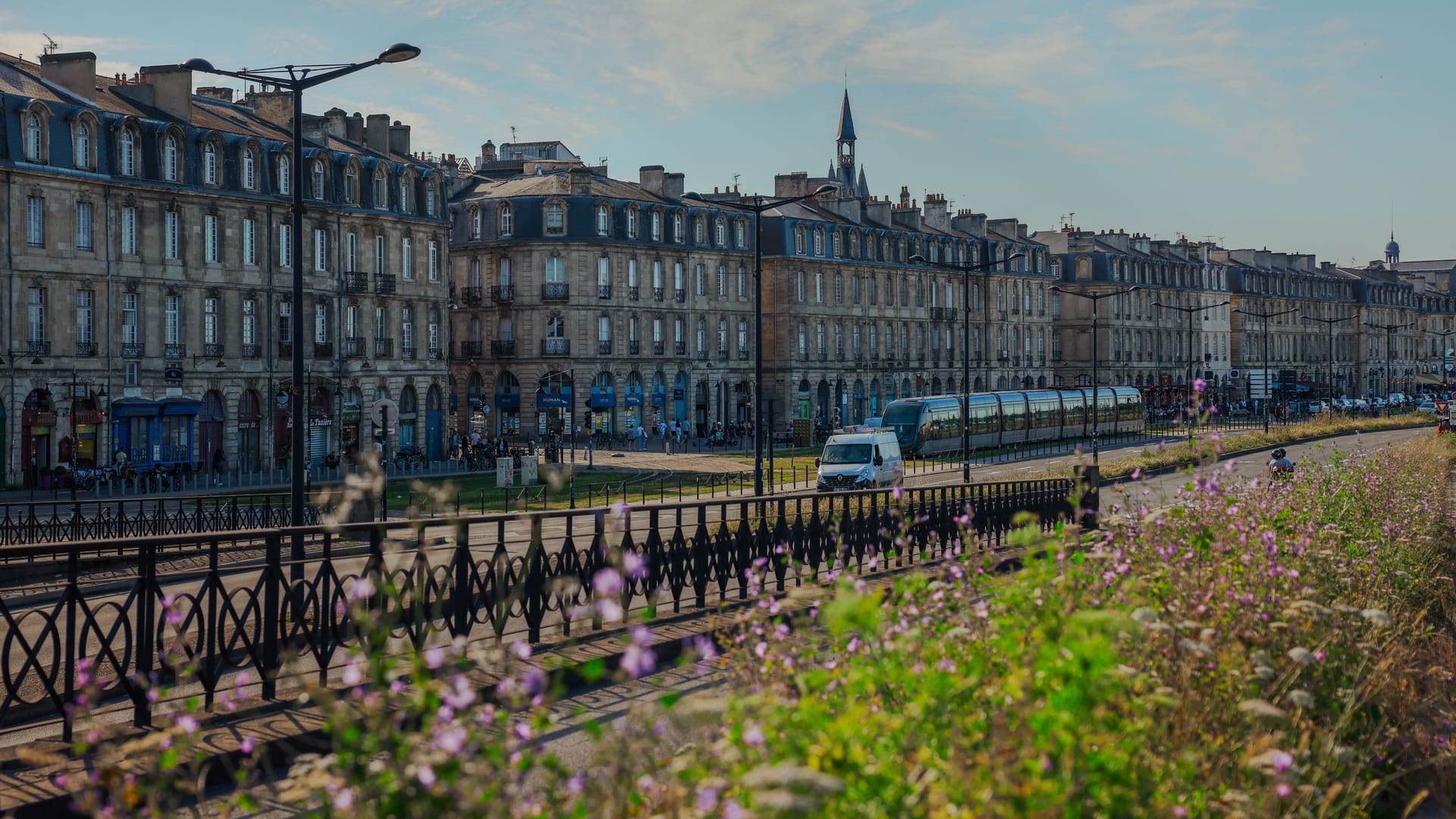
74/100Bordeaux has scrubbed up well, its honey-stone centre restored and the tram corridors kept clean. The public realm is the standout: the Miroir d'eau, the long riverfront and grand eighteenth-century squares give the city Paris-level grandeur. Waterfront life and wine-region festivals are free or close to it, and costs sit at a moderate, manageable level.
Safety
69/100Bordeaux is a safe place to live by most measures, with very low serious violence and streets that feel comfortable after dark. Pickpocketing and the usual city-centre opportunism exist, roughly on par with Berlin, so ordinary caution applies in busy spots. Traffic is fairly well managed for a French city.
Healthcare
68/100Care quality and hospital access are strong, backed by France's well-funded public system, and out-of-pocket costs stay low once a person is enrolled. The weak spot is the supply of doctors, with the wider region thin on general practitioners, so finding and keeping a GP can take patience. English-speaking medical staff are not a given outside private clinics.
Family life
70/100A solid family city, with safe streets, decent schools and a strong outdoor-childhood feel thanks to the parks, riverfront and nearby coast. French work-life culture and parental leave norms favour family time. Finding the right family-sized home at a workable price is the main friction, easier than Paris but still not effortless.
Career
58/100Bordeaux has a serviceable local job market, with adequate industry breadth and professional networks that are useful without being deep. Typical local pay sits above the wider corpus, but unemployment is high and English-language roles are limited. French is important for most locally based work.
Culture & food
67/100Wine country runs through everything here, and the restaurant, cafe and bistro culture is excellent for the city's size, just short of Paris. Local food traditions are deeply rooted, the museums and music scene are respectable, and nightlife is lively without being a capital-city affair. Most of it unfolds in French, with limited accommodation for non-speakers.
Ease of integration
56/100Daily life runs in French, with English common mainly among younger and international residents, so building a local circle rewards effort with the language. Locals are reasonably open to newcomers, on par with Paris and Berlin though a touch less so than Lisbon, and the city carries a strong regional identity. Settling in socially takes time and some French.
Connectivity
64/100Strong on the things that make a smaller city work well: a clean tram network, genuinely good cycling infrastructure, and one of France's best high-speed rail links, putting Paris within easy reach. Internet and utilities are reliable. The airport is regional in scope rather than a major hub, and public administration leans analogue and paperwork-heavy.
Social values
progressiveFrench secular public culture is firmly in place, and social attitudes are broadly liberal and tolerant, if a shade more traditional than Paris or Berlin. The city is welcoming to LGBTQ residents and reasonably progressive on gender, sitting comfortably in the European mainstream without being a frontier of social change.
Relocation ease
51/100Settling here means dealing with France's famously slow, paperwork-heavy bureaucracy, the main drag on the process. The language barrier is real for non-French speakers, and visa, banking and tax setup all take persistence. Finding housing is competitive but no worse than in most big European cities, and cultural adjustment is moderate for anyone arriving from elsewhere in Europe.
The trade-offs
A year in Bordeaux
Jul peaks around 28°C, Jan days top out near 10°C, and the year brings roughly 193 bright days.
Can you actually move here?
The hard limits people most often bring to a move, scored against Bordeaux's data.
Moving with a pet
Bringing a pet to Bordeaux is straightforward, following the standard EU import rules of microchip, rabies vaccination and a pet passport or health certificate. For most arrivals it is one of the easier parts of the move.
Who Bordeaux works for
Answer the questionnaire and see where Bordeaux lands for you.
Take the free questionnaireWhere else to look
Bordeaux vs. comparable cities
Objective scores (0–100) for Bordeaux and its 4 nearest comparable cities.
The cities people weigh against Bordeaux
Unexpected siblings
Far from Bordeaux on the map, close across all 14 categories of daily life.
