Affordability
73/100Wrocław's open-market one-bedroom rent on a new lease is about $746 per month. That is roughly 39% of one typical employee's mean net pay, a rent burden labelled tight alone.
Climate
temperateWrocław's summers are mild, with little oppressive heat, and the city has 169 bright days against 106 rainy-grey ones. Winter is still the weak season: short daylight and deep seasonal darkness linger, while air quality is only middling. Severe weather is not a major concern.
Nature access
lakes & riversWrocław sits inland with no coast in reach, so beach life is off the table. What it does have is the Oder threading through the city with its islands and riverside paths, plus decent forest and weekend escapes. The Sudetes mountains along the Czech border are closer here than from most large Polish cities, which helps for hikers and skiers.
Urban form
mid-sizedAt city level, Wrocław is a mid-sized, walkable place with a compact mixed-use core and low day-to-day car dependence. Its metro population is about 532,000, so it feels substantial without the scale or density of a major metropolis. Housing space is ordinary, and the overall tempo stays measured.
Public life & spaces
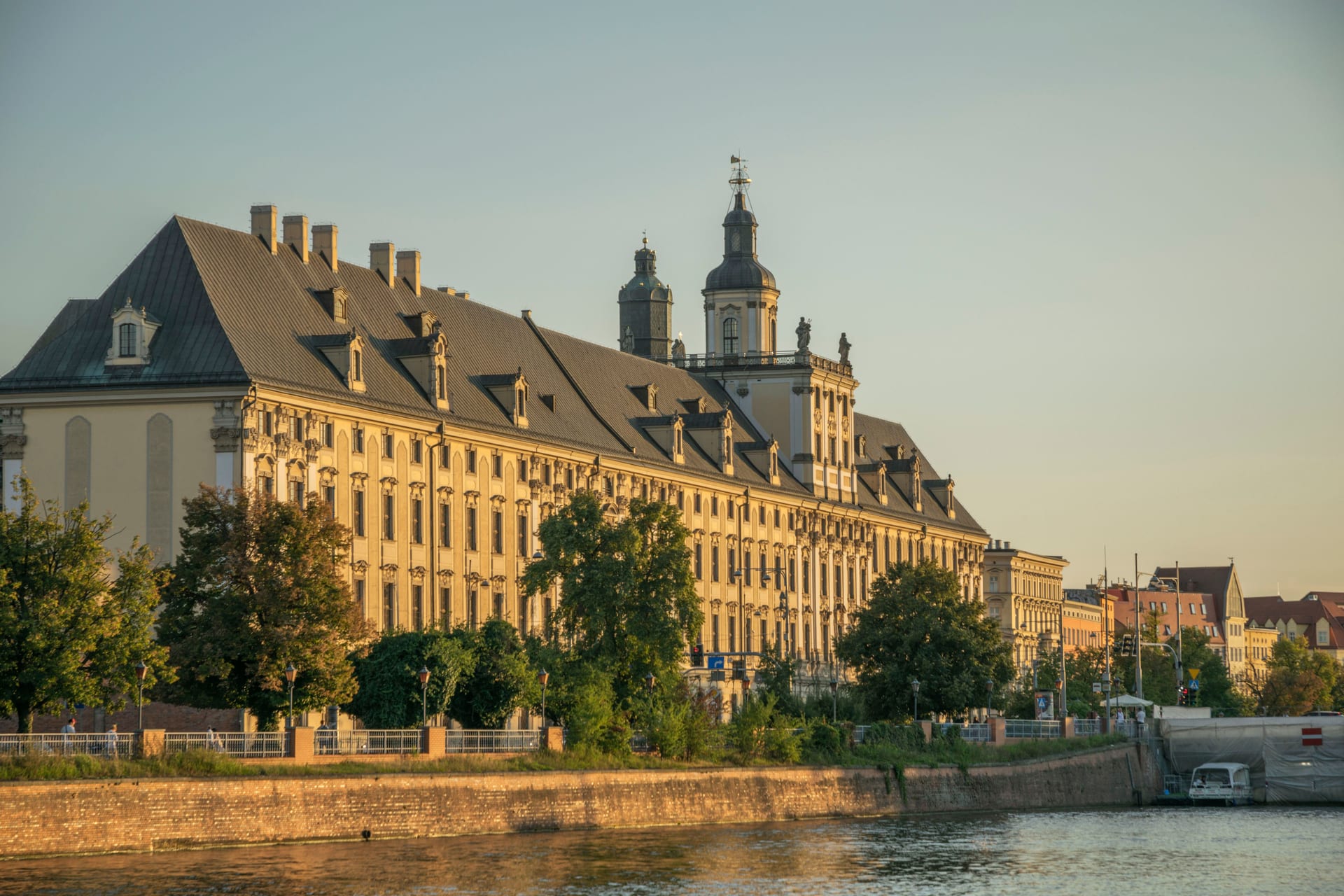
74/100Wroclaw is a clean, tidy city with a colourful, well-kept centre, its grand market square and river islands a genuinely lovely walkable core. Public space here punches above its size. As a cheap student town it offers dwarf-statue hunts, free festivals and easy outdoor life.
Safety
76/100Violent crime is very rare and the city feels secure walking around after dark. Theft is the one weaker spot: Wrocław records clearly more theft per resident than Warsaw or Kraków, so bikes and bags need ordinary city care. Traffic is reasonably orderly.
Healthcare
63/100Healthcare is competent and broadly accessible without being top-tier. Hospitals and emergency care are dependable, and out-of-pocket exposure stays modest. Doctor availability is middling, and finding English-speaking practitioners is doable but not guaranteed, so a private clinic often becomes the practical route for newcomers.
Family life
65/100A workable place to raise children. The city is safe for kids, schools are decent, and parks and playgrounds are easy to find. Poland's parental-leave framework is generous, and family housing is more attainable than in Warsaw or many Western capitals. Childcare and the broader work-life rhythm sit around average.
Career
64/100Wrocław has a solid employment base across several industries, with very low unemployment at about 3% and enough English-language work for international arrivals. Local pay remains modest, so the market is stronger than the earnings. Remote work is viable, while the startup scene is less developed and professional networks are moderate.
Culture & food
68/100For its size the city carries a solid cultural life, with a good spread of restaurants, cafes, and a famously walkable market square that anchors the social scene. Museums and events are plentiful enough, and vegetarian eating is well catered for. The music and arts edge and the international crowd are healthy but more modest than what Berlin offers.
Ease of integration
56/100The working language of daily life is Polish, and while English goes a long way among younger people and in professional settings, real integration leans on picking up some Polish. The city is moderately open to outsiders, in line with Warsaw, with a growing but still modest international presence. Newcomers tend to find their footing, though it takes effort.
Connectivity
60/100Trams and buses cover the city adequately, intercity rail and the airport connect it reasonably to the rest of Poland and Europe, and internet speeds are strong. A standout is how digitized public administration is, ahead of Berlin on that front, which eases a lot of routine paperwork. Utilities are reliable and road congestion is manageable.
Social values
mixedSocially, Wrocław leans conservative and traditional by Western European measures, with public life less secular and less liberal than Berlin or Lisbon, broadly like the rest of Poland. LGBTQ acceptance and visible diversity are limited. Civic trust and everyday orderliness, on the other hand, run high.
Relocation ease
57/100As an EU city, the legal side of moving is comparatively light, with visa, work authorization, and banking all on the easier end. Housing is markedly less of a fight than in Berlin or Lisbon. The friction is linguistic and bureaucratic: Polish is a demanding language and some official processes still test patience, even if cultural adjustment for Europeans is mild.