
Living in Tel Aviv
Tel Aviv runs hot, fast and famously expensive, the priciest place to live in Israel and one of the steeper costs anywhere in the eastern Mediterranean. Days revolve around the beach, late-night dinners and a tech scene that punches well above the city's size. The trade-off is the strain of high rents and an unsettled regional backdrop.
Tel Aviv at a glance
Vital stats
Shown in USD: the local currency (ILS) moves too fast for stable monthly figures.
Where Tel Aviv stands out
The metrics where Tel Aviv sits farthest from the middle worldwide, good and bad.
Cheap to arrive, expensive to stay?
A typical one-bedroom in Tel Aviv runs $1,772/mo. That is ~60% of one typical local employee’s mean net pay. This is a solo-newcomer stress test: sitting tenants, shared homes, subsidised housing and informal rents are deliberately outside the numerator.
The fastest way to test a shortlist is to go. A week on the ground tells you things no ranking can.
Partner link
Approved language-learning and international money resources for practical next steps.
Daily life in Tel Aviv
How Tel Aviv scores
Category by category
Affordability
55/100Tel Aviv's open-market one-bedroom rent on a new lease is about $1,772 per month. That is roughly 60% of one typical employee's mean net pay, a rent burden labelled sharing likely.
Climate
mediterraneanTel Aviv has mild winters and a long bright season, with only a few grey rainy stretches. Summer is the price: July averages about 27°C, and coastal humidity makes the heat feel heavy for long periods. The air is less clean than the easy Mediterranean image suggests, so this is a strong climate for light, not for people who dislike sticky heat.
Nature access
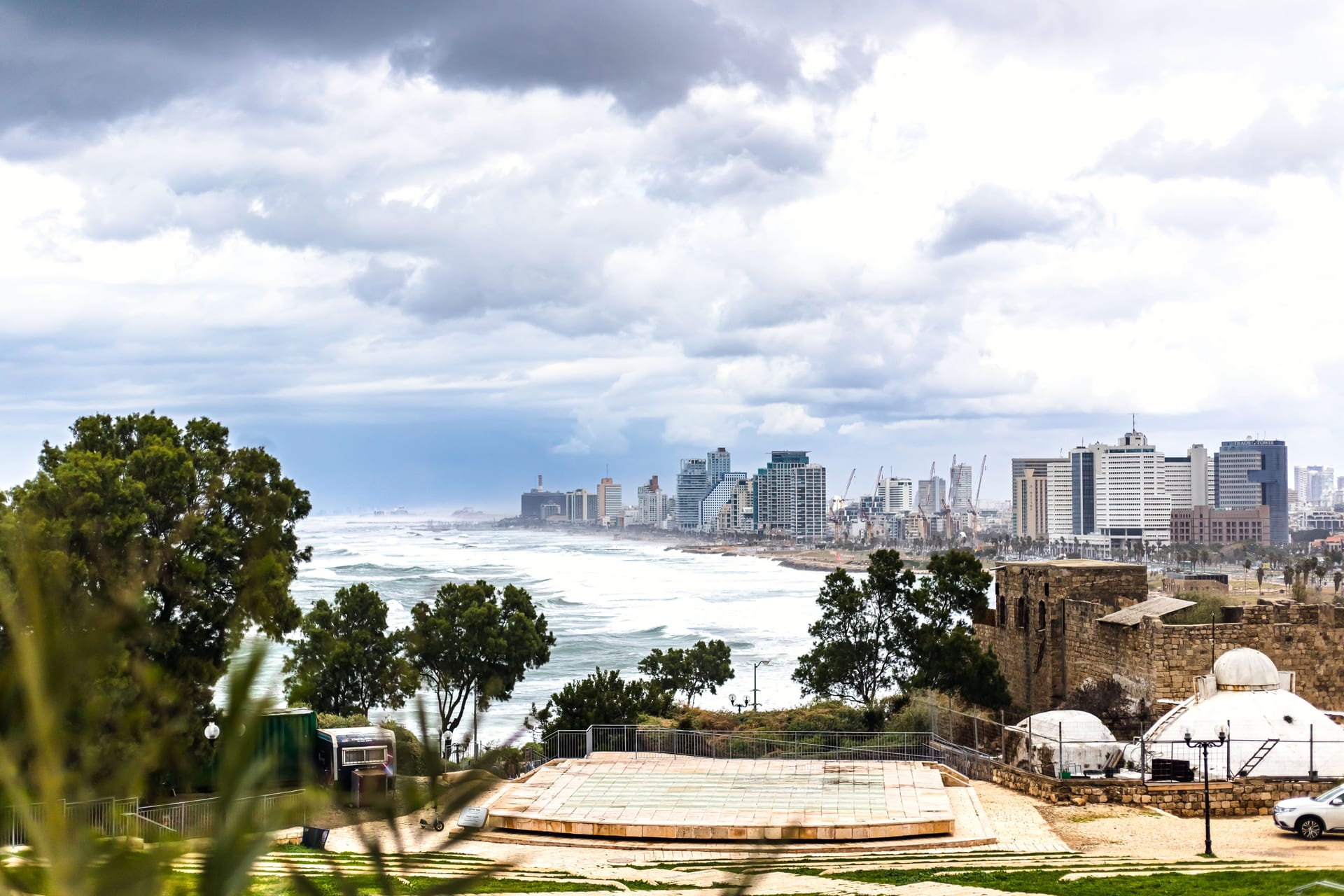
coastalThe beach is the headline, an unbroken run of Mediterranean coast right at the edge of the city, better waterfront access than almost any peer in the region. Past the shoreline the picture thins out fast. Green space per resident is scarce, and mountains, forests and proper hiking all sit at a distance, so weekend nature means a drive rather than a stroll.
Urban form
large cityCompact, dense and easy to cross on foot, Tel Aviv rewards people who want to live without a car. The pace is quick and the streets stay busy, with a strong mix of homes, shops and offices layered together. The cost of that density is space: apartments tend to be small, and room to spread out is hard to find.
Public life & spaces
74/100Tel Aviv is lively and a little worn — grimy in places, decent upkeep overall. Its strength is the built realm: the beach promenade, the Bauhaus boulevards, walkable squares that hum. The beaches are free and the energy is constant, but this is one of the region's most expensive cities.
Safety
65/100Everyday crime is low, with few homicides and roads that are safer than the regional norm, and walking around at night feels comfortable in most areas. The serious caveat is political stability, which scores at the very bottom. The wider security situation can shift quickly, and that backdrop is the single biggest thing to weigh before moving here.
Healthcare
73/100The system is strong, with good hospitals, reliable emergency care and low out-of-pocket costs once a person is in it. English is widely used in medical settings, which eases the early months for newcomers. The one soft spot is doctor availability, which can mean waits to see a specialist outside emergencies.
Family life
57/100Children grow up outdoors here, with safe streets, plenty of playgrounds and a beach-centred childhood. The harder parts are practical. Family-sized apartments are scarce and pricey, childcare is neither cheap nor abundant, and the work culture leans demanding, leaving less slack for parents juggling long hours.
Career
80/100Tel Aviv offers a deep market for technology and startup work, with strong professional networks and very low unemployment. English-language roles are unusually accessible, though local employers are less accommodating of remote work. Local employee pay is above the corpus midpoint, a useful marker of the market's strength.
Culture & food
79/100The food scene is the city's pride, packed with excellent restaurants and some of the best vegetarian and vegan eating anywhere. Cafe culture is everywhere, nightlife runs late, and there is a genuine local creative streak rather than an imported one. Museums and the arts are present and respectable without rivalling the great European capitals.
Ease of integration
67/100Hebrew is the language of daily life, but English goes a long way and the language barrier is lower than in much of Europe, so newcomers can function from day one. The culture is direct, secular and socially open, which helps outsiders find their footing. Connections form quickly once people get past the brisk first impression.
Connectivity
59/100Digital connectivity is genuinely good and getting around by bike is workable, with decent lanes by regional standards. Public transport is the weak link, thinner and less reliable than in comparable cities, and traffic can clog. Utilities and the airport hold up well, and intercity rail covers the small country adequately.
Social values
progressiveThis is one of the most liberal cities in the region by a wide margin, with a strongly secular public culture and an openly welcoming stance toward LGBTQ residents. Attitudes lean progressive, gender norms are relatively equal, and traditionalism is low. Civic trust and a sense of public orderliness are more middling, reflecting a famously informal society.
Relocation ease
48/100Settling in is helped by widespread English and a culture that newcomers adapt to reasonably fast. The friction shows up in the paperwork and the housing hunt: finding an apartment is competitive and stressful, banking and admin take patience, and bureaucracy can be slow. Those eligible for Israeli residence face an easier path than other arrivals.
The trade-offs
A year in Tel Aviv
Aug peaks around 31°C, Jan days top out near 17°C, and the year brings roughly 300 bright days.
Can you actually move here?
The hard limits people most often bring to a move, scored against Tel Aviv's data.
Moving with a pet
Bringing a pet is moderately manageable, easier than in some Mediterranean peers but still involving vaccination records, health certification and import paperwork. Plan the documentation ahead of the move rather than leaving it to the last weeks.
Who Tel Aviv works for
Answer the questionnaire and see where Tel Aviv lands for you.
Take the free questionnaireWhere else to look
Tel Aviv vs. comparable cities


Objective scores (0–100) for Tel Aviv and its 4 nearest comparable cities.
The cities people weigh against Tel Aviv
Unexpected siblings
Far from Tel Aviv on the map, close across all 14 categories of daily life.

