
Living in Kuwait City
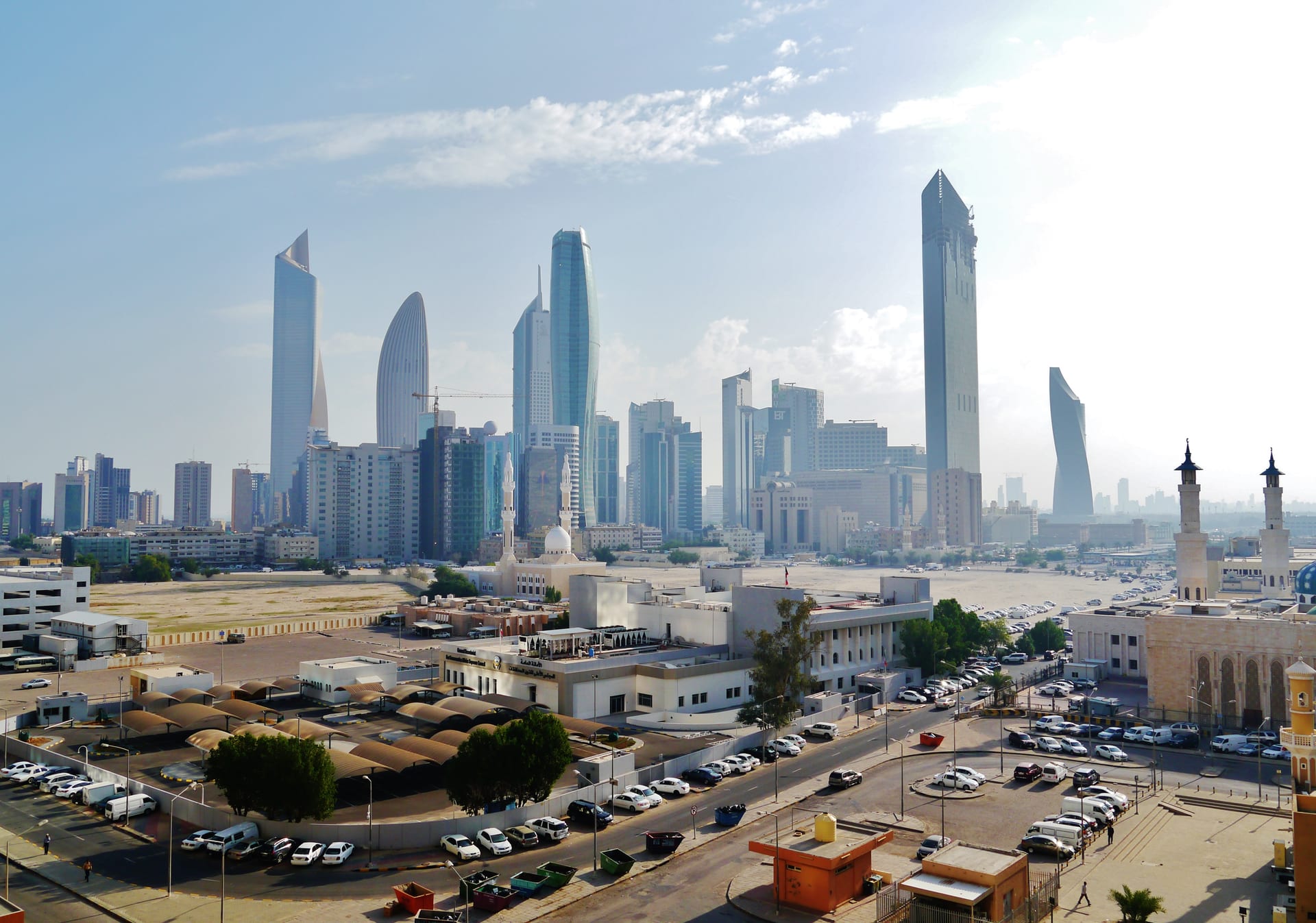
Kuwait City is the quieter, more buttoned-up cousin of the Gulf's showier hubs like Dubai and Doha: tax-free, very safe, and built around the car and the shopping mall. Summers are punishing, public life is conservative, and there is no nightlife to speak of. Most residents come for work and savings rather than the lifestyle.
Kuwait City at a glance
Vital stats
Shown in USD: the local currency (KWD) moves too fast for stable monthly figures.
Where Kuwait City stands out
The metrics where Kuwait City sits farthest from the middle worldwide, good and bad.
Cheap to arrive, expensive to stay?
A typical one-bedroom in Kuwait City runs $853/mo. That is ~62% of one typical local employee’s mean net pay. This is a solo-newcomer stress test: sitting tenants, shared homes, subsidised housing and informal rents are deliberately outside the numerator.
The fastest way to test a shortlist is to go. A week on the ground tells you things no ranking can.
Partner link
Approved language-learning and international money resources for practical next steps.
Daily life in Kuwait City
How Kuwait City scores
Category by category
Affordability
73/100Kuwait City's open-market one-bedroom rent on a new lease is about $853 per month. That is roughly 62% of one typical employee's mean net pay, a rent burden labelled sharing likely.
Climate
dry heatKuwait City has a striking split between pleasant winters and brutal summers. The sky is bright for much of the year and rain is rare, but summer averages around 38°C, with heat severe enough to keep outdoor life restricted for long periods. Air quality is the other major compromise.
Nature access
urbanThis is a desert city on flat coastal land, and it shows. Green space is scarce, parks are few, and there are no mountains, forests, rivers, or proper hiking within reach. The Gulf shoreline gives some beach access, but for anyone who wants nature on the weekend, the options run out fast.
Urban form
small cityLife is organised around highways, malls, and large private homes rather than walkable streets. Getting anywhere on foot is impractical, neighbourhoods feel low on street life, and a car is essentially mandatory. The upside is space: homes and apartments tend to be generously sized by global standards. The overall pace is unhurried, calmer than Dubai or Doha.
Public life & spaces
52/100Kuwait City is wealthy and broadly clean, though dust and ageing infrastructure show through. The waterfront corniche aside, it is heavily car-dependent and built around malls rather than squares. Free culture is thin on the ground; most of daily life here is paid-for and indoors.
Safety
80/100In ordinary life, Kuwait City feels safe. Violent and petty crime are rare, walking at night is usually comfortable, and the homicide rate is about 0.25 per 100,000. Traffic is the practical hazard, with road safety weaker than the city's calm streets might suggest.
Healthcare
66/100Hospital care is solid and emergency treatment is reliable, with English spoken widely in clinics, which eases life for newcomers. Private medicine carries cost, and the ratio of doctors to residents is thinner than in the wealthier Gulf states. For routine and serious care alike, the system is dependable rather than world-leading.
Family life
45/100For families the security and the spacious housing are real pluses, and children can grow up feeling safe. International schools exist but cost a lot, childcare support is limited, and there is little culture of generous parental leave. The fierce heat also constrains outdoor childhood for much of the year, keeping kids indoors.
Career
63/100Kuwait City's low unemployment and accessible English-language roles make the market comparatively easy to enter. The trade-off is a narrow economy, with limited industry and startup depth, while local pay sits below the middle of this group. Prospects depend strongly on sector, so a good fit matters more than sheer job volume.
Culture & food
50/100The international community is enormous, with people from across South Asia, the Arab world, and beyond, and English goes a long way in daily life. Restaurants and cafes are plentiful and the dining scene is genuinely good. But alcohol is banned and nightlife is essentially nonexistent, and the arts and museum scene stays modest compared with the region's bigger players.
Ease of integration
78/100With Arabic as the official language but English widely spoken, day-to-day connection is easy enough for newcomers. The flip side is a deeply conservative public culture and a heavily transient expatriate population, so friendships can feel impermanent and integrating with locals takes patience. Many residents end up socialising mostly within their own national communities.
Connectivity
39/100Digital connectivity is fast and utilities are dependable, but the bones of getting around are weak. Public transport is minimal, cycling infrastructure barely exists, and there are no intercity trains, leaving everyone reliant on cars and contending with congestion. The airport connects the city decently to the world, if not as comprehensively as Dubai or Doha.
Social values
traditionalThis is one of the more socially conservative places a newcomer might consider. Public life is religiously framed, social liberalism is low, and LGBTQ people face real legal and social risk. The population is highly international and diverse, but openness to outside norms is limited and traditional expectations shape daily conduct. Order and civic trust run high.
Relocation ease
53/100Residency is tied closely to an employer, so moving here generally means landing a job first, and the bureaucracy can be slow. The conservative social code is the bigger adjustment for many, a steep cultural shift for those used to liberal cities. On the easier side, the language barrier is low and taxes are about as simple as they come.
The trade-offs
A year in Kuwait City
Jul peaks around 42°C, Jan days top out near 18°C, and the year brings roughly 330 bright days.
Can you actually move here?
The hard limits people most often bring to a move, scored against Kuwait City's data.
Moving with a pet
Bringing a pet to Kuwait is a moderate undertaking, on par with the wider Gulf: expect vaccination records, an import permit, and health certification, with some breed restrictions. It is more involved than a move within Europe but well-trodden, so plan the paperwork early.
Who Kuwait City works for
Answer the questionnaire and see where Kuwait City lands for you.
Take the free questionnaireWhere else to look
Kuwait City vs. comparable cities


The cities people weigh against Kuwait City
Unexpected siblings
Far from Kuwait City on the map, close across all 14 categories of daily life.


