
Living in Dubai
Dubai is a warm, low-friction base with a strong English-language job market and bright weather almost year round. Low tax and easy administration are powerful draws. The trade-offs are prolonged summer heat and frequent mugginess, plus poor air quality and a cultural adjustment that can take time.
Dubai at a glance
Vital stats
Shown in USD: the local currency (AED) moves too fast for stable monthly figures.
Where Dubai stands out
The metrics where Dubai sits farthest from the middle worldwide, good and bad.
Cheap to arrive, expensive to stay?
A typical one-bedroom in Dubai runs $1,159/mo. That is ~47% of one typical local employee’s mean net pay. This is a solo-newcomer stress test: sitting tenants, shared homes, subsidised housing and informal rents are deliberately outside the numerator.
The fastest way to test a shortlist is to go. A week on the ground tells you things no ranking can.
Partner link
Approved language-learning and international money resources for practical next steps.
Daily life in Dubai
How Dubai scores
Category by category
Affordability
72/100Dubai's open-market one-bedroom rent on a new lease is about $1,159 per month. That is roughly 47% of one typical employee's mean net pay, a rent burden labelled tight alone.
Climate
dry heatDubai offers almost year-round bright skies, with about 346 bright days and only a handful of rainy-grey ones. Winter stays warm, but July averages nearly 37°C, and muggy conditions persist for much of the year. The sky is generous; the heat and air quality are the price.
Nature access
coastalThis is the city's clearest weakness. Green space is thin, parks are few for the population, and forests and rivers are essentially absent. The Gulf coastline is the saving grace, with good beach and warm-sea access. For hills or hiking, expect a drive well out toward the Hajar range, and even then the options are modest next to most of the region.
Urban form
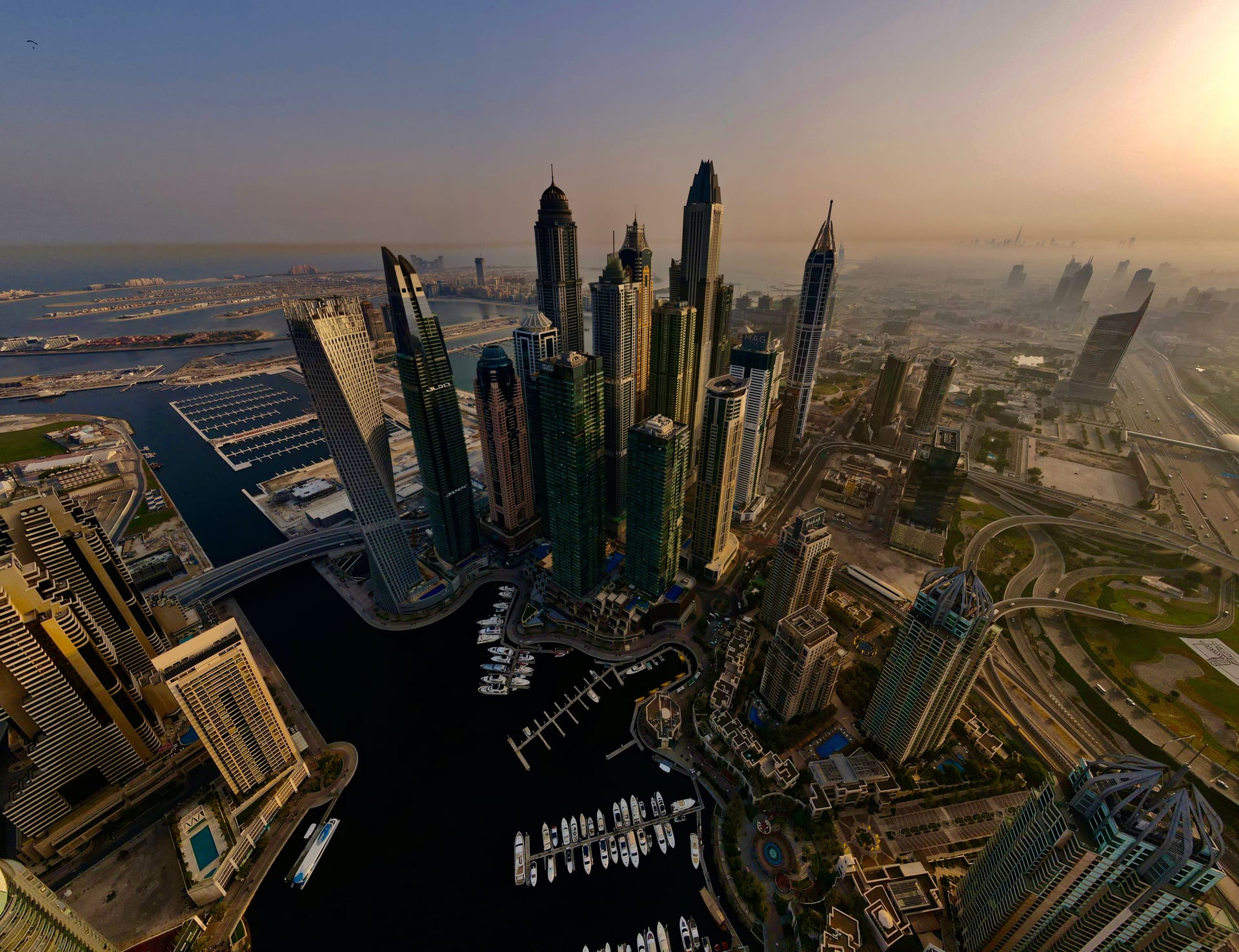
large cityBuilt for cars and built fast, the city sprawls along highways with towers rising in clusters rather than continuous streets. Walking between districts is rarely practical and the pavement-level texture is patchy. Homes tend to be spacious for the money, and the pace runs energetic without tipping into the round-the-clock frenzy of the largest Asian megacities.
Public life & spaces
67/100Dubai is new and manicured, its public face sanitised and well-maintained. The waterfronts and promenades are engineered handsomely, but the city is car-centric and substitutes the mall for the street. Almost nothing is genuinely free here; daily life is pay-to-play, with little public enjoyment that doesn't run through a till.
Safety
90/100Among Dubai's strongest cards. Violent crime is rare, petty theft is uncommon, and walking around late at night feels secure across the city, all underpinned by heavy policing. Roads are safer than much of the wider region. The overall sense of order is high, though it rests on tight central control rather than the give-and-take of a Western democracy.
Healthcare
75/100Private medicine is modern and well-equipped, with strong hospitals, reliable emergency care, and English spoken throughout, which smooths arrival enormously. The catch is cost and supply: care leans heavily on private insurance, out-of-pocket exposure can be significant, and the per-capita number of doctors is thinner than the polished facilities suggest.
Family life
50/100Mixed for families. Children are very safe and international schools are plentiful and decent, though good ones carry steep fees and family-sized housing strains budgets. The harder edges are the long-hours work culture, minimal parental leave, and an outdoor childhood hemmed in by heat for much of the year. Raising kids here often leans on hired help and a comfortable income.
Career
83/100Dubai offers a strong, international job market with low unemployment and many English-language roles. Networking and remote-work conditions are favourable, and the startup scene is credible. Typical local employee pay is relatively strong, though that does not make every newcomer's landing straightforward.
Culture & food
61/100The strength here is breadth more than depth. Restaurants span the globe and the international crowd is the most cosmopolitan anywhere nearby, so most cuisines and communities are represented. Cafes and nightlife are present without defining the place, shaped in part by local norms. What thins out is rooted local culture and an organic music and art scene; much of what is on offer feels imported and curated.
Ease of integration
85/100With Arabic official but English the working language, and a population overwhelmingly expatriate, striking up connections is easy on the surface and the language barrier is effectively nil. The flip side is depth and permanence. People cycle through on contracts, so circles form fast and dissolve fast, and a conservative framework means newcomers find an open expat world more readily than a settled local one.
Connectivity
59/100World-class in the parts that show. The airport is one of the planet's best-connected hubs, internet is fast, utilities are dependable, and government admin is heavily digitised and quick. Where it falls short is on the ground: public transport covers only part of the sprawl, cycling barely exists, and intercity rail is essentially absent, so a car stays close to essential.
Social values
traditionalThis is where Dubai asks the most of an incoming resident. Public culture is conservative and religiously grounded, social liberalism is limited, gender norms lean traditional, and LGBTQ residents face a legally and socially restrictive environment with no protection. Set against that, the city is strikingly diverse and broadly welcoming to foreigners, and it runs on a high degree of order and civic trust.
Relocation ease
75/100The administrative side is unusually light. Visa and work authorisation routes are relatively accessible, English removes most language friction, and banking and tax administration are simple. The tax burden is about 0.1%, but cultural adjustment is the part that takes longer, especially under conservative social rules.
The trade-offs
A year in Dubai
Jun peaks around 42°C, Jan days top out near 25°C, and the year brings roughly 346 bright days.
Can you actually move here?
The hard limits people most often bring to a move, scored against Dubai's data.
Moving with a pet
Bringing a pet runs moderate in difficulty. Expect an import permit, an up-to-date microchip and vaccination record, and a registered vet to manage clearance, and factor the summer heat into travel timing, so start the paperwork well ahead of the move.
Who Dubai works for
Answer the questionnaire and see where Dubai lands for you.
Take the free questionnaireWhere else to look
Dubai vs. comparable cities


Objective scores (0–100) for Dubai and its 4 nearest comparable cities.
The cities people weigh against Dubai
Unexpected siblings
Far from Dubai on the map, close across all 14 categories of daily life.


