Affordability
68/100Ljubljana's open-market one-bedroom rent on a new lease is about €816 per month. That is roughly 39% of one typical employee's mean net pay, a rent burden labelled tight alone.
Climate
temperateLjubljana's winters are cold and dim, with January averaging 1.9°C and only about 65 days of strong winter brightness. Bright days are fairly typical and grey wet days slightly more common, so the climate is mixed rather than relentlessly gloomy. Summers stay warm rather than severe.
Nature access
great hikingThis is the city's strongest hand by a wide margin. The Julian Alps, Lake Bled, and Triglav National Park are all close enough for a day or weekend trip, and forests and rivers press right up to the edge of town. Hiking, cycling, and mountain access are about as good as a European capital gets. Only the sea sits a touch further off.
Urban form
mid-sizedLjubljana's 252,736-person metro has a town-like scale, with an exceptionally walkable core and little need for a car in daily routines. Mixed-use streets make errands simple. The trade-off is limited housing space and a very slow tempo, so residents seeking metropolitan intensity may find the city too quiet.
Public life & spaces
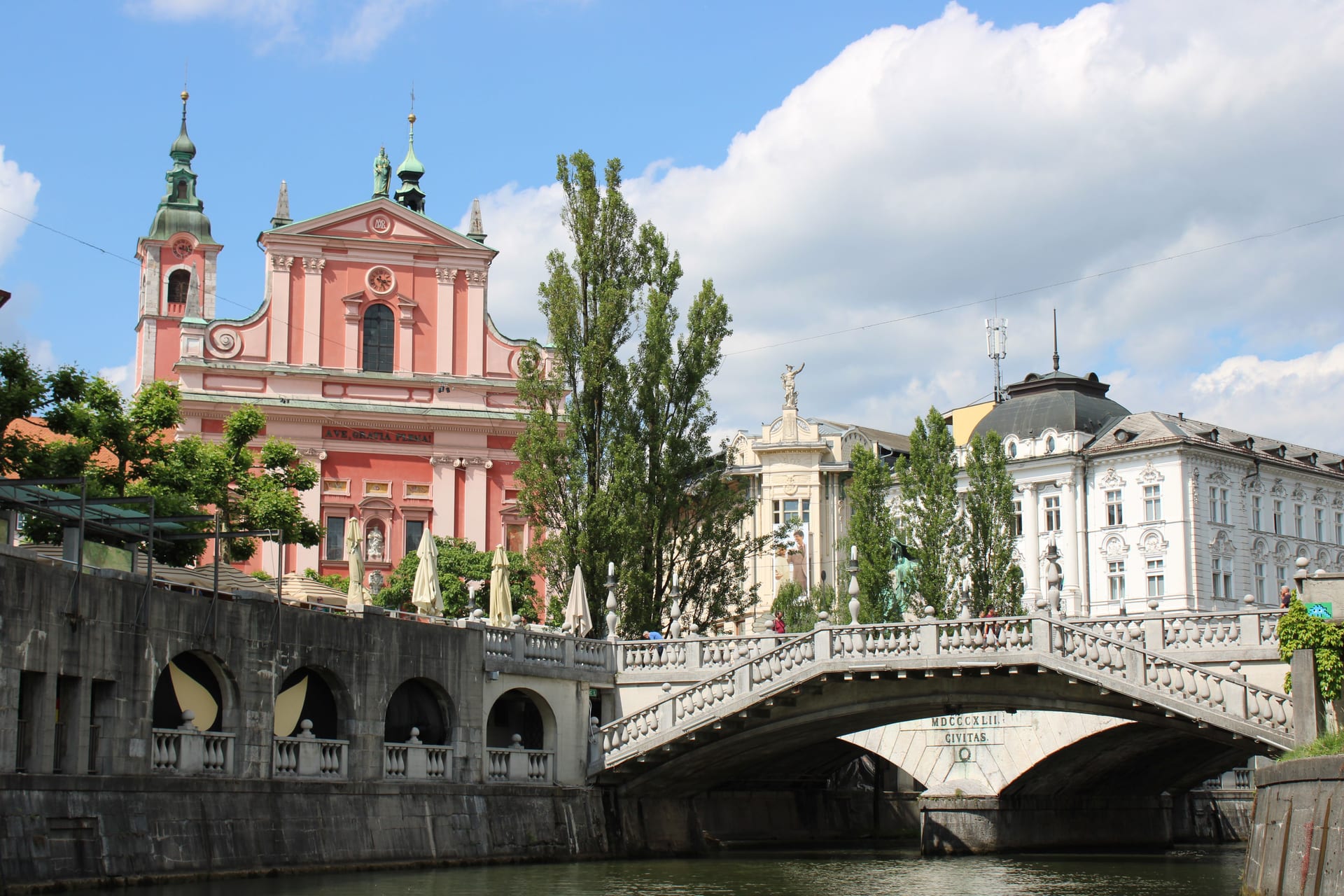
85/100Ljubljana is notably clean and green, its car-free centre pristine, its pedestrianised riverbanks and Plecnik bridges among Europe's most elegant public spaces. Few capitals feel this cared-for at this scale. It stays affordable too, with riverside festivals and walkable free culture; the catch is simply how small it is.
Safety
87/100About as reassuring as Europe offers. Violent crime is rare, the streets feel calm well after dark, and traffic is comparatively orderly. Newcomers tend to relax into the place quickly, and parents in particular flag how easy it is to let children roam.
Healthcare
66/100Public healthcare is solid and out-of-pocket costs stay low, which keeps the system accessible. Quality and hospital access are respectable without matching Vienna's depth, and waits can stretch in some specialties given a thinner spread of doctors. English is spoken often enough in clinical settings to manage.
Family life
69/100A genuinely easy place to raise young kids, built on strong child safety, plentiful playgrounds and parks, and a culture that protects family time. Childcare and parental-leave norms are supportive. Schools are decent rather than standout, and finding affordable family-sized housing takes patience.
Career
59/100Ljubljana has very low unemployment, at about 3%, but the local market is small and specialised. English-language work exists, and remote work is a workable route, although professional networks and the technology scene are thinner than in larger regional hubs. Local pay is comparatively solid by the wider comparison.
Culture & food
71/100An outsized cafe culture anchors daily life, with riverside terraces busy in any decent weather. The dining and arts scenes are pleasant and improving but stay modest next to Vienna or Prague, and nightlife is on the quieter side. The international crowd is small, so the texture here is distinctly local.
Ease of integration
52/100Slovenian is the everyday language, though English goes a long way among younger residents and Croatian is widely understood. Cultural adjustment tends to be smooth and the society is friendly, yet the expat community is small, so building a local circle rewards learning some of the language and showing up regularly. Newcomers who put in that effort settle in well.
Connectivity
62/100Utilities are reliable and traffic rarely snarls, which makes the day-to-day feel steady. Local transit and cycling work fine for a city this compact. Where it lags is reach beyond the borders: the airport and intercity rail connections are limited, and digital admin still leans analogue.
Social values
progressiveModerately liberal and broadly secular, with reasonable footing on gender equality and LGBTQ acceptance for the region. It reads as open and tolerant in everyday terms while staying less cosmopolitan and diverse than Vienna. A streak of tradition runs underneath, milder than in much of Central Europe but present.
Relocation ease
58/100EU residency and work rules are the standard middle-of-the-road experience for the bloc. Cultural adjustment is one of the gentler ones around, but the paperwork side drags: bureaucracy runs slow, housing can take real legwork to secure, and admin processes are not as digitized as some neighbours. Patience helps more than anything.