
Living in Budapest
Budapest is an elegant Central European base for people who value atmosphere, manageable daily costs, and a city that stays active through the seasons. Winter is cold and dim despite a generally bright year, while local pay is modest, making the city more appealing to people with outside income.
Budapest at a glance
Vital stats
Shown in USD: the local currency (HUF) moves too fast for stable monthly figures.
Where Budapest stands out
The metrics where Budapest sits farthest from the middle worldwide, good and bad.
Cheap to arrive, expensive to stay?
A typical one-bedroom in Budapest runs $679/mo. That is ~60% of one typical local employee’s mean net pay. This is a solo-newcomer stress test: sitting tenants, shared homes, subsidised housing and informal rents are deliberately outside the numerator.
The fastest way to test a shortlist is to go. A week on the ground tells you things no ranking can.
Partner link
Approved language-learning and international money resources for practical next steps.
Daily life in Budapest
How Budapest scores
Category by category
Affordability
70/100Budapest's open-market one-bedroom rent on a new lease is about $679 per month. That is roughly 60% of one typical employee's mean net pay, a rent burden labelled sharing likely.
Climate
temperateBudapest has four distinct seasons, with a cold, dim winter and warm summers that can occasionally turn sticky. With about 210 bright days and 83 rainy-grey days, the year offers plenty of usable light outside the darkest months.
Nature access
lakes & riversBudapest is a city of the Danube and the Buda hills rather than dramatic wilderness. There is no coast, and proper mountains sit a drive away, so weekend escapes lean on forests, riverbanks, and modest trails in the hills. Green space per resident is on the thin side, a fair trade-off to keep in mind for anyone who wants nature on the doorstep.
Urban form
large cityBudapest is built to be lived in without a car. The old core is dense and walkable, with mixed-use streets where shops, cafes, and flats stack together, and a tram-and-metro network that reaches most corners. Neighbourhoods hold a distinct character on each side of the river, while the outer suburbs are the weaker part of the picture.
Public life & spaces
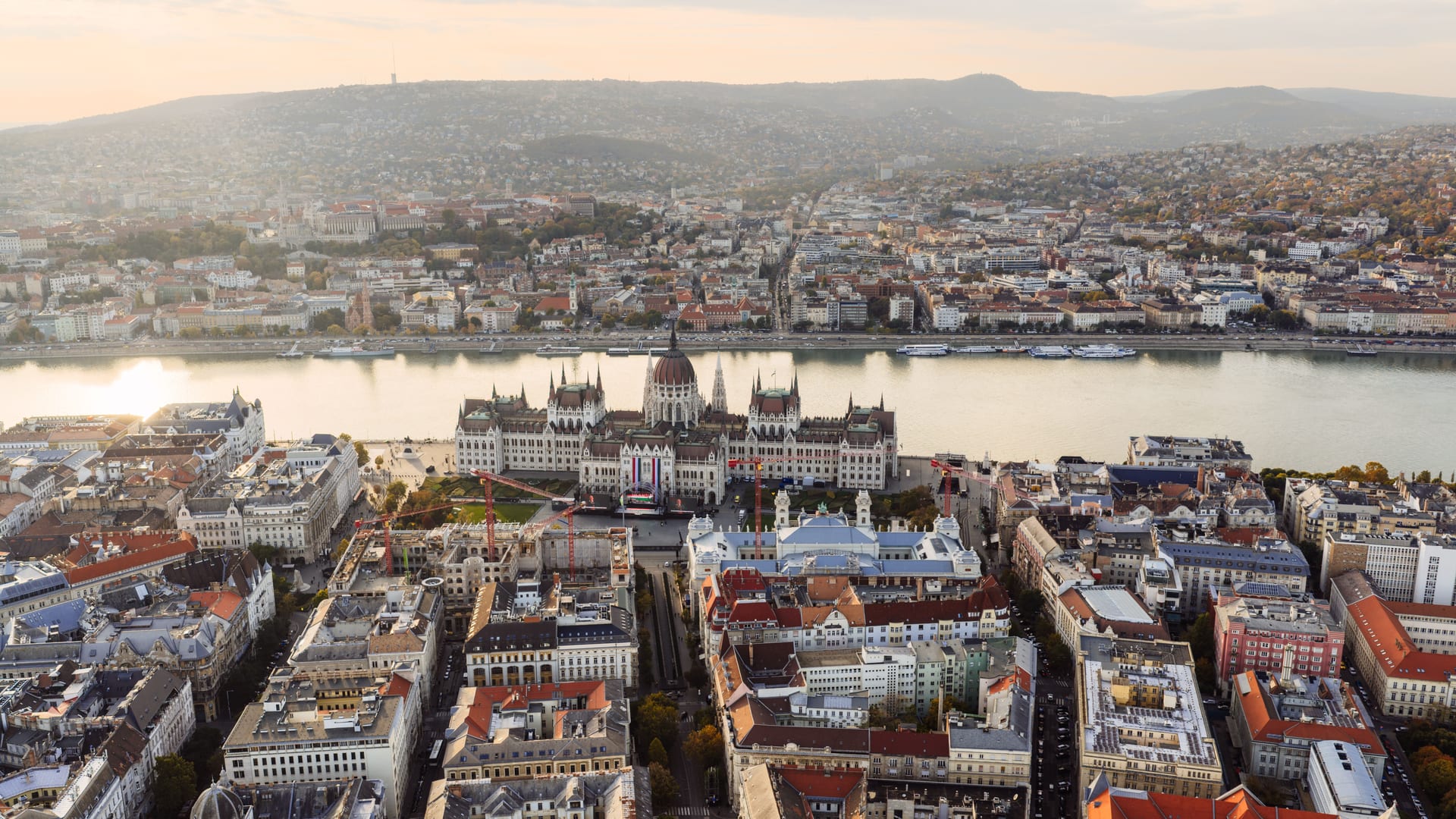
63/100Budapest is grand but worn, its faded facades and uneven upkeep part of the charm. What it offers is spectacle: stunning Danube embankments, sweeping squares, thermal baths and riverside promenades. Life here stays cheap, with festivals, ruin bars and free riverside culture running through the year.
Safety
72/100Budapest is a notably safe capital. Violent crime is rare, the homicide rate is among the lowest in this peer group, and walking the central districts after dark feels comfortable to most residents. Pickpocketing around tourist hotspots is the usual nuisance, and traffic is the more realistic everyday risk than crime.
Healthcare
62/100Healthcare here is solid but not a standout. Public hospitals function and emergency care is reliable enough, yet doctor availability is thinner than in Western Europe, and the public system can mean waits, which pushes many residents toward private clinics. English is spoken at those private and central practices more readily than across the public network.
Family life
59/100Budapest works reasonably for families. The city is safe for children, family-sized flats are more attainable than in pricier capitals, and parks and playgrounds are within reach in most districts. Schools and childcare are adequate rather than exceptional, and the local work culture is less protective of family time than further west.
Career
65/100The local market is modest, with opportunities in shared services and technology. English-language and remote-friendly work exists, but local pay is low, so Budapest works best for regional roles or income earned from elsewhere.
Culture & food
79/100This is where Budapest punches hard. The nightlife built around its ruin bars is genuinely distinctive, the cafe tradition runs deep, and there is a steady current of music, museums, and a strong sense of local culture. The food scene is improving and good value, though vegetarians and vegans will find fewer options than in Berlin, and Hungarian remains a real barrier outside tourist circles.
Ease of integration
48/100Hungarian is one of Europe's harder languages, and while English and German go a long way in central and professional settings, daily life rewards learning some of it. There is an established expat scene to land in, but the wider culture is more reserved toward outsiders than the Iberian or German cities newcomers often compare it with, so building local friendships takes patience.
Connectivity
62/100The transport backbone is the highlight: trams, metro lines, and buses make getting around easy, and utilities and internet are reliable and fast. Cycling lanes are catching up rather than comprehensive, intercity rail is dated, and public-sector bureaucracy still runs on paper more than it should. The airport connects well to Europe without being a major long-haul hub.
Social values
mixedSocially, Budapest leans conservative for an EU capital. Public attitudes are more traditional than in Berlin or Lisbon, LGBTQ acceptance is limited and shaped by a restrictive national climate, and openness to foreigners is measured rather than warm. Newcomers who want a liberal, cosmopolitan social environment should weigh this honestly before committing.
Relocation ease
57/100As an EU capital, Budapest keeps the paperwork lighter than many peers: visa and work-authorization routes are relatively straightforward for those who qualify, and tax filing is comparatively simple. The language barrier is the main friction, and while everyday bureaucracy is less maddening than Lisbon's, cultural adjustment and the housing hunt still take time and a bit of local help.
The trade-offs
A year in Budapest
Jul peaks around 28°C, Jan days top out near 4°C, and the year brings roughly 210 bright days.
Can you actually move here?
The hard limits people most often bring to a move, scored against Budapest's data.
Moving with a pet
Bringing a pet to Budapest is straightforward. As an EU destination, it follows standard, well-trodden import rules, so a microchip, rabies vaccination, and the right paperwork are usually all it takes for cats and dogs from most origins.
Who Budapest works for
Answer the questionnaire and see where Budapest lands for you.
Take the free questionnaireWhere else to look
Budapest vs. comparable cities


Objective scores (0–100) for Budapest and its 4 nearest comparable cities.
The cities people weigh against Budapest
Unexpected siblings
Far from Budapest on the map, close across all 14 categories of daily life.
