Affordability
69/100Monterrey's open-market one-bedroom rent on a new lease is about $537 per month. That is roughly 70% of one typical employee's mean net pay, a rent burden labelled sharing likely.
Climate
mediterraneanMonterrey is bright and mild in winter, but summer is a serious heat trade-off. July averages about 28°C, with long hot spells and many muggy days. Around 275 bright days keep the sky clear, while air quality is less comfortable than the light suggests.
Nature access
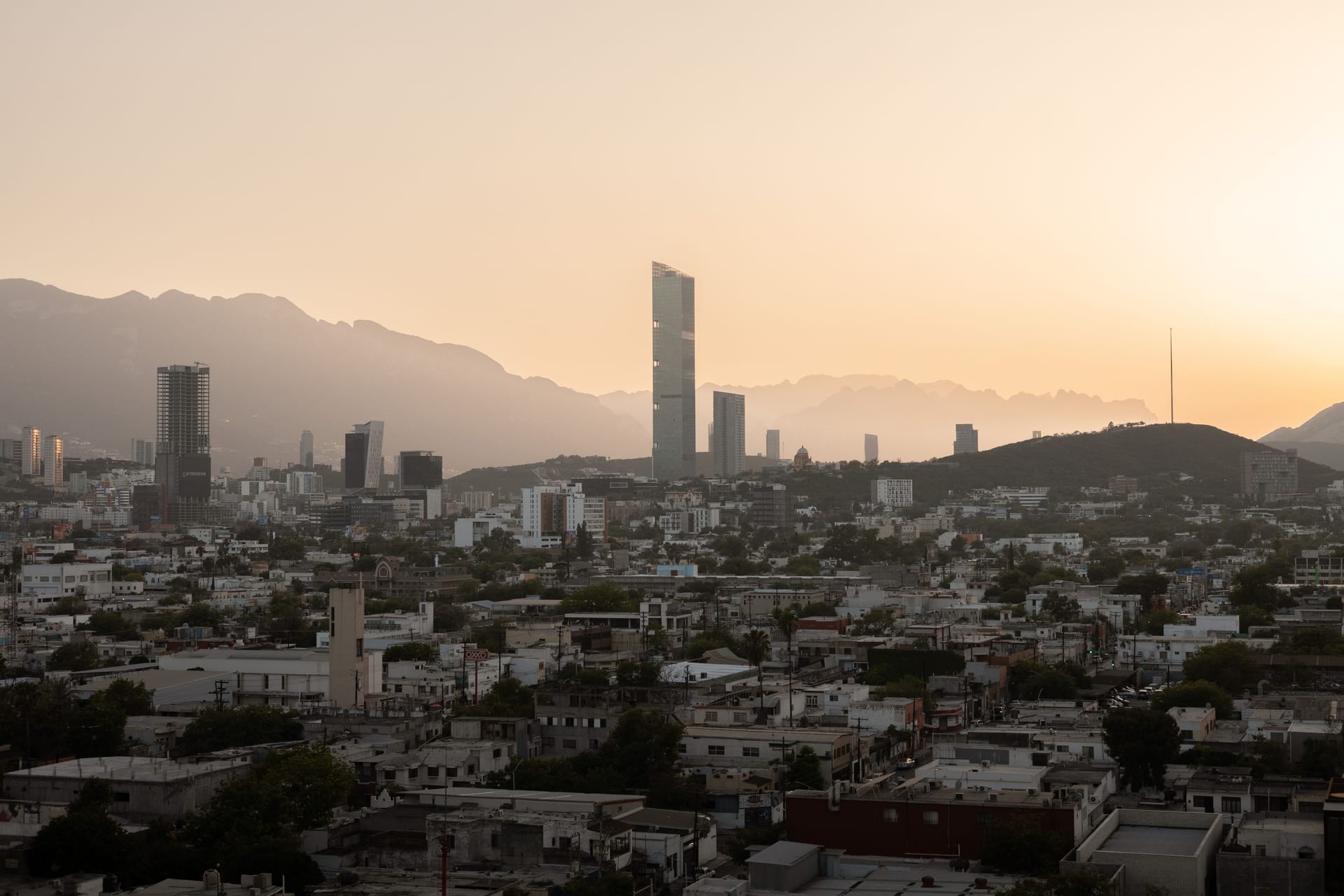
alpineThe Sierra Madre walls the city in dramatically, and that proximity is the real draw: serious hiking, climbing and weekend escapes into the mountains sit right on the doorstep. What it lacks is the soft stuff. Parks and green space inside the city are thin, there is no coast nearby, and rivers and lakes are scarce.
Urban form
large citySprawling, low-slung and built around the car. Distances are long, walkability is poor, and getting through daily life without a vehicle is hard. The upside is space, homes tend to run larger than in the denser capital, and the better residential pockets are pleasant. Just expect to drive everywhere.
Public life & spaces
48/100Monterrey is wealthier and tidier than most Mexican cities, with the vast Macroplaza and the Paseo Santa Lucia riverwalk at its heart. Beyond those, though, it sprawls car-dependent and dull. Prices run higher than elsewhere in the country, with some free riverside life and events but less spilling-out street culture.
Safety
46/100A complicated picture. Serious violent crime has eased considerably from its worst years and the city now reads as safer than its reputation suggests, but everyday wariness, petty crime and caution after dark are still part of life. The broader national backdrop of weak institutions and political instability sits underneath it all.
Healthcare
55/100Among the stronger options in Mexico, with well-regarded private hospitals and specialists, and English is spoken more often in the better clinics than across much of the country. Care leans on the private system, where standards are good but costs land on the patient. Doctor density nationwide is thin.
Family life
41/100Workable for families without being a standout. Schools, childcare and family-sized housing are all serviceable and roughly on par with the capital, and there is room to live larger. The weak spots are cultural: long working hours and a demanding work culture, plus thin parental leave, leave less time at home.
Career
67/100Monterrey has a strong local job market, broad industry fit and a dense professional network. English-language work is widely available, while the tech ecosystem is present but not a standout. Typical local pay remains low by international standards, a clear constraint for locally paid work.
Culture & food
65/100A solid northern-Mexican scene, known above all for its grilled meats and a distinct regional cooking tradition. Restaurants, cafes and nightlife are all decent. Be clear-eyed about the comparison, though: on culture, music, museums and sheer culinary depth, this is a quieter, more business-minded city than Mexico City, which outshines it on nearly every cultural axis. Vegan and vegetarian options are limited.
Ease of integration
56/100Spanish runs daily life, and while English turns up in business and expat circles, real integration rests on the language. Locals, the regiomontanos, are known for being welcoming and direct, and openness to foreigners is genuine. The social grain is more traditional and conservative than the capital's, so newcomers fit in faster by leaning into local rhythms.
Connectivity
38/100The clear weak point. Public transport is limited, cycling barely supported, and intercity rail effectively nonexistent, so the car does almost all the work. Traffic is heavy though less choking than the capital's, and the airport connects well domestically and to the United States. Utilities and digital admin can be unreliable.
Social values
mixedMexico's more conservative big city. Northern, business-oriented and family-centred, Monterrey reads as notably more traditional and less socially liberal than the capital, where progressive attitudes run far stronger. There is real openness to foreigners and a workable level of acceptance, but on secular public life and social liberalism it sits well behind Mexico City.
Relocation ease
54/100Mexico is one of the more straightforward places to settle into. Residency and work authorization are relatively accessible, and the cultural distance is manageable for many newcomers. The main hurdles are practical: getting by needs functional Spanish, and banking, paperwork and the housing search can be slow and bureaucratic.