Affordability
66/100Guadalajara's open-market one-bedroom rent on a new lease is about $537 per month. That is roughly 91% of one typical employee's mean net pay, a rent burden labelled solo unlikely.
Climate
temperateThe climate is mild and bright for much of the year, with around 232 bright days and low humidity. Summer heat is restrained, and winter stays comfortable. A seasonal run of grey-rainy days interrupts the otherwise clear pattern, while air quality is the real weakness.
Nature access
alpineNature is more about weekends than daily life. The city itself runs short on green space, and there is no coast within easy reach, so beach trips mean planning. What it does offer is the surrounding highlands, with mountains, forest, and Lake Chapala close enough for day trips and modest hiking. In-town parks and cycling routes are functional rather than generous.
Urban form
large cityThis is a sprawling, car-dependent metro rather than a compact walkable one. Outside a few central districts, getting around really wants a vehicle, and density is low. Neighbourhood quality is decent and homes tend to come with a fair amount of space, but the overall fabric rewards drivers more than pedestrians.
Public life & spaces
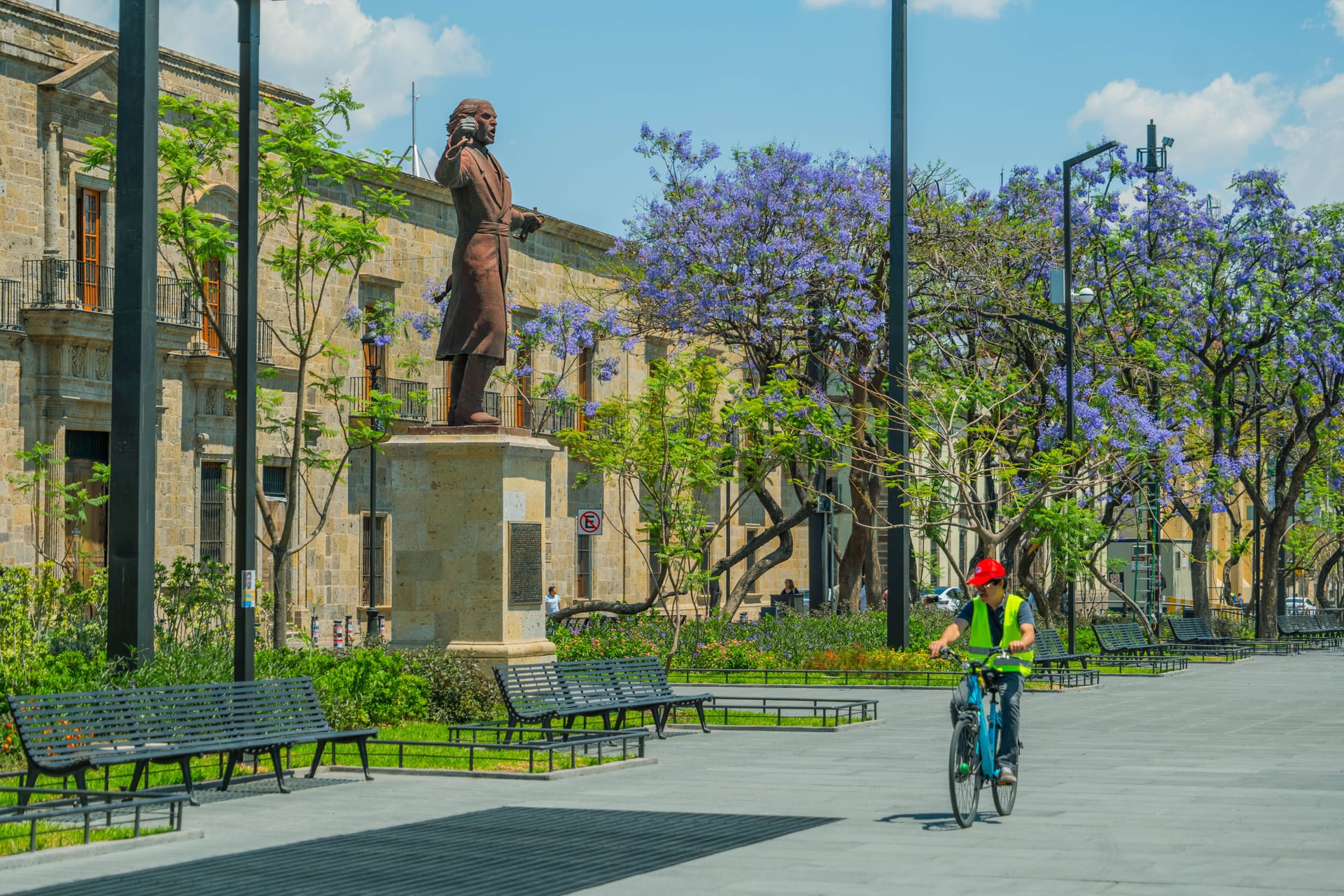
52/100Guadalajara keeps its centre tidier than Mexico City, though the outskirts are uneven. Its historic plazas, cathedrals, and pedestrian core give it a strong, walkable public realm. Living is cheap, and the best of it is free: festivals, mariachi drifting through the squares, and a plaza culture that fills the evenings at no cost.
Safety
43/100Safety remains a mixed proposition. The homicide rate is about 11 per 100,000, while perceived and night-time safety are weaker, so caution after dark is sensible. Petty and violent crime are meaningful parts of the daily calculation, and national political stability adds an unsettled backdrop.
Healthcare
51/100Healthcare is workable, with hospital access and overall quality landing in the middle of the pack and a reasonable number of English-speaking providers in the private sector. Doctor availability is thin relative to demand, and emergency-care reliability is uneven, so most newcomers lean on private clinics and carry their own coverage.
Family life
42/100For families the basics are in place: schools, childcare, playgrounds, and outdoor time for kids all sit around adequate. The softer side is harder. Child-safety perceptions are low, parental-leave support is limited, and the work-life balance can be demanding, so family life depends a lot on income and the right neighbourhood.
Career
66/100Guadalajara has a workable local market with a real technology base and strong support for remote work. English-language roles are available but not the default. For people paid locally, typical pay is low by the standards of this comparison, making the income source a central consideration for anyone relying on local employment.
Culture & food
75/100Culture is where the city earns its keep. As the home of mariachi and the heartland of tequila, Guadalajara carries a strong, unmistakably local identity, backed by a serious music and art scene and a deep run of restaurants. Cafes, nightlife, and museums are all solid. The main limit for newcomers is language, since daily cultural life runs in Spanish.
Ease of integration
56/100Day-to-day life happens in Spanish, and English only goes so far outside professional and expat circles, so making local friends really rewards learning the language. Tapatíos have a reputation for warmth, and openness to foreigners is good, but the smaller international community means integration leans on Spanish more than in bigger global hubs.
Connectivity
40/100Infrastructure is a soft spot. Digital connectivity is unreliable for a city this size, intercity rail is essentially absent, and dealing with bureaucracy still means paperwork rather than apps. Public transport and utilities are passable, and traffic, while present, is more manageable than in Mexico City. The airport keeps it reasonably connected.
Social values
progressiveSocially the city sits in a moderate band, more open than its conservative-Catholic backdrop might imply. It reads as friendlier to LGBTQ residents and to foreigners than many expect, and Guadalajara has a notable creative and queer scene. Gender equality and civic trust still trail, and traditional values hold steady in much of daily life.
Relocation ease
54/100Getting set up is relatively smooth by global standards. Residency and work authorization are achievable without heavy friction, and the cultural adjustment is gentle for most. The real hurdle is language, since bureaucracy and banking still expect Spanish, and the paper-based systems can slow things down for anyone who arrives without it.