
Living in Brasília
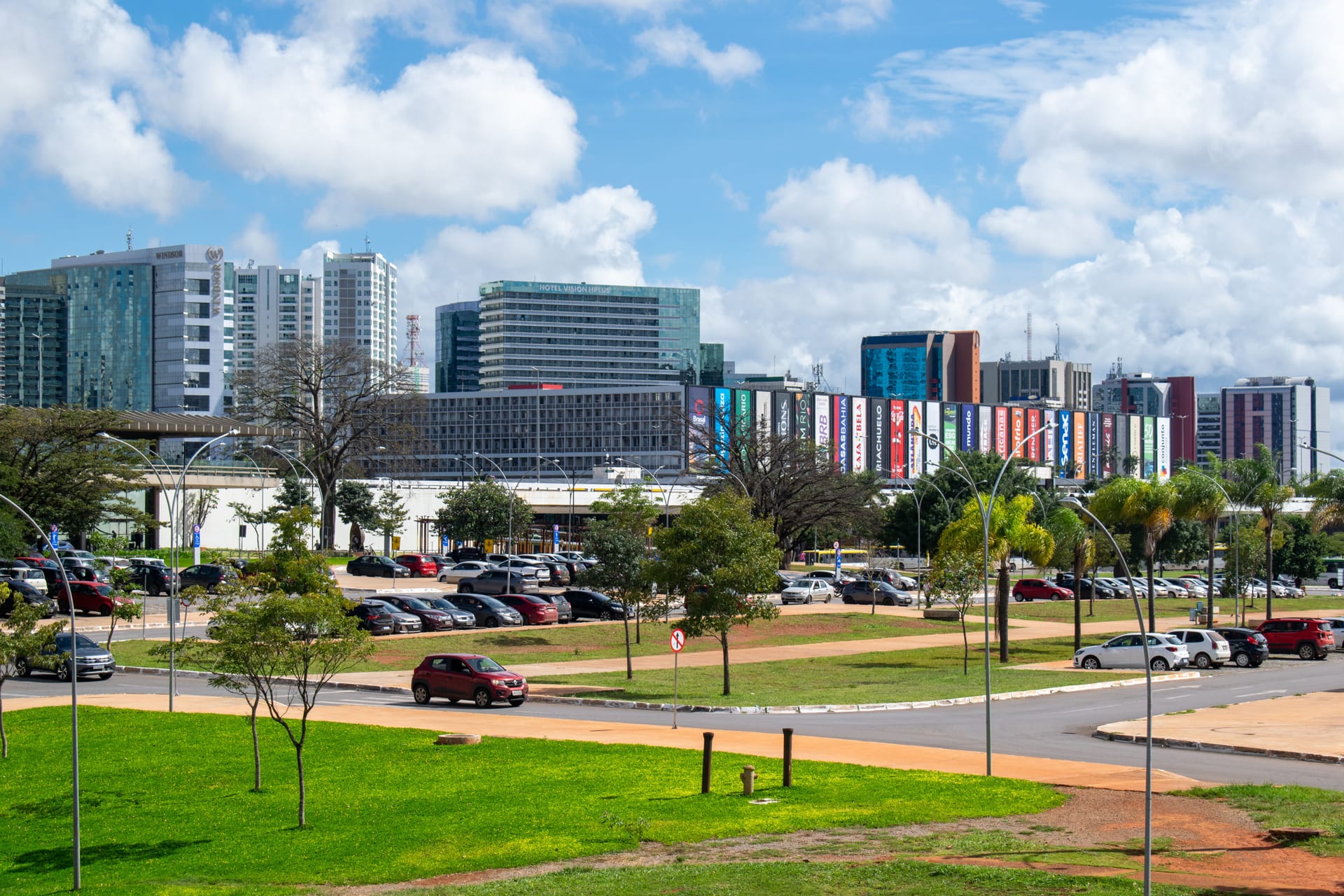
Brazil's purpose-built capital is a modernist experiment in concrete and open sky, calmer and more spread out than São Paulo or Rio. Living costs run low and the air stays clean, but the city was drawn for cars and ministries, so daily life leans quiet, administrative, and dependent on driving everywhere.
Brasília at a glance
Vital stats
Shown in USD: the local currency (BRL) moves too fast for stable monthly figures.
Where Brasília stands out
The metrics where Brasília sits farthest from the middle worldwide, good and bad.
Cheap to arrive, expensive to stay?
A typical one-bedroom in Brasília runs $435/mo. That is ~66% of one typical local employee’s mean net pay. This is a solo-newcomer stress test: sitting tenants, shared homes, subsidised housing and informal rents are deliberately outside the numerator.
The fastest way to test a shortlist is to go. A week on the ground tells you things no ranking can.
Partner link
Approved language-learning and international money resources for practical next steps.
Daily life in Brasília
How Brasília scores
Category by category
Affordability
75/100Brasília's open-market one-bedroom rent on a new lease is about $435 per month. That is roughly 66% of one typical employee's mean net pay, a rent burden labelled sharing likely.
Climate
tropicalBrasília has a gentle highland climate, with January averaging 21.9°C and July 19.4°C. Bright days are plentiful and extreme-weather risk is low. Humidity is relatively moderate, though the dry season can make the air feel parched.
Nature access
leafyGreen space per resident is generous, far more than crowded São Paulo offers, and parks and cycling routes thread through the city. The big absence is the sea: there is no coast within reach, and mountains and forest are limited. Lake Paranoá and the surrounding cerrado give weekends some outdoor texture without rivalling Brazil's coastal escapes.
Urban form
large cityThis is the defining trade-off. Brasília was designed around the automobile and superblocks, so density is unusually low, walkability is poor, and getting around without a car is a daily struggle. Apartments tend to come with decent space, and the layout is orderly, but the mixed-use street life that animates São Paulo or Buenos Aires is largely missing.
Public life & spaces
56/100Brasilia is the planned exception, orderly and decently kept across its monumental zone. But its grandeur is modernist and car-dependent, vast axes that look impressive yet feel sterile and short on the squares where life actually gathers. Free monuments and parks help, though it runs pricier than most Latin American peers.
Safety
51/100Safety lands in the middle of the Brazilian pack: violent and petty crime register lower than in São Paulo or Bogotá, and the orderly central districts feel calmer. Night-time confidence is still limited, and national political stability has been shaky in recent years. Traffic, on these wide fast roads, is a real risk.
Healthcare
58/100Hospital access and overall care quality are respectable for the region, on par with São Paulo and better than Mexico City, helped by the capital's concentration of public and private facilities. The number of doctors per resident is thin, and English-speaking care is patchy. Out-of-pocket costs stay moderate compared with regional peers.
Family life
55/100Families get plenty of parks, playgrounds, and an outdoor-friendly rhythm that beats most Brazilian cities, plus a calmer work-life culture than the big commercial hubs. School quality and child safety are middling rather than strong. The space and greenery suit raising young kids, even if top-tier schooling takes some searching.
Career
58/100Brasília runs on government, so the job market is narrow and heavily public-sector, with weaker industry breadth, tech and startup activity than São Paulo or Mexico City. English-language roles are scarce. Unemployment is relatively low and remote work is workable, but anyone outside the civil-service orbit will find the opportunities limited.
Culture & food
58/100As a young administrative capital, Brasília trails the cultural depth of São Paulo, Rio, and Buenos Aires across restaurants, nightlife, and street-level culture. There are museums, music, and a recognisable modernist identity, but the scene is quieter and more dispersed. Evenings tend to be low-key rather than electric.
Ease of integration
59/100Portuguese is essential here, and English goes only so far, so the language barrier is the main hurdle to building a local circle. Brazilians are warm and fairly open to newcomers, and there is a modest international and diplomatic community, but the car-centric layout makes spontaneous social life harder than in a denser city.
Connectivity
47/100Internet is fast and road congestion is mild for a Brazilian capital, both genuine pluses. The weak spots are public transport, which is thin and underused, and intercity rail, which is effectively non-existent. The airport connects well domestically. Practical life works best for those willing to drive.
Social values
mixedBrasília sits roughly where most Brazilian capitals do on social attitudes, fairly open to foreigners and reasonably accepting on LGBTQ matters, though a touch more conservative and traditional than São Paulo or Buenos Aires. Secular public life and gender-equality norms are middling rather than progressive.
Relocation ease
49/100Visas and work authorisation are comparatively straightforward, easier than much of Europe, which lowers the entry bar. The friction comes after arrival: Portuguese is largely unavoidable, bureaucracy is heavy, and tax paperwork is genuinely complex. Housing searches and banking admin take patience common across Brazil.
The trade-offs
A year in Brasília
Sep peaks around 31°C, May days top out near 26°C, and the year brings roughly 204 bright days.
Can you actually move here?
The hard limits people most often bring to a move, scored against Brasília's data.
Moving with a pet
Bringing a pet to Brazil is moderately manageable, broadly in line with other Brazilian and Latin American capitals: expect health certificates, vaccination records, and import paperwork rather than long quarantine, with a fair amount of admin to work through.
Who Brasília works for
Answer the questionnaire and see where Brasília lands for you.
Take the free questionnaireWhere else to look
Brasília vs. comparable cities
Objective scores (0–100) for Brasília and its 4 nearest comparable cities.
The cities people weigh against Brasília
Unexpected siblings
Far from Brasília on the map, close across all 14 categories of daily life.


