Affordability
72/100Belize City's open-market one-bedroom rent on a new lease is about $394 per month. That is roughly 68% of one typical employee's mean net pay, a rent burden labelled sharing likely.
Climate
tropicalWarmth never lets up, but the climate is not easy. January averages about 25°C, while high humidity and near year-round mugginess make the heat heavy. Light is less reliable than the setting suggests, with only about 103 bright, dry days a year, and weather risk adds a serious seasonal consideration.
Nature access
coastalThe draw is the water. Easy reach to the Caribbean and the world's second-largest barrier reef, with strong weekend escapes to cayes, jungle, and national parks just inland. Inside the city itself, parks and green space are scarce, and there are no mountains or notable trail networks close by.
Urban form
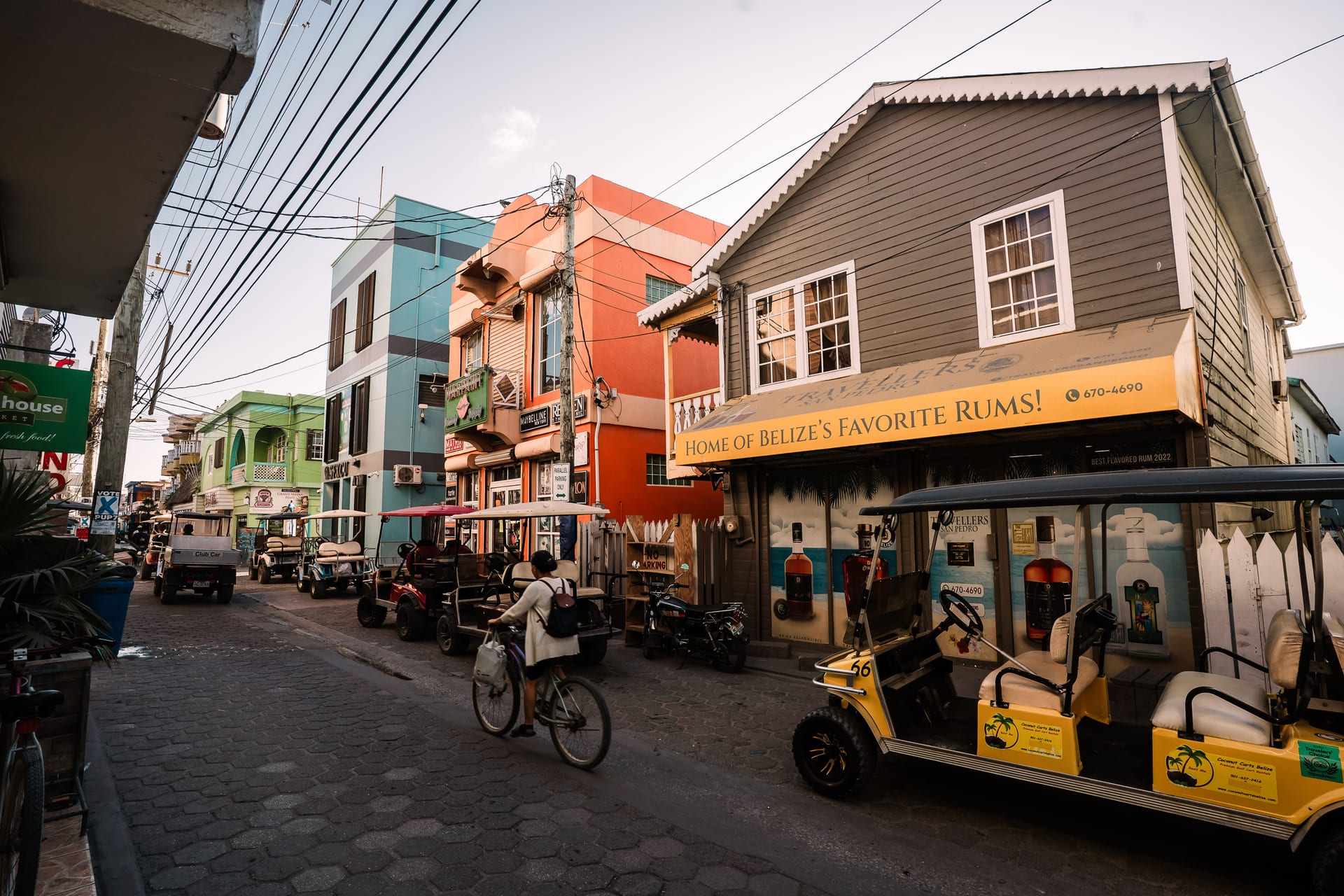
small cityTiny and low-slung, more overgrown town than city, far smaller than the Latin American hubs it gets listed alongside. Walkability is limited, neighbourhood quality is uneven, and getting around mostly means a car. The pace is slow and unhurried, which suits some and frustrates others.
Public life & spaces
19/100Belize City is run-down and littered, a tropical port with weak public squares and a scrappy, neglected waterfront. There isn't much cared-for shared space to lean on here. Daily life is cheap enough, but free culture is thin too, leaving you to make your own fun rather than find it laid on.
Safety
37/100Safety is a serious daily constraint. A homicide rate of about 28 per 100,000 sits alongside high violent and petty-crime exposure, and walking home late is a poor bet in much of town. Traffic is another hazard, so moving around requires care even when crime is not the issue.
Healthcare
40/100Care is basic. Hospital access, specialist depth, and emergency reliability all lag the region, and the ratio of doctors to residents is thin, so serious cases often mean travelling abroad. The one bright spot is language: medical staff commonly speak English, which removes a barrier that trips up newcomers in Panama or Mexico.
Family life
33/100A mixed picture for raising kids. The outdoor, water-centred childhood and relatively relaxed work-life rhythm are genuine pluses, and English-medium schooling is widely available. But child safety is a real worry given the crime levels, schools and childcare are limited, and playgrounds and parks are sparse.
Career
37/100A weak local job market with little industry depth, a small professional network, and almost no startup or tech scene compared with Medellín or Panama City. The standout is English-language work: this is one of the few places in the region where an English-only professional can operate, and remote work is workable. For most, an income from elsewhere is the realistic path.
Culture & food
49/100Modest on the cultural front. Restaurants, cafés, nightlife, and museums are all limited next to Panama City or the big Mexican cities, and the arts scene is small. What it does have is a distinct Creole-Caribbean character of its own, and because everything runs in English, the culture is unusually easy for a newcomer to step straight into.
Ease of integration
67/100English as the everyday language, alongside Spanish and Kriol, makes connecting with locals far simpler here than almost anywhere else in Latin America. People are generally open to foreigners and the mix is diverse, so integrating socially is quick. The flip side is a more conservative, traditional social fabric, with weaker civic trust than the wider region.
Connectivity
21/100Thin across the board. Public transport, cycling provision, and intercity rail are effectively absent, internet is slow by regional standards, and utilities can be unreliable. The redeeming details are light road congestion, thanks to the city's small size, and an airport with workable international links.
Social values
mixedSocially conservative and fairly traditional, sitting toward the less liberal end of its regional peers on questions like LGBTQ acceptance and gender equality. Public life carries a strong religious thread. What stands out positively is genuine openness to outsiders and a diverse, internationally mixed population.
Relocation ease
58/100One of the smoother moves on paper. Residency is straightforward, taxes are simple, and the absence of a language barrier removes the single biggest hurdle most relocations face. Cultural adjustment tends to be gentle for English speakers. Day-to-day admin, banking, and finding housing are slower and clunkier, so patience is needed once on the ground.