
Living in Salzburg
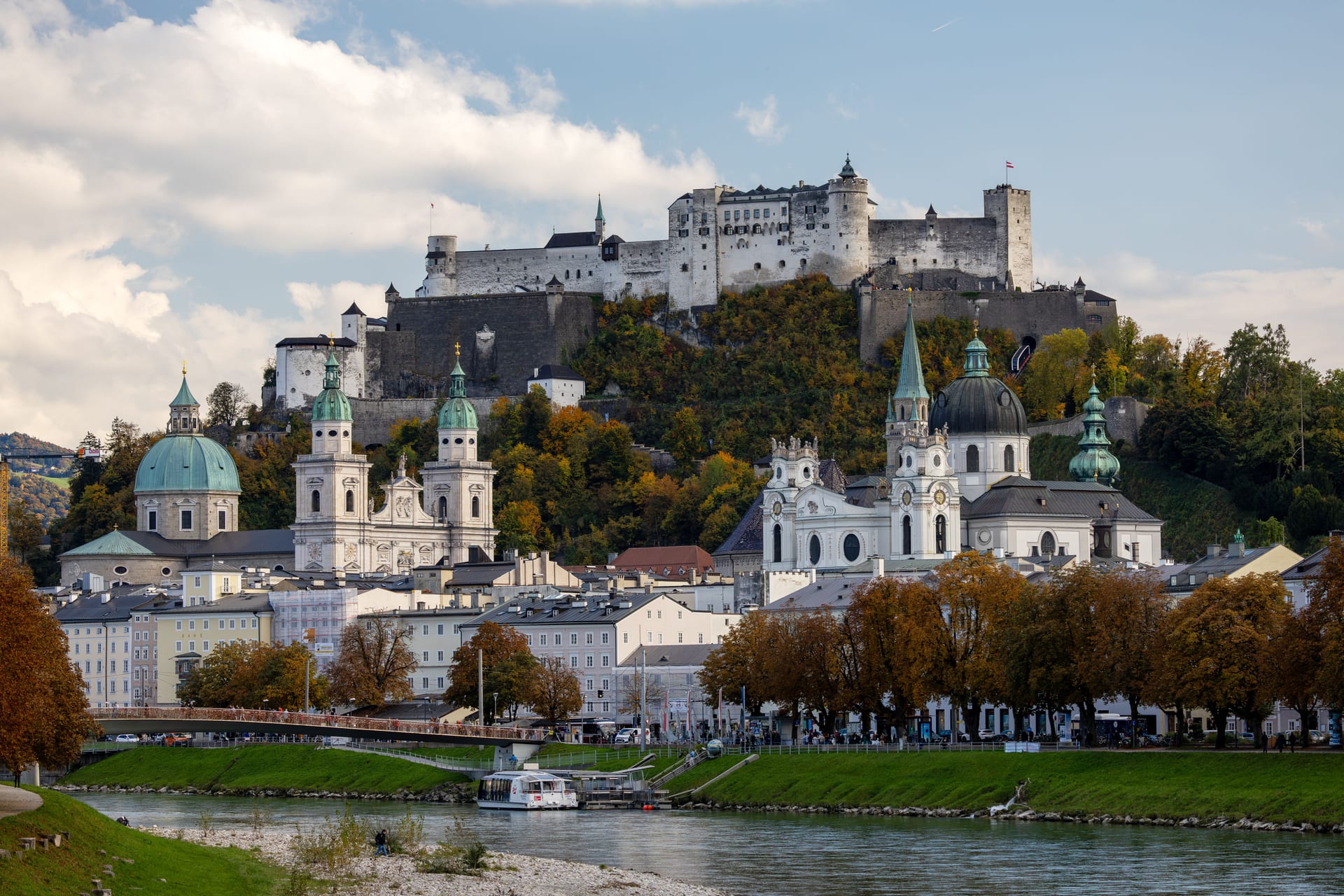
A small, postcard-pretty Austrian city wedged against the Alps, where baroque streets give way to mountains within minutes. Life here runs slow and orderly, closer in feel to a large town than to Vienna. Strong on safety and nature, thinner on career options and big-city energy.
Salzburg at a glance
Vital stats
Where Salzburg stands out
The metrics where Salzburg sits farthest from the middle worldwide, good and bad.
Cheap to arrive, expensive to stay?
A typical one-bedroom in Salzburg runs €830/mo. That is ~27% of one typical local employee’s mean net pay. This is a solo-newcomer stress test: sitting tenants, shared homes, subsidised housing and informal rents are deliberately outside the numerator.
The fastest way to test a shortlist is to go. A week on the ground tells you things no ranking can.
Partner link
Approved language-learning and international money resources for practical next steps.
Daily life in Salzburg
How Salzburg scores
Category by category
Affordability
67/100Salzburg's open-market one-bedroom rent on a new lease is about €830 per month. That is roughly 27% of one typical employee's mean net pay, a rent burden labelled manageable solo.
Climate
wet & greySalzburg's climate is wet and grey, with 177 rainy-grey days and only 142 bright days in a typical year. Winters are cold and short on light, while summers stay mild to warm without much muggy heat. Clean air and low extreme-weather risk are the counterweight, but the skies are a real trade-off.
Nature access
great hikingThis is where Salzburg is hard to beat. The Alps start at the city's edge, with world-class hiking, forests, lakes and national parks all within easy reach, and weekend escapes that few European cities can match. What it lacks is the sea, far inland with no coast or beach to speak of.
Urban form
small cityCompact and walkable, Salzburg is a small city you can cross on foot, with handsome, well-kept neighbourhoods and a calm, unhurried pace. After Vienna it feels almost village-like, low-density and quiet. The flip side is modest housing space and more reliance on a car once you leave the centre.
Public life & spaces
89/100Salzburg is pristine, its baroque old town immaculately kept down to the cobbles. The squares, the riverside and the sheer beauty of the built fabric make it a lovely place simply to walk. The trade-off is tourism and price: the squares cost nothing to enjoy, but most else here comes dear.
Safety
85/100Among the safest places a person could land. Violent crime is rare, the streets feel secure after dark, and traffic is well-managed. Political stability is solid and petty crime stays low, the kind of quiet, predictable safety that defines small Austrian cities.
Healthcare
73/100Healthcare is a clear strength. Care quality is high, doctors are plentiful for a city this size, hospitals are accessible and out-of-pocket costs stay low under the public system. English-speaking care is reasonably common, though not guaranteed at every practice.
Family life
79/100A reassuring place to raise children: very safe, with good childcare, decent schools, plenty of playgrounds and a genuine outdoor childhood on the doorstep. Work-life balance leaves room for family life. The catch is finding a large enough home, since family-sized housing is tight and not cheap.
Career
50/100Salzburg offers a small, specialised job market centred on tourism, services, and manufacturing, with limited English-only roles and modest startup depth. Local pay is comparatively high, but unemployment is above the corpus norm. The city suits a defined local opportunity better than a broad international job search.
Culture & food
68/100For its size, Salzburg punches above its weight culturally, anchored by a serious classical music and festival tradition and a strong museum and arts calendar. Cafe culture is woven into daily life. Where it falls short is nightlife and an international dining range, both quieter than in Vienna or Munich.
Ease of integration
56/100German is the language of daily life, and while English goes a long way in tourist-facing settings, real integration leans on learning it. The city is welcoming but somewhat insular, less open to newcomers and less international than Austria's larger cities. Civic trust runs high, so local life is orderly, but social circles can take time to break into.
Connectivity
64/100A mixed picture. Cycling infrastructure is good, intercity trains are reliable, and utilities rarely fail. But the local airport is small with limited connections, public transport is decent rather than comprehensive, broadband lags the European front-runners, and digital bureaucracy still trails the best.
Social values
progressiveSalzburg leans more traditional and conservative than Vienna or Munich, with a more visible role for religion and Catholic custom in public life. Attitudes toward social liberalism and newcomers are cooler than in Austria's big cities. Gender equality and LGBTQ acceptance are reasonable, and civic trust and orderliness are notably high.
Relocation ease
56/100Settling in carries the usual EU-Austria friction: workable visa and work-authorisation routes, paired with paperwork and German-language admin that test patience. Finding a place to live is the real bottleneck, with a tight market that pushes newcomers hard. Banking and tax setup are middling, neither smooth nor painful.
The trade-offs
A year in Salzburg
Jun peaks around 23°C, Jan days top out near 2°C, and the year brings roughly 142 bright days.
Can you actually move here?
The hard limits people most often bring to a move, scored against Salzburg's data.
Moving with a pet
Bringing a pet is straightforward. Austria follows standard EU rules, so a microchip, rabies vaccination and pet passport or health certificate cover most cats and dogs, with no quarantine for travellers from typical origin countries.
Who Salzburg works for
Answer the questionnaire and see where Salzburg lands for you.
Take the free questionnaireWhere else to look
Salzburg vs. comparable cities

The cities people weigh against Salzburg
Unexpected siblings
Far from Salzburg on the map, close across all 14 categories of daily life.

