
Living in Reykjavík
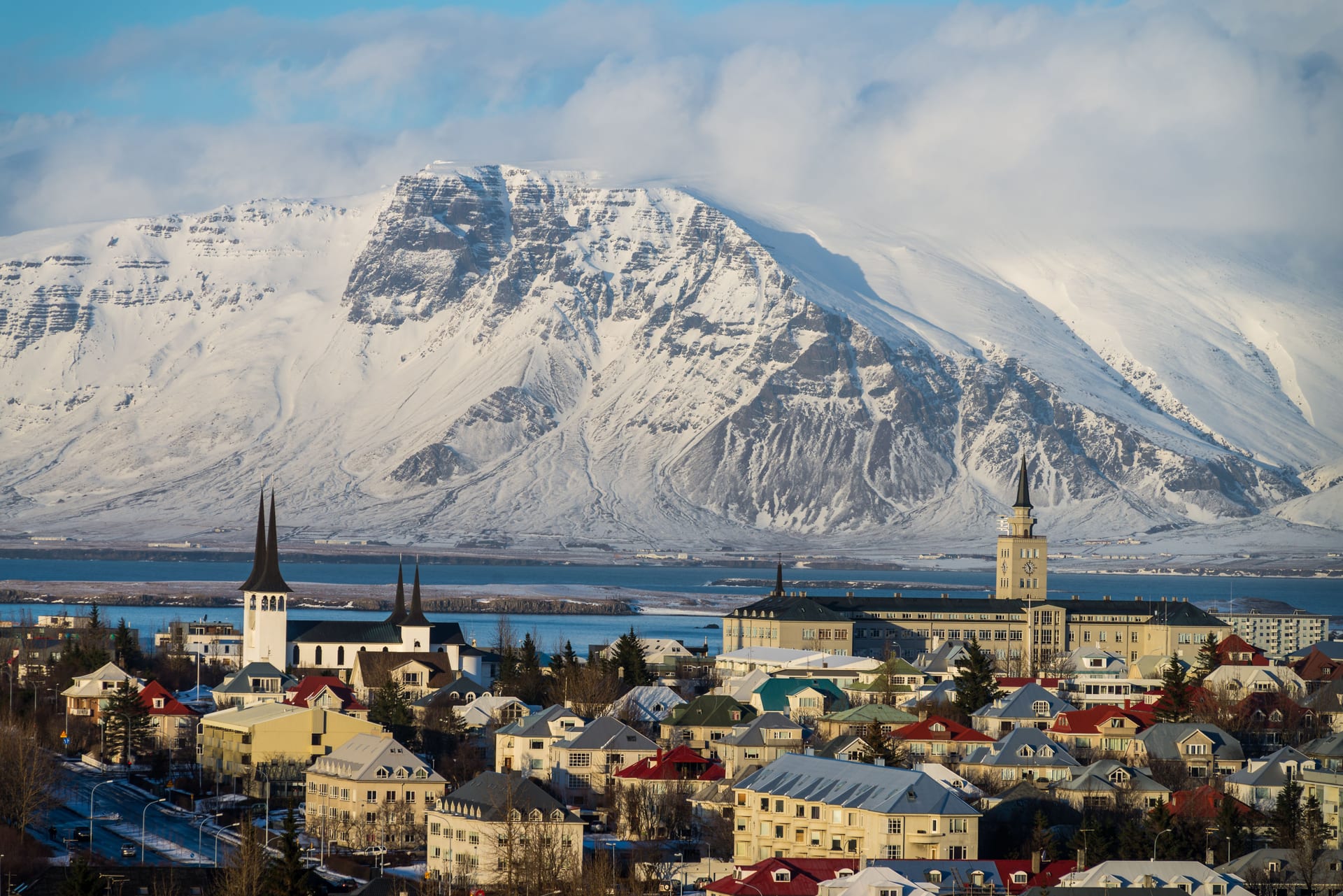
The world's northernmost capital is tiny, safe, and wrapped in some of the most dramatic landscape in Europe. It feels less like a metropolis than an overgrown town with a lava field at its edge, and life slows to match. Quieter and pricier than Oslo or Stockholm, with a fraction of their scale.
Reykjavík at a glance
Vital stats
Shown in USD: the local currency (ISK) moves too fast for stable monthly figures.
Where Reykjavík stands out
The metrics where Reykjavík sits farthest from the middle worldwide, good and bad.
Cheap to arrive, expensive to stay?
A typical one-bedroom in Reykjavík runs $2,104/mo. That is ~41% of one typical local employee’s mean net pay. This is a solo-newcomer stress test: sitting tenants, shared homes, subsidised housing and informal rents are deliberately outside the numerator.
The fastest way to test a shortlist is to go. A week on the ground tells you things no ranking can.
Partner link
Approved language-learning and international money resources for practical next steps.
Daily life in Reykjavík
How Reykjavík scores
Category by category
Affordability
54/100Reykjavík's open-market one-bedroom rent on a new lease is about $2,104 per month. That is roughly 41% of one typical employee's mean net pay, a rent burden labelled tight alone.
Climate
coldReykjavík offers almost no summer heat, but also little conventional summer. The year brings only 109 bright days and 155 rainy-grey ones. Winter darkness and high humidity are the real costs; the compensations are exceptionally clean air and virtually no muggy weather.
Nature access
leafyThis is the headline reason people come. Weekend access to wilderness is about as good as it gets, with hiking, national parks, mountains, and coastline all within easy reach of the city. Forest is the one gap, since the island has little of it. Otherwise the raw landscape is hard to match in Europe.
Urban form
small cityReykjavík is small, low-density, and spread out, far more so than Oslo or Stockholm, which makes a car the default way to get around. Neighbourhoods are pleasant and the housing tends to be roomy, but the pace is slow and the urban fabric thin. Anyone craving big-city density will feel the smallness quickly.
Public life & spaces
78/100Reykjavik is a clean little capital, fresh-aired and tidy. Its built core is small, leaning on the geothermal pools, the harbour and modest squares rather than grand plazas. The harsh reality is expense, with this being one of Europe's priciest cities, so cheap everyday enjoyment is genuinely hard to come by.
Safety
91/100Reykjavík remains exceptionally safe in daily life. Violent crime and petty theft are limited, walking at night feels comfortable, and traffic risk is unusually low. The homicide rate is about 1.3 per 100,000, yet the wider picture still supports a city where personal safety rarely dictates routine.
Healthcare
70/100Care quality is solid and dependable, with reliable emergency services and very little friction reaching the system. English is spoken in clinical settings, which eases things for newcomers. The main caveat is doctor availability, which is thinner than in Oslo or Lisbon, so waits for non-urgent care can stretch.
Family life
72/100A strong place to raise children. Child safety is unmatched, work-life balance is generous, parental leave is well supported, and kids grow up with the outdoors at the door. The weaker spots are schools, which are good rather than exceptional, and the cost and tightness of finding a family-sized home.
Career
59/100Reykjavík's labour market is narrow and specialised, so a foothold or a well-matched field matters. Unemployment is low and typical employee pay is high by the comparison-set standards, but the range of sectors is limited. English-language and remote roles exist without making the market broad.
Culture & food
76/100For its size the cultural output punches hard, especially music and the arts, where Iceland has a reputation that outstrips its population. Local creative life is distinctive and genuine. Dining, nightlife, and museums are decent but limited, closer to a large town than to Oslo or Stockholm in range.
Ease of integration
67/100Icelandic is the local language, but English goes a long way and is spoken almost everywhere, so the language wall is low. The society is open, liberal, and high-trust, which helps. The catch is scale: the international community is small and the local social world is tight-knit, so making deep local friendships can take patience.
Connectivity
56/100A split picture. Digital infrastructure is excellent, utilities are dependable, and roads rarely clog. But there is no intercity rail at all, public transport leans entirely on buses, and the flight network is modest, so getting around the country and beyond depends on driving or a single main airport.
Social values
progressiveAmong the most socially progressive places anywhere. Gender equality is essentially at the ceiling, public life is secular, and attitudes toward LGBTQ people and personal freedom are firmly liberal. Traditional conservatism is minimal. Newcomers are received warmly, on par with or ahead of the larger Nordic capitals.
Relocation ease
54/100Moving here is moderately smooth. The language barrier is low thanks to widespread English, bureaucracy is light, and admin is well digitised. Visa and work-authorisation steps are a bit stiffer than in Sweden or Portugal. The genuine pain point is finding housing, where a tight, competitive market makes the search hard.
The trade-offs
A year in Reykjavík
Jul peaks around 13°C, Jan days top out near 1°C, and the year brings roughly 109 bright days.
Can you actually move here?
The hard limits people most often bring to a move, scored against Reykjavík's data.
Moving with a pet
Bringing a pet here is one of the hardest moves on this list. Iceland enforces strict import rules with permits and a mandatory quarantine, far tougher than mainland Nordic countries, so expect months of advance planning and real cost.
Who Reykjavík works for
Answer the questionnaire and see where Reykjavík lands for you.
Take the free questionnaireWhere else to look
Reykjavík vs. comparable cities


The cities people weigh against Reykjavík
Unexpected siblings
Far from Reykjavík on the map, close across all 14 categories of daily life.
