
Living in Valletta
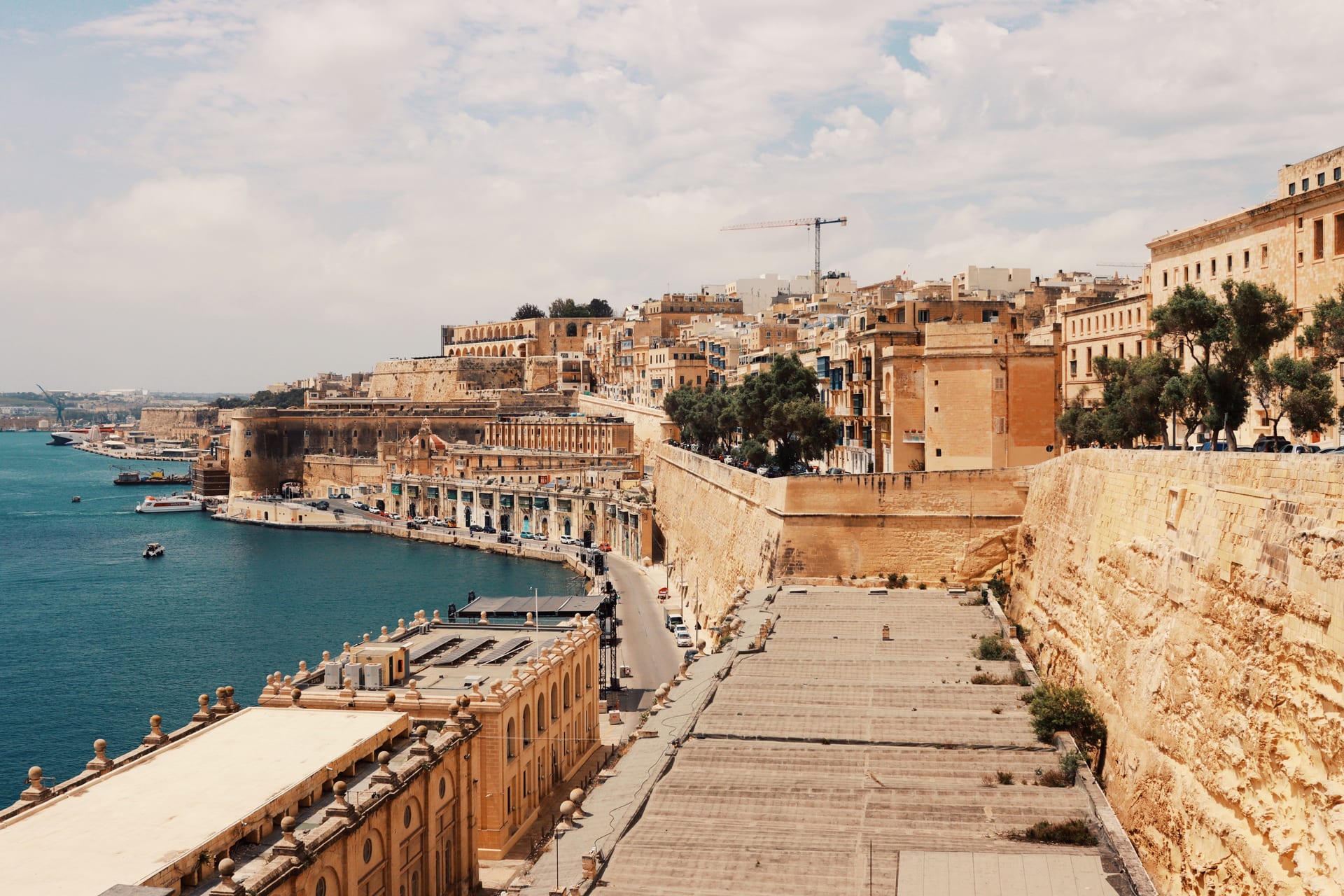
Valletta is Malta's compact baroque capital, a honey-stone peninsula wrapped by the Mediterranean and ringed by harbour towns that bleed into one another. Like the larger expat hubs of Cyprus, it pairs cheap rent and reliable sun with island limits: small, hot in summer, and short on green. English is everywhere, which softens the landing.
Valletta at a glance
Vital stats
Where Valletta stands out
The metrics where Valletta sits farthest from the middle worldwide, good and bad.
Cheap to arrive, expensive to stay?
A typical one-bedroom in Valletta runs €731/mo. That is ~37% of one typical local employee’s mean net pay. This is a solo-newcomer stress test: sitting tenants, shared homes, subsidised housing and informal rents are deliberately outside the numerator.
The fastest way to test a shortlist is to go. A week on the ground tells you things no ranking can.
Partner link
Approved language-learning and international money resources for practical next steps.
Daily life in Valletta
How Valletta scores
Category by category
Affordability
70/100Valletta's open-market one-bedroom rent on a new lease is about €731 per month. That is roughly 37% of one typical employee's mean net pay, a rent burden labelled tight alone.
Climate
mediterraneanBright skies dominate, with roughly 294 bright days and only 38 rainy-grey days. Summers are properly hot, and humidity is the main drawback, especially when the heat settles in. Winters, by contrast, are easy to live through.
Nature access
coastalThis is the weak spot. Malta has no mountains, no forests, no rivers, and Valletta itself is nearly all stone with very little parkland inside the city. What it does have is the sea, right there and excellent, with swimming and coastal walks easy to reach. Beyond the water, the options for hiking or weekend escapes into wild country are thin.
Urban form
small townValletta is tiny and dense, a walkable warren of grid streets, steps and shaded alleys where almost everything sits within a few minutes on foot. The wider conurbation around the Grand Harbour blurs town into town, so daily life often spills outside the capital proper. The pace is unhurried and human-scaled rather than metropolitan.
Public life & spaces
74/100Valletta is a restored baroque capital, its UNESCO core kept clean and the grand squares, bastions and harbour views making for handsome public space. The festas and the harbourside are free, and the streets reward wandering. But it is a small island city, and prices are steadily climbing with the tourists.
Safety
86/100Valletta feels safe day and night. Serious violence and petty crime are low, and the homicide rate is about 0.6 per 100,000. Road safety is a quiet strength, so personal security rarely shapes daily decisions.
Healthcare
68/100Malta's public system is solid and dependable, with decent hospital and doctor access for an island its size, though specialist depth is naturally more limited than on the mainland. The standout for newcomers is that care is delivered in English as a matter of course, removing a barrier that complicates many other Mediterranean moves. Out-of-pocket exposure is moderate.
Family life
59/100A safe, outdoor-friendly setting for raising children, with mild winters that keep kids outside and a strong sense of physical security. The practical frictions are real: school quality is middling, family-sized housing is hard to find and pricey, and dedicated playgrounds and green space inside the city are scarce. Childcare access and work-life rhythm are reasonable.
Career
59/100The local market is steady rather than expansive, with very low unemployment and strong access to English-language work. Remote work is a natural fit, while the smaller startup scene limits the depth of tech opportunities. Typical local pay is relatively strong for local employees.
Culture & food
72/100For a place this small, the cultural offer punches above its footprint, with a long Mediterranean food tradition, lively cafes, decent nightlife and a busy calendar of events and museums in the historic core. The local culture is strongly felt and the international community is large and easy to plug into. Variety has its island ceiling, but the everyday texture is rich.
Ease of integration
74/100Newcomers tend to find a soft landing here. Maltese is the native tongue, but English is co-official and universally spoken, so making connections and handling daily life rarely hits a language wall. A sizeable international crowd means social circles form quickly, and the city is welcoming to outsiders, though Malta's deeply Catholic, traditional grain means fully integrating with local society takes patience.
Connectivity
46/100This is where island life shows its seams. There are no trains at all, the bus network is patchy and slow, and cycling infrastructure barely exists, so getting around leans heavily on cars and the inevitable congestion. The airport keeps Valletta well connected to Europe by air. Digital connectivity is adequate without being a strength.
Social values
progressiveSocially, Malta runs more conservative than much of Southern Europe, with the Catholic Church still woven through public life and a traditional streak in everyday attitudes. That said, it has moved fast on some fronts, and LGBTQ legal protections are among the most progressive in Europe. Openness to foreigners is genuine, civic orderliness less so.
Relocation ease
63/100Settling in is eased enormously by language: with English co-official, the day-to-day barrier is effectively zero, and cultural adjustment for Westerners is gentle. The friction lives in the paperwork. Bureaucracy, banking and the housing search can be slow and frustrating, and visa or residence processes, while manageable, take persistence to navigate.
The trade-offs
A year in Valletta
Aug peaks around 28°C, Jan days top out near 15°C, and the year brings roughly 294 bright days.
Can you actually move here?
The hard limits people most often bring to a move, scored against Valletta's data.
Moving with a pet
Bringing a pet to Malta is straightforward for EU arrivals and well-defined for others, thanks to clear, predictable import rules and the country's standard microchip, rabies and documentation requirements. Plan ahead for the timing, but expect a smooth, low-stress process.
Who Valletta works for
Answer the questionnaire and see where Valletta lands for you.
Take the free questionnaireWhere else to look
Valletta vs. comparable cities


The cities people weigh against Valletta
Unexpected siblings
Far from Valletta on the map, close across all 14 categories of daily life.