Affordability
68/100Thessaloniki's open-market one-bedroom rent on a new lease is about €598 per month. That is roughly 50% of one typical employee's mean net pay, a rent burden labelled sharing likely.
Climate
mediterraneanThessaloniki has a bright, warm climate, but it comes with a sharper seasonal edge. July averages 28.9°C, and gulf humidity can make summer feel heavy. About 237 bright days help, but cool winters and regular grey spells give the year more variation than the light alone implies.
Nature access
great hikingThe pull here is what lies just beyond the city rather than inside it. Within the centre, parks and per-person green space are scarce, among the thinnest of any comparable city. But weekends open up to Mount Olympus, the Chalkidiki beaches and the hills behind town, giving easy reach to coast, forest and mountain in a single drive.
Urban form
mid-sizedA walkable, dense city built along the waterfront, where most errands happen on foot and the car stays parked more than in many Greek towns. The pace is unhurried, and neighbourhoods blend homes, shops and tavernas at street level. Apartments tend to run small, in the typical compact Greek-flat mould.
Public life & spaces
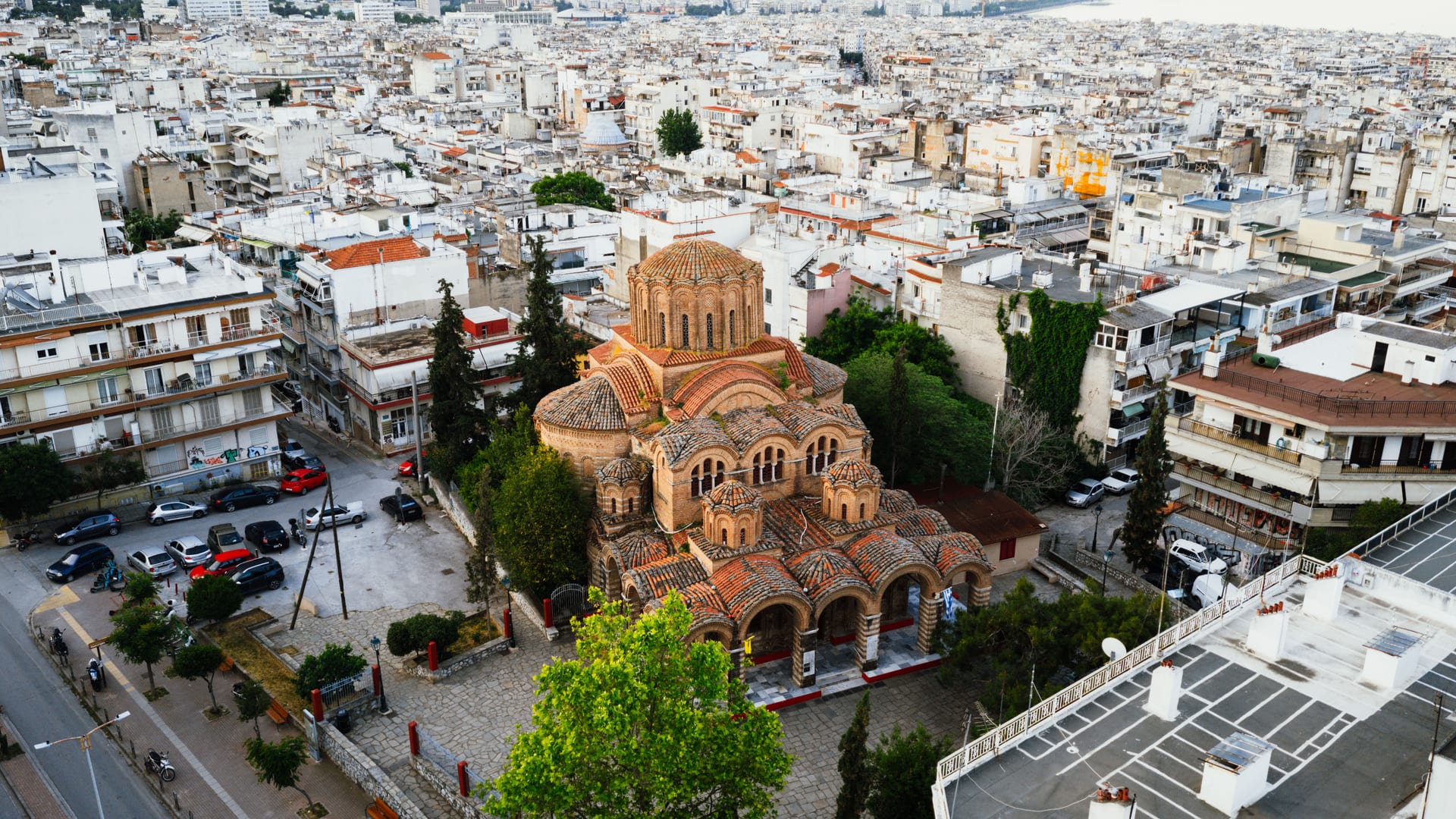
56/100Thessaloniki is a gritty Greek port — graffiti and litter are everywhere, and cared-for public space thins out fast beyond the long waterfront, Aristotelous Square and the scattered Roman ruins. What it offers is cheapness: a student city where seafront life, tavernas and festivals cost almost nothing.
Safety
64/100Violent crime is rare and the homicide rate is very low, on par with Athens and most of Western Europe, and the roads are comparatively safe. Pickpocketing and other petty theft are the more realistic concern, common enough in busy areas. Greece's broader political stability rates lower than the northern-European norm.
Healthcare
63/100Doctors are plentiful, with availability that outstrips much of Europe, and English is spoken often enough in clinics to manage. Overall hospital quality and emergency-care reliability sit in the middle of the pack, behind the standard found in Lisbon or Berlin. Many residents lean on private care to skip public-system waits.
Family life
54/100A safe, outdoor-leaning place to raise children, with the seafront, mild weather and an easygoing street life that keeps kids outside. Schools, childcare and parental-leave provisions are adequate without standing out, and dedicated playgrounds are in shorter supply than in northern European cities. Family-sized housing is at least more attainable here than in Athens or Lisbon.
Career
49/100Thessaloniki's career picture is narrow. Pay for local employees is low, and the job market, English-only roles, and professional networks are all limited. Remote work is the stronger route in, especially for people who can bring an income from elsewhere.
Culture & food
75/100Food is the headline. Thessaloniki is widely held to be Greece's best eating city, with a restaurant scene that edges out Athens, strong cafe culture and lively nightlife driven by a large student population. Museums, music and the arts are solid. The resident international community, by contrast, stays relatively small.
Ease of integration
56/100Daily life runs in Greek, and while English goes a long way in cafes, shops and with younger people, settling in rewards learning the language. Locals are warm and fairly open to outsiders, but the foreign and expat scene is modest, so newcomers tend to fold into Greek social circles rather than a ready-made international bubble.
Connectivity
47/100A mixed picture. Buses cover the city reasonably, road congestion is manageable for its size, and a long-delayed metro has finally opened. Cycling lanes are sparse, intercity rail is slow and limited, and home internet speeds lag well behind European norms, a real consideration for anyone working online.
Social values
progressiveSocially moderate, with everyday acceptance of LGBTQ people and a genuine openness to foreigners that compares well with Athens. At the same time the Orthodox Church remains woven into public life, and on secularism, civic trust and social liberalism the city reads more traditional than Lisbon or the northern-European cities.
Relocation ease
55/100As an EU city, visas and work authorisation are straightforward for Europeans, and cultural adjustment is gentle for most Westerners. The friction is administrative: Greek bureaucracy is famously slow, opening bank accounts and handling paperwork takes patience, and the rental search can be frustrating. The language barrier is moderate rather than severe.