
Living in Sliema
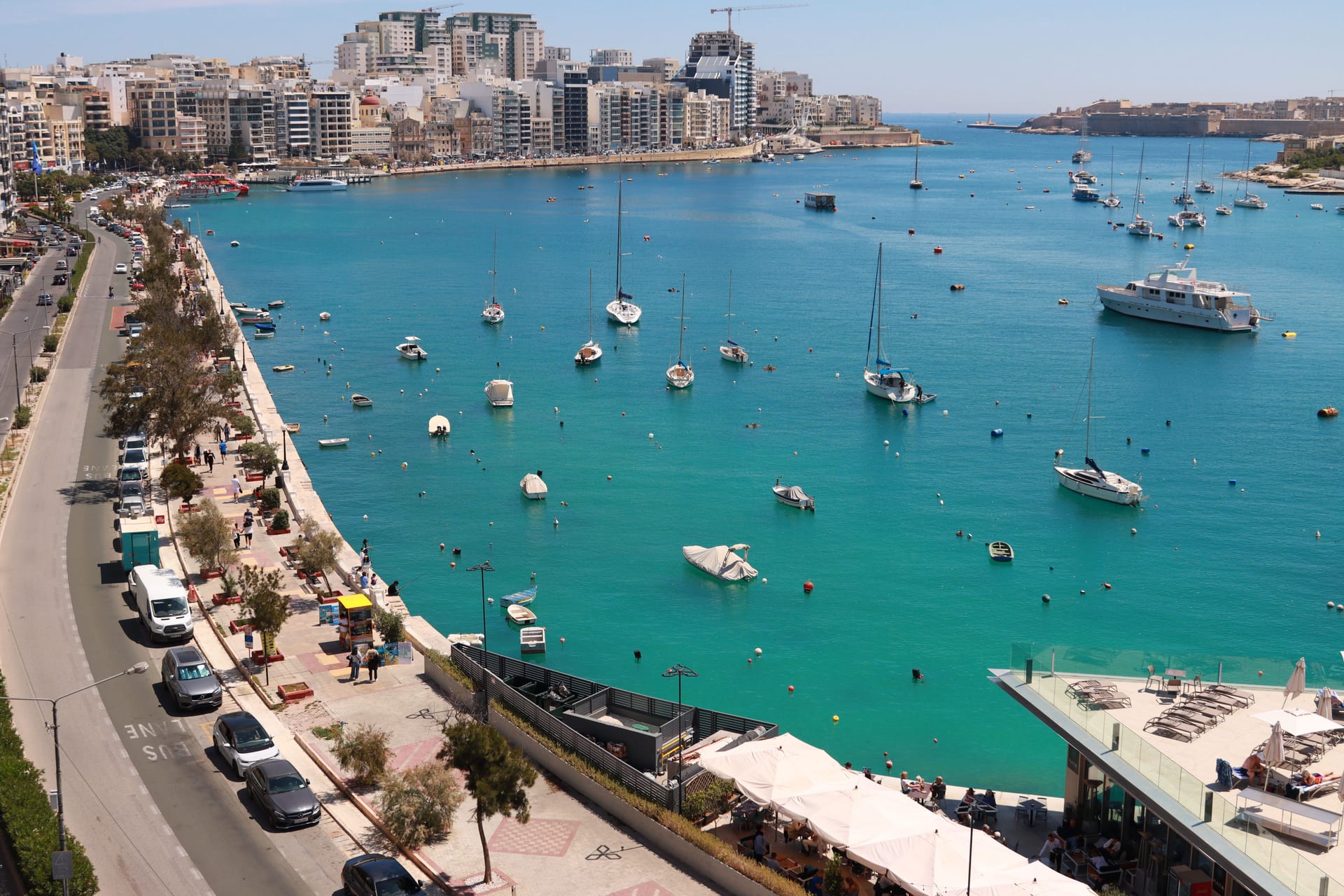
A dense seafront town on a small island, where life runs along the promenade and English is spoken almost everywhere. Sunnier and far easier to land in as a newcomer than mainland Mediterranean hubs like Athens or Lisbon, though it is also pricier and far more crowded for the space.
Sliema at a glance
Vital stats
Where Sliema stands out
The metrics where Sliema sits farthest from the middle worldwide, good and bad.
Cheap to arrive, expensive to stay?
A typical one-bedroom in Sliema runs €1,100/mo. That is ~55% of one typical local employee’s mean net pay. This is a solo-newcomer stress test: sitting tenants, shared homes, subsidised housing and informal rents are deliberately outside the numerator.
The fastest way to test a shortlist is to go. A week on the ground tells you things no ranking can.
Partner link
Approved language-learning and international money resources for practical next steps.
Daily life in Sliema
How Sliema scores
Category by category
Affordability
65/100Sliema's open-market one-bedroom rent on a new lease is about €1,100 per month. That is roughly 55% of one typical employee's mean net pay, a rent burden labelled sharing likely.
Climate
mediterraneanSliema has mild winters and bright skies for most of the year, with about 294 bright days and only 38 rainy-grey days. Summer brings the trade-off: July is hot, and humidity can make the warm season feel heavy. The climate is generous with light but less forgiving of heat.
Nature access
coastalEasy access to the sea is the one real strength, with swimming and coastline a constant. Beyond that, green is scarce. Parks are few, open space per resident is among the lowest anywhere, and there are no mountains, forests or rivers. Anyone craving hikes or proper wilderness will feel hemmed in by the island.
Urban form
small townA compact, dense town built right up to the waterfront, walkable along its main streets and mixed enough that errands stay close. Apartments tend to be tight, and the pace leans busier than sleepy Valletta. It is more crowded than mainland peers like Lisbon at a fraction of their footprint.
Public life & spaces
63/100Sliema is a dense Maltese strip where construction dust and uneven upkeep are constants, and good public space is mostly the seafront promenade hemmed in by crowded sprawl. The waterfront and the village festas cost nothing, and the sea is always there. But tourist prices keep climbing across the island.
Safety
84/100Sliema is reassuringly safe, including after dark. Serious violence and petty crime are low, and the homicide rate is about 0.6 per 100,000. Road safety is also a strength, leaving little day-to-day reason for personal security to dominate life.
Healthcare
67/100Solid public and private care with good doctor availability for its size, and emergency cover is reliable. A standout for newcomers is how widely healthcare is delivered in English, well ahead of Athens or Lisbon. Out-of-pocket exposure stays reasonable, and getting set up with cover is relatively straightforward.
Family life
56/100A double-edged setting for families. Children grow up outdoors, by the water and in the sun, which counts for a lot. But schools rate only average, playgrounds and green play space are thin, and finding roomy family housing is hard and costly. Childcare is reasonably available.
Career
58/100Sliema has a steady local market, with very low unemployment and strong access to English-language work. Remote work and professional networks widen the options, while the startup scene is smaller. For local employees, pay is a modest advantage.
Culture & food
60/100The lived culture is social and outward-facing, with strong cafe and nightlife scenes and a deeply international crowd. Restaurants are good without being a destination. Where it thins out is high culture: museums, music and the arts scene are modest, lighter than Valletta next door, let alone Athens or Berlin.
Ease of integration
78/100Breaking in is unusually easy. English is everywhere alongside Maltese, the expat community is large and welcoming, and cultural adjustment for most Western newcomers is close to frictionless. Local society stays fairly traditional and Catholic, so deeper integration with born-and-raised Maltese can take longer than the surface ease suggests.
Connectivity
44/100Connectivity is the strong point, with near-universal fast fibre and a single airport that links out reasonably well. The weak spots are local: buses are the only public transport and run patchy, there are no trains at all, and cycling is barely viable. Roads get congested for such a small place.
Social values
progressiveLiberal in parts, traditional in others. LGBTQ acceptance is high and the island is genuinely diverse and international. But public life remains visibly Catholic and less secular than Athens or Lisbon, and attitudes toward foreigners, while fine, are warmer on the mainland. A mix of openness and old habits.
Relocation ease
62/100One of the smoothest landings in Europe for an English speaker: no language barrier, easy cultural fit, and EU residence and work routes that are simpler than Germany's. The friction shows up later, in a tight and frustrating housing search, fiddly banking setup, and tax paperwork that rewards getting advice early.
The trade-offs
A year in Sliema
Aug peaks around 28°C, Jan days top out near 15°C, and the year brings roughly 294 bright days.
Can you actually move here?
The hard limits people most often bring to a move, scored against Sliema's data.
Moving with a pet
Bringing a pet is straightforward. As an EU country with standard pet-import rules, Malta is on par with Athens, Lisbon or Berlin, needing the usual microchip, rabies vaccination and paperwork rather than the long quarantines island destinations elsewhere can demand.
Who Sliema works for
Answer the questionnaire and see where Sliema lands for you.
Take the free questionnaireWhere else to look
Sliema vs. comparable cities


The cities people weigh against Sliema
Unexpected siblings
Far from Sliema on the map, close across all 14 categories of daily life.