Affordability
71/100Alicante's open-market one-bedroom rent on a new lease is about €635 per month. That is roughly 35% of one typical employee's mean net pay, a rent burden labelled manageable solo.
Climate
mediterraneanAlicante offers an easy winter and about 297 bright days, with only 31 rainy-grey days. Summer brings the catch: the warmth can feel sticky for a substantial part of the year, despite moderate humidity and clean air.
Nature access
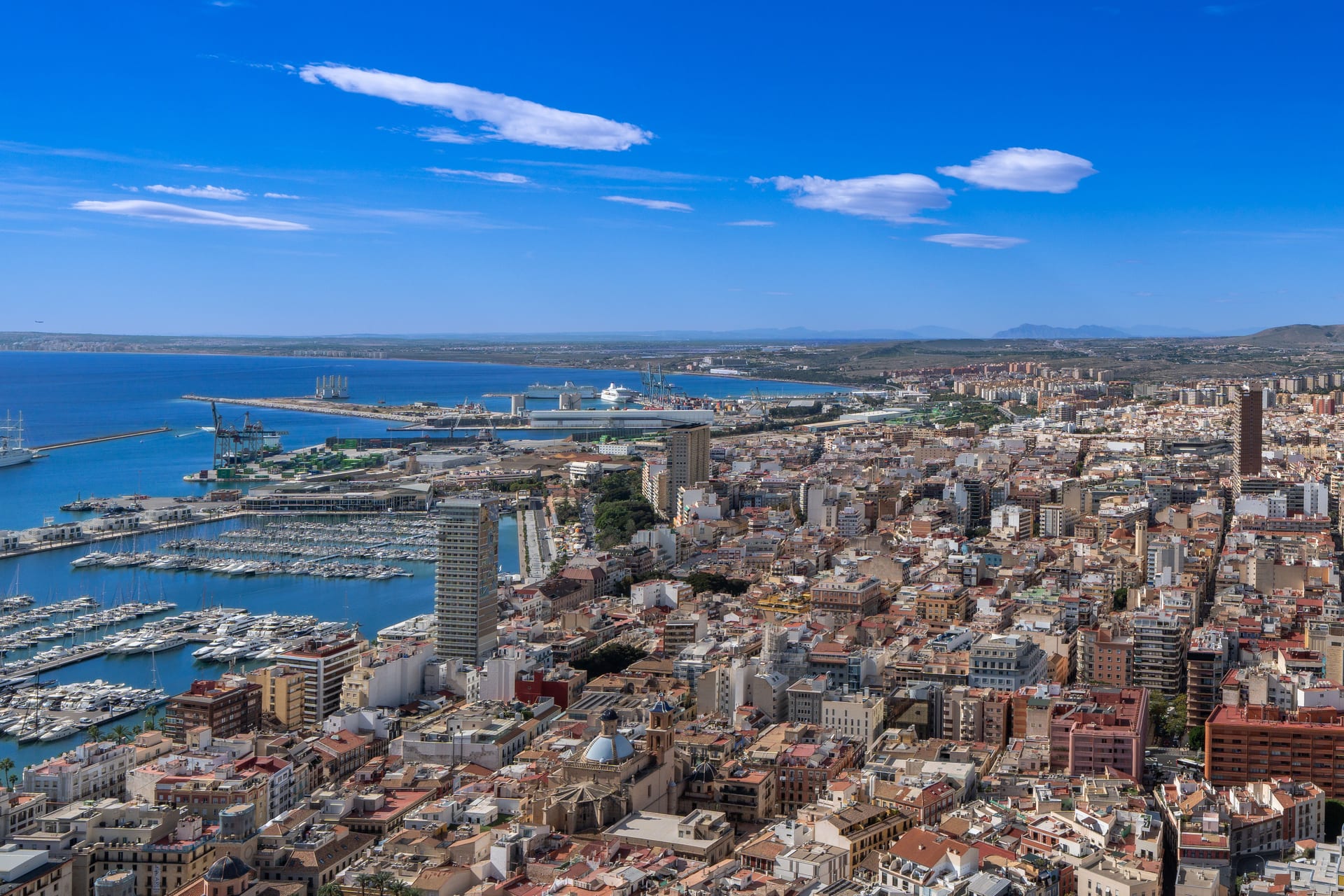
coastalThe coastline is the whole story here, with easy beach and sea access right at the city's edge. Inland it thins out fast. Public green space within the city is genuinely sparse, and mountains, forests, and serious hiking trails are modest compared with what Málaga down the coast offers. Weekend escapes are possible but take some driving.
Urban form
mid-sizedA compact, walkable city where most errands happen on foot and car-dependency stays low. It sprawls little and feels human-scaled rather than dense. The flip side is pace: Alicante is quiet, calmer even than Valencia or Málaga, which suits people who want low-key over energy and can frustrate those after a bigger-city buzz.
Public life & spaces
74/100Alicante keeps its seafront tidy and its old town well-swept, a notch cleaner than the bigger Spanish capitals. The marbled Explanada promenade, the marina and the plazas give the day a generous walkable shape. Best of all it stays cheap: beaches, fiestas and street life cost nothing, though the polish thins outside the centre.
Safety
73/100Among the safer places to land. Violent crime is rare, the homicide rate is very low, and walking around after dark feels comfortable in most areas. Roads are well managed too. The usual coastal-Spain caveat applies, petty theft and pickpocketing around tourist spots and the beach are the main thing to stay alert to.
Healthcare
71/100Solid public healthcare backed by Spain's national system, with good hospital access and reliable emergency care. English is spoken well enough in clinics that newcomers manage, helped by the large foreign population along this stretch of coast. Doctor availability and insurance paperwork are average rather than standout.
Family life
68/100An easy place to raise young kids outdoors, with warm weather, beaches, and a strong street-life culture that keeps children outside year-round. Day-to-day it feels safe and unhurried. Schools, childcare, and family-sized housing are workable but unremarkable, roughly in line with other mid-size Spanish cities rather than ahead of them.
Career
49/100Alicante is better suited to remote work than to building a local career. Typical local pay is relatively solid, but the employment market is narrow, with limited professional networks and startup activity. English-language roles exist, though remote income remains the city's clearest career advantage.
Culture & food
65/100Decent food and a likeable everyday culture, with good restaurants, plenty of cafés, and a lively enough night out, though all of it stays provincial next to Valencia or Madrid. The art, music, and museum scene is modest. What stands out for the city's size is its international community, large and easy to plug into.
Ease of integration
70/100Spanish is the language of daily life, with Valencian alongside it, but English goes a long way given the dense expat presence along the coast. Locals are open and welcoming to foreigners, and the cultural adjustment is gentle. Newcomers tend to find the social side easy, whether through Spanish neighbours or the established international crowd.
Connectivity
65/100Punches above its size on the basics. Fast internet, an airport with good links, and decent intercity trains make getting around and staying connected straightforward, and traffic rarely snarls. Public transport within the city is functional rather than extensive, and cycling infrastructure lags behind Valencia's.
Social values
progressiveSocially liberal and relaxed, in keeping with coastal Spain. The public culture is fairly secular, LGBTQ residents are well accepted, and attitudes toward gender and toward foreigners are open. It leans a touch more traditional than Valencia, but newcomers from progressive places will feel at home.
Relocation ease
57/100Spain's residence and work routes are reasonably navigable, the language barrier is low to start with given how much English circulates, and settling in culturally is one of the easier moves in Europe. The friction is administrative: Spanish bureaucracy is slow and paperwork-heavy, and finding housing in a tight rental market takes patience.