
Living in Hong Kong
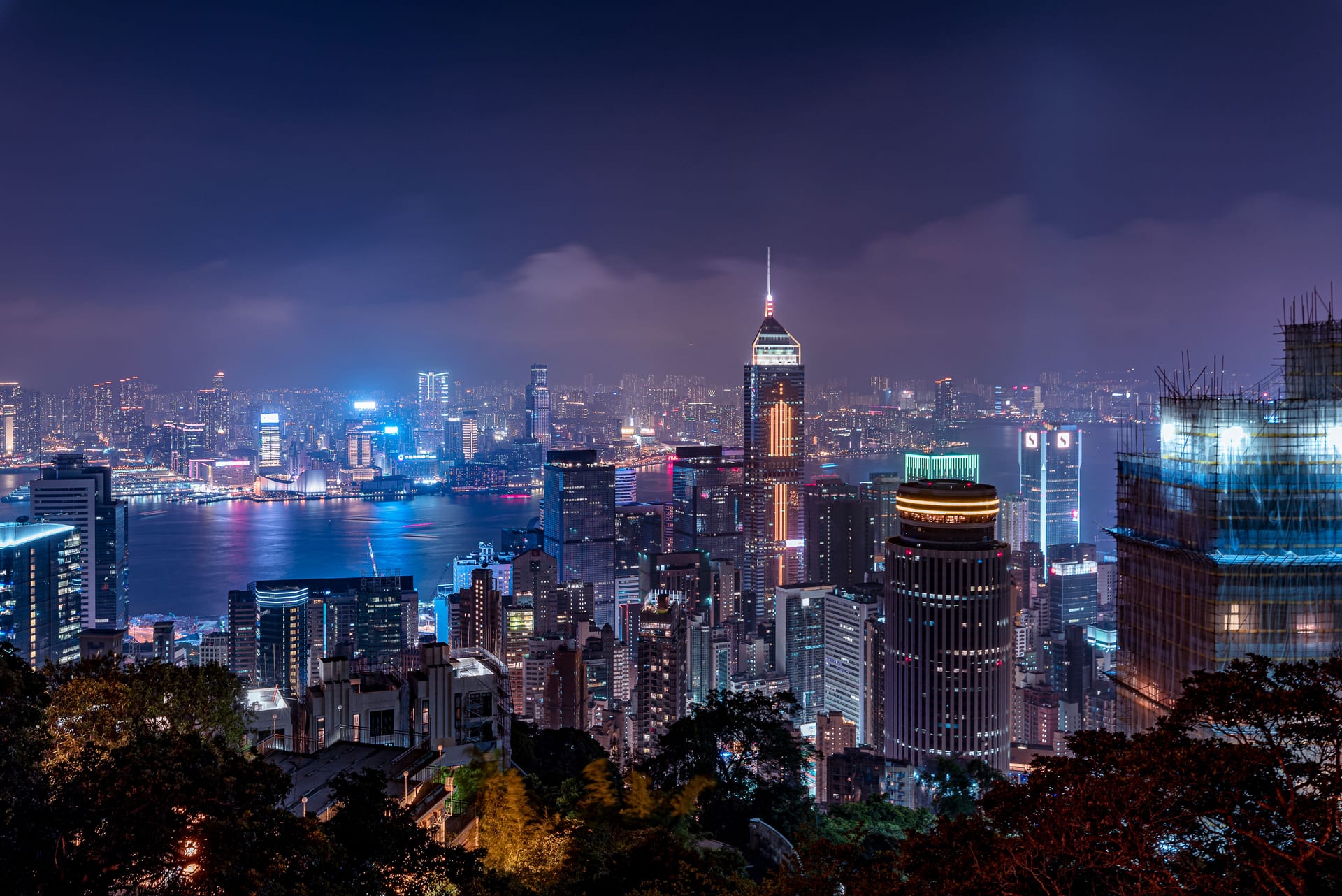
A vertical, hyper-efficient city where the financial centre runs up against forested hills and outlying islands. Like Singapore, it rewards career ambition and pays for it in space and money, but Hong Kong is louder, denser, and more chaotic, with a harder edge to daily life. Long hours are the norm.
Hong Kong at a glance
Vital stats
Where Hong Kong stands out
The metrics where Hong Kong sits farthest from the middle worldwide, good and bad.
Cheap to arrive, expensive to stay?
A typical one-bedroom in Hong Kong runs HK$13,300/mo. That is ~70% of one typical local employee’s mean net pay. This is a solo-newcomer stress test: sitting tenants, shared homes, subsidised housing and informal rents are deliberately outside the numerator.
The fastest way to test a shortlist is to go. A week on the ground tells you things no ranking can.
Partner link
Approved language-learning and international money resources for practical next steps.
Daily life in Hong Kong
How Hong Kong scores
Category by category
Affordability
62/100Hong Kong's open-market one-bedroom rent on a new lease is about HK$13,300 per month. That is roughly 70% of one typical employee's mean net pay, a rent burden labelled sharing likely.
Climate
subtropicalHong Kong has mild winters, but July averages about 29°C and high humidity makes the warm season oppressive. Clear days are limited and grey or rainy weather is common, while extreme weather can disrupt plans. Winter stays relatively bright, offering a useful counterweight to the long humid season.
Nature access
great hikingAn unexpected escape hatch sits right next to the towers. Roughly three-quarters of the territory is country park, so serious hiking trails and quiet beaches are a short ride from downtown, more accessible here than in Singapore. Inside the dense urban core, though, everyday green space is scarce and there are few rivers or lakes to speak of.
Urban form
megacityAbout as dense and vertical as cities get, built upward because there is nowhere else to go. Flats are famously cramped, the smallest among major hubs. The payoff is exceptional walkability and a near-total freedom from needing a car, with shops, offices, and homes stacked together. The pace is relentless, just shy of Tokyo's intensity.
Public life & spaces
74/100Hong Kong is generally clean, if some older districts stay grimy and the whole city feels cramped and vertical. The harbourfront promenades are its great shared asset, but proper squares are scarce. Daily life is expensive here; the free harbour walks and street markets are the real bargains.
Safety
87/100Among the safest big cities anywhere. Violent crime is rare, streets feel secure late at night, and traffic is well managed. Day-to-day, residents move around with little worry. The one softer spot is political stability, which sits below regional peers like Singapore and reflects a more uncertain governance climate.
Healthcare
72/100Clinical quality is high and emergency care is dependable, with a public system that delivers strong outcomes and private hospitals for those who pay. English is widely usable in medical settings. The strain shows in capacity: doctors are thin on the ground relative to the population, so public-sector waits can be long.
Family life
48/100Schools are a genuine strength, with strong local and international options, and children are safe. The hard part is everything around that. Family-sized flats are scarce and brutally expensive, childcare support is limited, and the work culture leaves parents little time, with some of the longest hours of any major city.
Career
83/100Hong Kong's local market is one of its clearest strengths, with very low unemployment, strong English-language access and dense professional networks. Local pay is above the corpus midpoint, but remote work is less central, so the strongest route is a locally based career rather than a fully location-independent one.
Culture & food
85/100The food alone justifies the move. Dim sum, street stalls, and a Michelin-heavy fine-dining scene make this one of the best eating cities on earth, level with Tokyo. Nightlife is strong, the arts scene has grown, and a large international community mixes with a distinct local culture that outshines Singapore's more managed feel.
Ease of integration
67/100Cantonese is the language of daily life, with Mandarin and widely-spoken English easing the way for newcomers, so getting by is far simpler than the dialect suggests. Locals are courteous more than effusive, and the long-hours culture leaves thin margins for socialising. The expat scene is large and well-established, which is where many arrivals find their footing first.
Connectivity
69/100Close to flawless on the systems that matter. The metro is world-class, the airport is a global hub, and power and utilities simply never fail. Internet is fast and government services are largely digitised. The clear gap is cycling, which barely exists as a way to get around given the terrain and density.
Social values
mixedCosmopolitan and outward-looking by regional standards, more socially open than Singapore or the Gulf, yet still fairly traditional on the whole. Gender equality and diversity are reasonably strong. Social liberalism and LGBTQ acceptance are moderate, ahead of much of Asia but well short of Western European norms.
Relocation ease
53/100Mechanically, one of the smoother landings in Asia. Bureaucracy is light, banking and taxes are simple, and the low language barrier helps enormously. Visa and work-authorisation hurdles are middling. The real friction is finding somewhere to live: the housing hunt is fierce and fast-moving, and adjusting to the sheer pace takes time.
The trade-offs
A year in Hong Kong
Jul peaks around 31°C, Jan days top out near 19°C, and the year brings roughly 168 bright days.
Can you actually move here?
The hard limits people most often bring to a move, scored against Hong Kong's data.
Moving with a pet
Bringing a pet is moderately involved. Hong Kong runs a tiered import system with permits, vaccinations, and sometimes quarantine depending on origin country, so it is more demanding than Singapore but manageable with advance planning.
Who Hong Kong works for
Answer the questionnaire and see where Hong Kong lands for you.
Take the free questionnaireWhere else to look
Hong Kong vs. comparable cities


The cities people weigh against Hong Kong
Unexpected siblings
Far from Hong Kong on the map, close across all 14 categories of daily life.
