
Living in Phnom Penh
Cambodia's riverside capital runs cheaper and calmer than Bangkok, the regional hub most newcomers measure it against. Daily life is easy on a foreign budget and light on paperwork, but the trade-off shows up in patchy infrastructure, thin healthcare, and a job market that gives little to those who need local income.
Phnom Penh at a glance
Vital stats
Shown in USD: the local currency (KHR) moves too fast for stable monthly figures.
Where Phnom Penh stands out
The metrics where Phnom Penh sits farthest from the middle worldwide, good and bad.
Cheap to arrive, expensive to stay?
A typical one-bedroom in Phnom Penh runs $271/mo. That is ~99% of one typical local employee’s mean net pay. This is a solo-newcomer stress test: sitting tenants, shared homes, subsidised housing and informal rents are deliberately outside the numerator.
The fastest way to test a shortlist is to go. A week on the ground tells you things no ranking can.
Partner link
Approved language-learning and international money resources for practical next steps.
Daily life in Phnom Penh
How Phnom Penh scores
Category by category
Affordability
74/100Phnom Penh's open-market one-bedroom rent on a new lease is about $271 per month. That is roughly 99% of one typical employee's mean net pay, a rent burden labelled solo unlikely.
Climate
tropicalThe climate is hot all year, with January and July both near 28°C and no meaningful cool season. The wet season brings roughly 166 rainy-grey days, while near-constant humidity makes heat hard to escape. Air quality is mixed rather than pristine.
Nature access
urbanGreenery is in short supply inside the city, with few parks and little public green space per resident. There is no coastline at hand and no real hills or trails close by, so outdoor escapes mean planning a trip out. The Mekong and Tonle Sap rivers give the place its character, but day to day nature access is limited.
Urban form
large cityA compact, low-rise capital that feels small and unhurried compared with sprawling Bangkok or Manila. Pace is gentle, but the streets are built around motorbikes and cars rather than walking, so getting around on foot is awkward and neighbourhoods vary a lot in quality. Suburban living is underdeveloped.
Public life & spaces
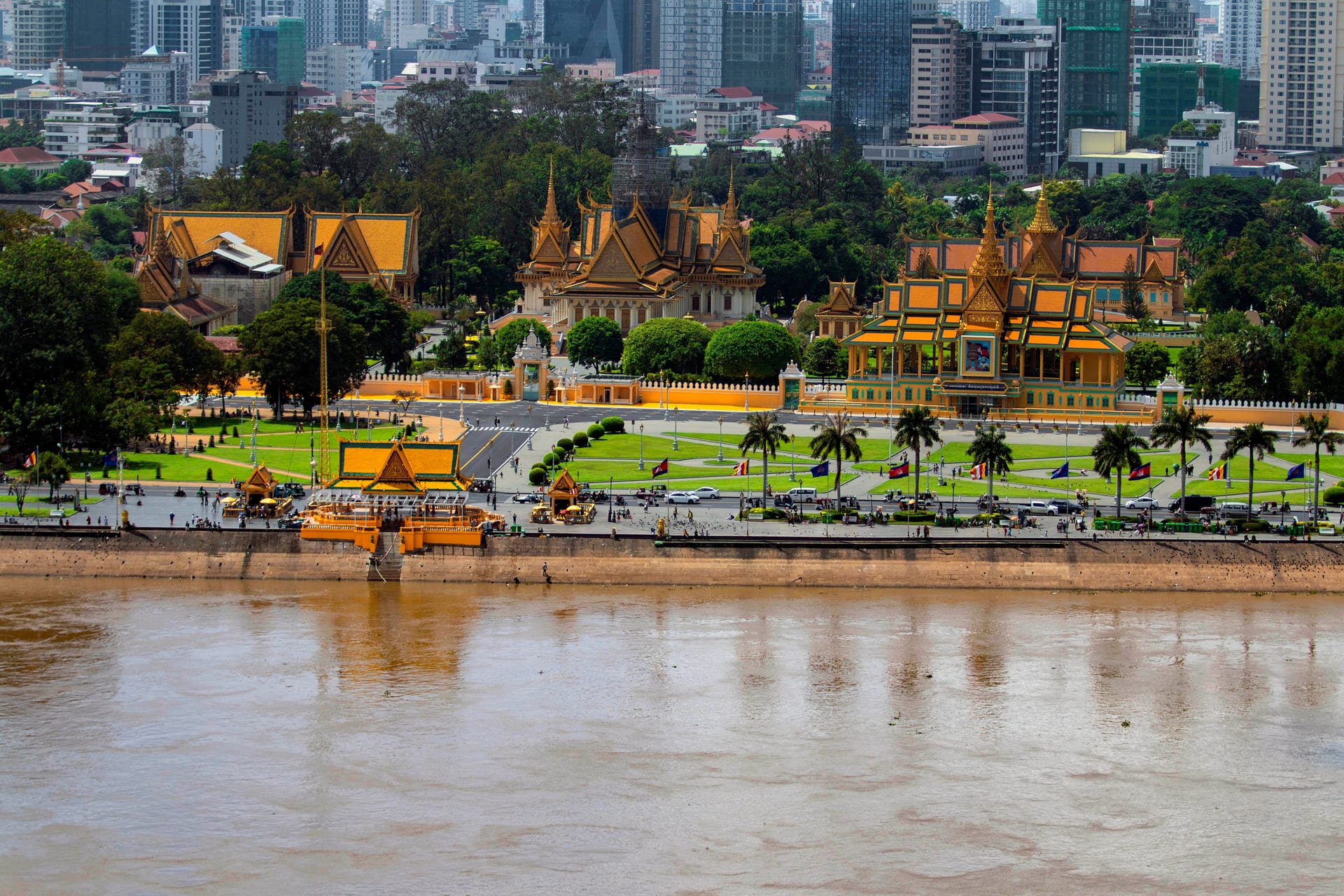
33/100Phnom Penh is dusty and littered, its waste systems weak and traffic disorderly, with cared-for space largely confined to the riverside promenade by the Tonle Sap. Living is very cheap and the markets and waterfront give it free, lived-in life. But built public squares and proper facilities remain sparse beyond that strip.
Safety
55/100Serious violent crime is rare, and the homicide picture is reassuringly low for the region. The everyday concerns are different: bag-snatching and opportunistic theft are common enough to stay alert about, and the traffic is genuinely dangerous, with road safety among the weaker points of living here. Walking around at night calls for ordinary caution.
Healthcare
32/100Local healthcare is the real weak spot. Hospital quality, specialist depth, and the sheer number of doctors all fall short, and emergency care is not something to lean on. Many residents fly to Bangkok or Singapore for anything serious. English-speaking care exists at private clinics, but insurance and out-of-pocket costs need careful planning.
Family life
28/100Childcare is plentiful and cheap, and family-sized housing is far easier to afford than in pricier Asian hubs. Beyond that the picture thins out: schools are limited outside a handful of international options, playgrounds and parks are scarce, and parental support structures are minimal. It can work for families who lean on private services and outside resources.
Career
51/100Conventional local careers are difficult to build in Phnom Penh. The market and industry base are shallow, professional networks are limited, and the technology scene is small. Local pay is low by the wider benchmark, so remote income offers the strongest work case, with some English-language openings.
Culture & food
62/100The food and cafe culture punch above the city's size, with a strong local identity and a growing restaurant scene, even if it stays a step behind Bangkok. There is a sizeable international community and a real expat foothold here. Museums, music, and the wider arts scene are more modest, fine for casual interest rather than depth.
Ease of integration
63/100Khmer is the everyday language, with English fairly common in expat-facing life, so getting by is manageable while genuine local connection takes effort to build. Cambodians are notably welcoming to foreigners, and the established international community makes a soft landing realistic. Integrating beyond that circle is slower, given the language gap and a fairly traditional social fabric.
Connectivity
26/100This is where daily friction bites. Public transport is barely there, cycling infrastructure is minimal, and there are no useful intercity trains, so a motorbike or car becomes close to essential. Internet speeds lag the region, and utilities can be unreliable. The airport offers decent regional connections, and traffic, while messy, is lighter than Bangkok's.
Social values
mixedSocially the city sits in the middle of the road, leaning traditional in a quietly Buddhist way. Attitudes toward gender, LGBTQ life, and personal freedom are broadly tolerant in practice without being progressive, roughly in line with neighbouring capitals. Openness to foreigners is a clear strength; civic trust and public orderliness are weaker.
Relocation ease
47/100Among the easiest places in Asia to actually move to. Visas are straightforward and cheap to obtain, and finding a place to live is refreshingly low-hassle compared with Bangkok or Tokyo. Banking and admin can be clunky, and the language barrier is real outside expat circles, but the overall friction of setting up is low.
The trade-offs
A year in Phnom Penh
Apr peaks around 36°C, Dec days top out near 31°C, and the year brings roughly 129 bright days.
Can you actually move here?
The hard limits people most often bring to a move, scored against Phnom Penh's data.
Moving with a pet
Bringing a pet here is relatively straightforward, easier than into Bangkok or Manila and lighter on red tape than many Western destinations. Expect basic vaccination and paperwork requirements rather than long quarantine, though confirming current rules and lining up a vet ahead of time is wise.
Who Phnom Penh works for
Answer the questionnaire and see where Phnom Penh lands for you.
Take the free questionnaireWhere else to look
Phnom Penh vs. comparable cities


Objective scores (0–100) for Phnom Penh and its 4 nearest comparable cities.
The cities people weigh against Phnom Penh
Unexpected siblings
Far from Phnom Penh on the map, close across all 14 categories of daily life.
