Affordability
77/100Bangkok's open-market one-bedroom rent on a new lease is about $433 per month. That is roughly 66% of one typical employee's mean net pay, a rent burden labelled sharing likely.
Climate
tropicalBangkok is hot year-round, with average temperatures around 26°C in January and 30°C in July. Humidity makes it muggy almost every day, while clear and dry days are less common than in many cities. There is little seasonal darkness, but air quality is a meaningful trade-off.
Nature access
urbanGreenery is the weak spot. Green space per resident is scarce, parks are limited, and there is little in the way of hills, forests or hiking close by. Coastlines and weekend escapes are reachable, so the country's beaches and islands offset some of what the city itself lacks.
Urban form
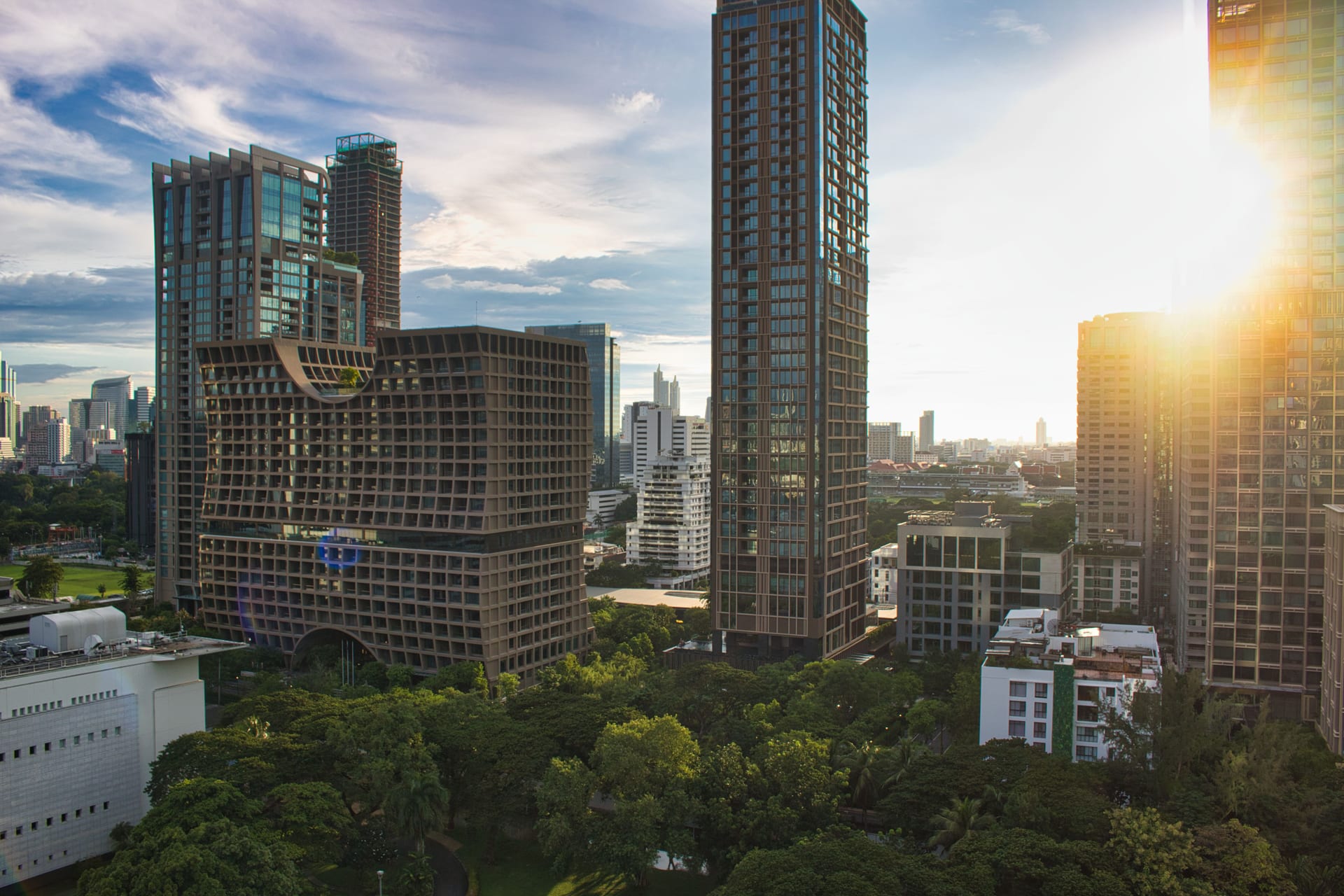
megacityA vast, dense megacity that sprawls rather than rewards walking. Pavements are patchy, distances are long, and getting around on foot is rarely pleasant. Some districts have a workable mix of homes, shops and life on the street, but the overall fabric leans toward scale and congestion over human-sized neighbourhoods.
Public life & spaces
37/100Bangkok is hot, humid and grimy, its sidewalks broken and its shared space surrendered to malls and traffic, with only riverside patches by the Chao Phraya offering respite. But street life is gloriously cheap and everywhere: temples, the Chatuchak market, food stalls and festivals that cost next to nothing. Polished plazas, though, are scarce.
Safety
58/100Violent crime is low and the homicide rate is among the reassuring numbers here, so day-to-day personal safety is solid. Petty theft and night-time wariness are about average. The bigger caveats are road safety, which is genuinely poor, and a history of political instability that flares up periodically.
Healthcare
61/100Private hospitals are well regarded and many cater to international patients in English, which is a real draw across the region. Hospital access and emergency care are reasonable. The pressure point is the thin supply of doctors per resident, so the system leans heavily on private care and the insurance that comes with it.
Family life
43/100A middle-of-the-road place to raise children. Childcare is available and affordable, and the city is reasonably safe for kids, but schools, family housing and outdoor space for children are all only fair. Long working hours and limited parental-leave norms shape what family life looks like.
Career
63/100Bangkok's local market has one clear strength: unemployment is very low. English-language roles are limited, professional networks are modest, and local pay is low. Remote work is a better fit than relying on a deep local career ladder, while the broader market remains fairly ordinary.
Culture & food
68/100Food is the headline. The street stalls and restaurants are world-class and cheap, the cafe and nightlife scenes run deep, and local culture is loud and ever-present. A large international community makes settling in easier, with the main friction being the language rather than the social life.
Ease of integration
67/100Thai is the everyday language and the barrier is real, since English only goes so far outside expat and tourist circles. That said, the city is fairly open to foreigners and carries a long-established international crowd, so building a social life among other newcomers tends to be quick even while integrating into Thai networks takes patience and language effort.
Connectivity
40/100The airport connectivity is excellent, making the rest of the world easy to reach. Inside the city, the picture is mixed: the metro and skytrain cover only part of a huge area, congestion is heavy, and cycling is an afterthought. Digital connectivity is solid, but bureaucracy remains stubbornly paper-bound.
Social values
progressiveSocially the city sits in a moderate, fairly relaxed middle. It is reasonably open to foreigners and notably tolerant on LGBTQ life by regional standards. Civic orderliness and trust in institutions run lower, and the public culture blends openness with a strong streak of tradition.
Relocation ease
52/100Practical setup is mixed. Finding housing is relatively easy and the long-stay visa routes are more manageable than many newcomers expect, but work authorization, banking and general bureaucracy can grind. The language gap is the steepest part of the adjustment, even if the culture itself is welcoming.