
Living in Nassau
Nassau is a small, low-rise capital strung along turquoise water, where life runs at an easy island tempo and almost everything happens by car. The famous draw is fiscal: like few places in the Caribbean, the Bahamas levies no income tax, which pulls in a steady international crowd. Day to day, though, it costs more than mainland Latin American capitals like Panama City, and the conveniences of a bigger city are thin.
Nassau at a glance
Vital stats
Shown in USD: the local currency (BSD) moves too fast for stable monthly figures.
Where Nassau stands out
The metrics where Nassau sits farthest from the middle worldwide, good and bad.
Cheap to arrive, expensive to stay?
A typical one-bedroom in Nassau runs $969/mo. That is ~50% of one typical local employee’s mean net pay. This is a solo-newcomer stress test: sitting tenants, shared homes, subsidised housing and informal rents are deliberately outside the numerator.
The fastest way to test a shortlist is to go. A week on the ground tells you things no ranking can.
Partner link
Approved language-learning and international money resources for practical next steps.
Daily life in Nassau
How Nassau scores
Category by category
Affordability
70/100Nassau's open-market one-bedroom rent on a new lease is about $969 per month. That is roughly 50% of one typical employee's mean net pay, a rent burden labelled sharing likely.
Climate
tropicalNassau has an easy winter climate, with January averaging about 23°C and little seasonal darkness. Summer is the harder season: humidity and near year-round mugginess make the heat cling, while bright, dry days number about 182 a year. The main downside is storm risk, which deserves practical preparation.
Nature access
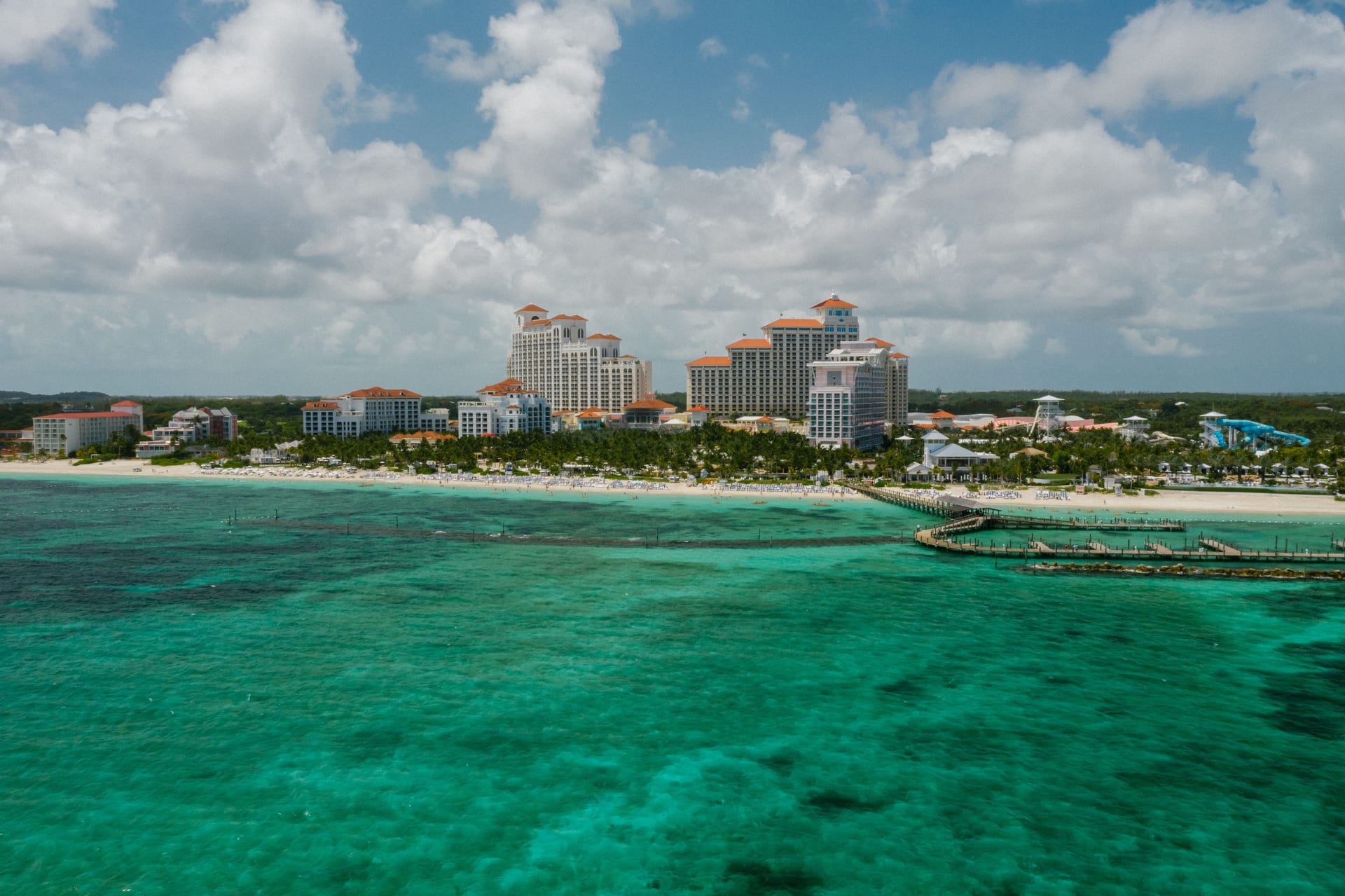
coastalThis is an ocean town first and last. Beach and water access is as good as it gets, with weekend boating and reef trips part of ordinary life. What is missing is everything inland: no mountains, little forest, few proper parks, and modest green space within the city. People who measure nature by hiking trails and woodland will feel the gap, while anyone drawn to the sea is spoiled.
Urban form
small cityNassau is a small capital that sprawls rather than rises, far less dense than Panama City or any major mainland metro. The pace is calm and unhurried. The trade-off is heavy car dependency: walkability is poor, neighbourhoods are spread out, and getting around on foot is rarely practical. It feels more like a large town than a city.
Public life & spaces
41/100Nassau's cruise-port strip is kept presentable, but step past it and the upkeep frays into litter and wear. There is little real public square life, just a tourist core built around the dock. The beaches are gorgeous yet often pay-gated, and the island runs expensive, with little that is genuinely free.
Safety
55/100Safety is a real weak spot. The homicide rate runs high by regional standards, above Panama City and Mexico City, and residents tend to be cautious about where and when they move around at night. Petty and violent crime are both present. On the positive side, the country is politically stable, which gives daily life a steadier backdrop than the crime figures alone suggest.
Healthcare
50/100Care is serviceable for routine needs and everything operates in English, which removes a major source of stress for newcomers. Beyond the basics it thins out: doctor availability is limited, out-of-pocket costs can bite, and for serious or specialist treatment many residents travel to the United States. Treat it as adequate for the everyday, not for the complex.
Family life
42/100Families face a mixed picture. The outdoor, water-centred childhood is a genuine plus, and the work-life rhythm is gentler than in busier capitals. But schools are middling, childcare is limited, family-sized housing is expensive relative to incomes, and child safety scores below the regional pack. Parental leave support is thin compared with what Europe offers.
Career
46/100English removes the main language barrier in Nassau, but the local market remains narrow. Pay is close to the middle of the wider city comparison, but slightly below its midpoint, while unemployment is high and industry depth is limited, with the startup and technology scene especially thin. Remote work is reasonably workable, so the city suits portable income better than a broad local career search.
Culture & food
57/100Culture here is relaxed and outward-facing rather than deep. Restaurants, nightlife and a visible international crowd give it some texture, and conch shacks and a distinct Bahamian rhythm carry real local flavour. Museums, the arts and the wider creative scene are modest next to a Mexico City, and vegetarian or vegan eaters will find fewer options than they would on the mainland.
Ease of integration
67/100English is the first language, so newcomers connect without a language wall, and the culture is broadly welcoming to outsiders. An established international community makes it easy to find familiar footing. The flip side is a socially conservative society, so the warmth comes with traditional norms that some arrivals will need to read carefully before settling in.
Connectivity
29/100Infrastructure is the daily friction. There is no real public transport network to speak of, no intercity rail, and cycling provision is almost nonexistent, so a car is close to mandatory. Internet speeds lag the region. The airport is well connected for an island this size, which matters when so much travel and shopping happens off-island.
Social values
traditionalSocially, Nassau leans traditional and religious, with public life shaped by churchgoing and conservative norms. It is friendly to foreign residents and reasonably diverse, but markedly less liberal than Mexico City or any European capital. LGBTQ acceptance is limited, and progressive social attitudes are not the default, which is worth weighing for anyone for whom that is central.
Relocation ease
61/100For an island, the move in is relatively smooth. There is no language barrier, taxes are simple, and the cultural adjustment is gentle for English speakers. Visa routes are workable, especially for those with means. The catches are practical: securing the right to work locally is harder, and banking and everyday admin can be slow and paperwork-heavy.
The trade-offs
A year in Nassau
Jul peaks around 29°C, Jan days top out near 24°C, and the year brings roughly 182 bright days.
Can you actually move here?
The hard limits people most often bring to a move, scored against Nassau's data.
Moving with a pet
Bringing a pet is moderately manageable. The Bahamas requires an import permit and the usual vaccination and health paperwork arranged ahead of time, so it takes planning, but the process is more straightforward than the strictest island regimes and well within reach with some lead time.
Who Nassau works for
Answer the questionnaire and see where Nassau lands for you.
Take the free questionnaireWhere else to look
Nassau vs. comparable cities


Objective scores (0–100) for Nassau and its 4 nearest comparable cities.
The cities people weigh against Nassau
Unexpected siblings
Far from Nassau on the map, close across all 14 categories of daily life.

