Affordability
68/100Nicosia's open-market one-bedroom rent on a new lease is about €969 per month. That is roughly 48% of one typical employee's mean net pay, a rent burden labelled tight alone.
Climate
mediterraneanBright days are abundant in Nicosia, with roughly 298 a year. Winters are mild, but the inland summer is a serious trade-off: July averages 30.2°C, and muggy conditions recur through a substantial part of the year. The heat is the price of such a reliably bright climate.
Nature access
urbanThis is a landlocked capital, so the sea is a drive away rather than a walk, and green space inside the city is thin on the ground. The Troodos mountains give weekenders something real, with hiking and forest within reach, but rivers and lakes barely feature. For day-to-day nature on the doorstep, it lags the coastal cities most newcomers would compare it to.
Urban form
small cityNicosia's metro population is about 108,000, so it feels like a small capital rather than a large urban region. The layout is spread out, with moderate walkability and high car dependence. Homes offer reasonable space, but everyday errands rarely knit together into a dense urban rhythm.
Public life & spaces
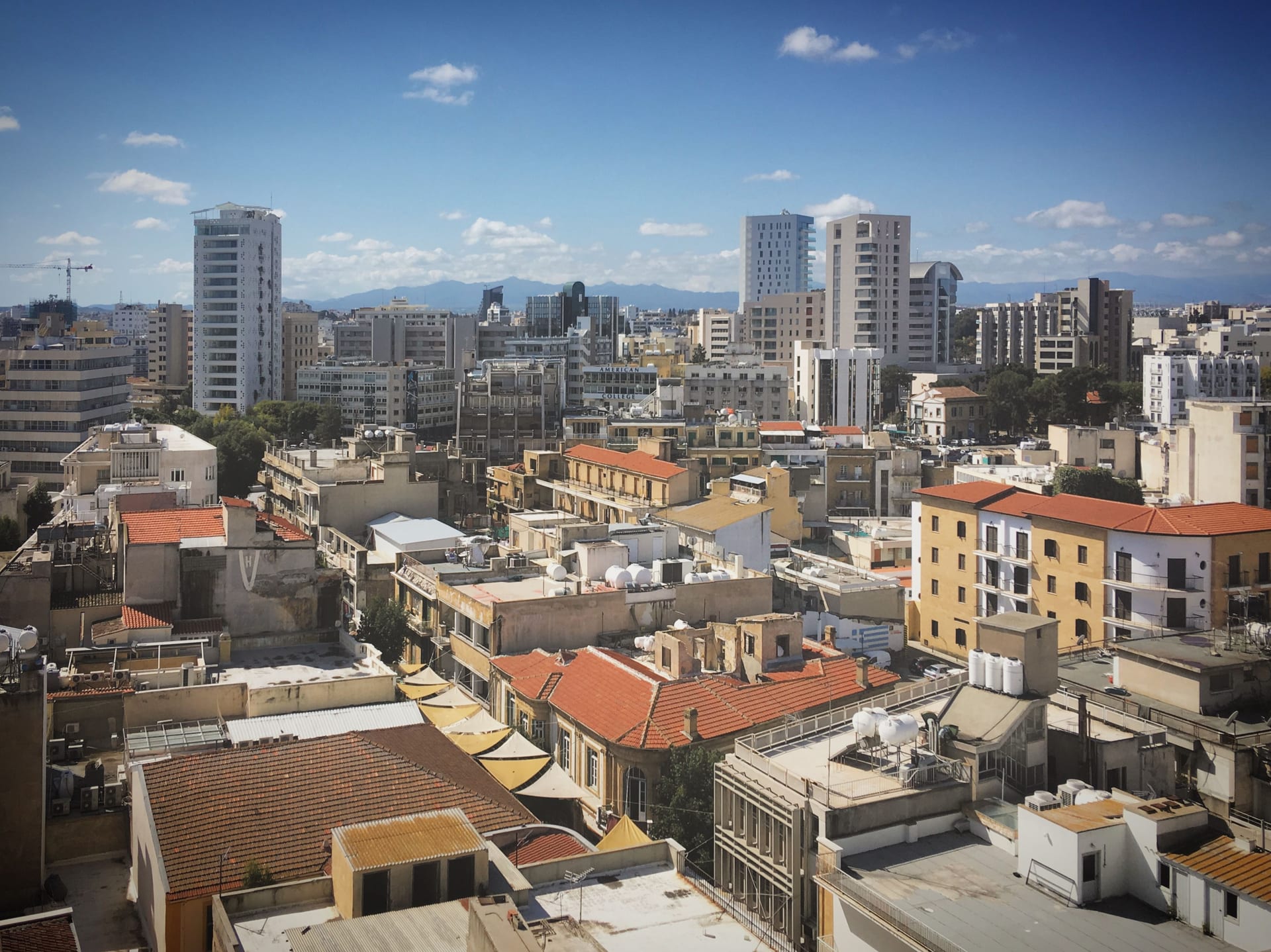
52/100Nicosia is a divided capital with mixed upkeep, the buffer zone and edges visibly worn. Its walled old centre and squares give some built public space, though the inland city leans on cars. Prices stay moderate and there's free heritage and street life to enjoy, but the shared realm feels patchier than the coast's.
Safety
80/100Among the safer capitals anywhere, with very little violent crime and a strong sense of ease walking around after dark. Petty crime stays low by Mediterranean standards, better than Athens or Málaga, and the roads are calmer than the regional norm. Day to day, personal safety is one of the city's quiet strengths.
Healthcare
64/100Care is solid if not exceptional, broadly on a par with Lisbon and ahead of older Athens public provision, though it trails the depth you would find in Málaga or Berlin. Doctor numbers per head run thin. The standout is how easily medical care happens in English, which removes a stressful barrier most newcomers worry about.
Family life
60/100A safe, outdoor childhood comes naturally here, with kids able to spend real time outside and low everyday risk. Schools are the soft spot, weaker on paper than in Athens or Berlin, though the international and private options many relocating families use lift the real picture considerably.
Career
60/100Nicosia's local market is small, but it has a useful advantage for international workers. English-language and remote roles are comparatively accessible, while typical local pay is relatively strong for local employees. The limitation is depth: industry breadth, professional networks, and startup opportunities remain modest, so local job-hunting can feel narrow.
Culture & food
65/100Cypriot food and a strong, distinct local culture anchor daily life, and there is a real international crowd for a city this size, comparable to Málaga. Cafés and tavernas are easy to fall into. Where it thins out is the live scene: nightlife and the music and art offer all run quieter than in Athens or Lisbon, and the city is no cultural capital.
Ease of integration
63/100Greek is the everyday language, but English goes a long way and the language barrier is among the lowest in the region, so newcomers settle in quickly. Cultural adjustment is gentle and locals are fairly welcoming to foreigners. The social texture leans traditional and somewhat conservative, so building deeper local ties can take patience for those used to more liberal, anonymous big cities.
Connectivity
31/100This is the weak link. There is no rail network at all, public transport is sparse, and cycling provision barely exists, so getting around really means driving. Traffic at least stays light and roads flow. Digital and administrative systems lag the better-run cities in the region, so expect some friction with anything official.
Social values
mixedSocially, Nicosia sits on the conservative end of the European spectrum, with public life shaped by the Orthodox Church and slower-moving attitudes on liberal and LGBTQ matters than Athens, Lisbon, or Málaga. Openness to foreigners is reasonably warm and the international mix helps. People who prize a secular, progressive public culture should weigh this carefully.
Relocation ease
59/100Moving here is comparatively smooth. The low language barrier and gentle cultural adjustment make the landing easy, visas and work authorization are manageable, and the light, simple tax setup is a recognised draw. The grind shows up in the everyday admin: finding housing and dealing with banks takes more patience than in the slicker cities nearby.