
Living in Santo Domingo
Santo Domingo stays hot and humid through the year, with little seasonal darkness but relatively few bright, dry days. Local pay is low by the wider city comparison, and the career market is limited, so a move works better with portable income or a clear local plan.
Santo Domingo at a glance
Vital stats
Shown in USD: the local currency (DOP) moves too fast for stable monthly figures.
Where Santo Domingo stands out
The metrics where Santo Domingo sits farthest from the middle worldwide, good and bad.
Cheap to arrive, expensive to stay?
A typical one-bedroom in Santo Domingo runs $377/mo. That is ~84% of one typical local employee’s mean net pay. This is a solo-newcomer stress test: sitting tenants, shared homes, subsidised housing and informal rents are deliberately outside the numerator.
The fastest way to test a shortlist is to go. A week on the ground tells you things no ranking can.
Partner link
Approved language-learning and international money resources for practical next steps.
Daily life in Santo Domingo
How Santo Domingo scores
Category by category
Affordability
72/100Santo Domingo's open-market one-bedroom rent on a new lease is about $377 per month. That is roughly 84% of one typical employee's mean net pay, a rent burden labelled solo unlikely.
Climate
tropicalThe warmth is dependable, but comfort is not. January averages about 24°C, and high humidity leaves the city muggy through most of the year, while only around 123 days are bright and dry. Storm risk is a real part of the calendar, even though winter stays light and seasonal darkness is minimal.
Nature access
coastalThe ocean is the headline draw, with strong beach and coastal access and good potential for weekend escapes around the island, on par with Panama City. Inside the city, green space is thin on the ground and mountains sit well out of easy reach. For trails and forest, the wider Dominican Republic delivers more than the capital itself.
Urban form
mid-sizedA mid-sized capital that leans heavily on cars. Walkability is poor outside the colonial core, neighbourhood quality varies, and getting around usually means driving or hailing a ride. The pace runs moderate, busier than Medellín but calmer than Mexico City. Expect sprawl rather than dense, transit-friendly urbanism.
Public life & spaces
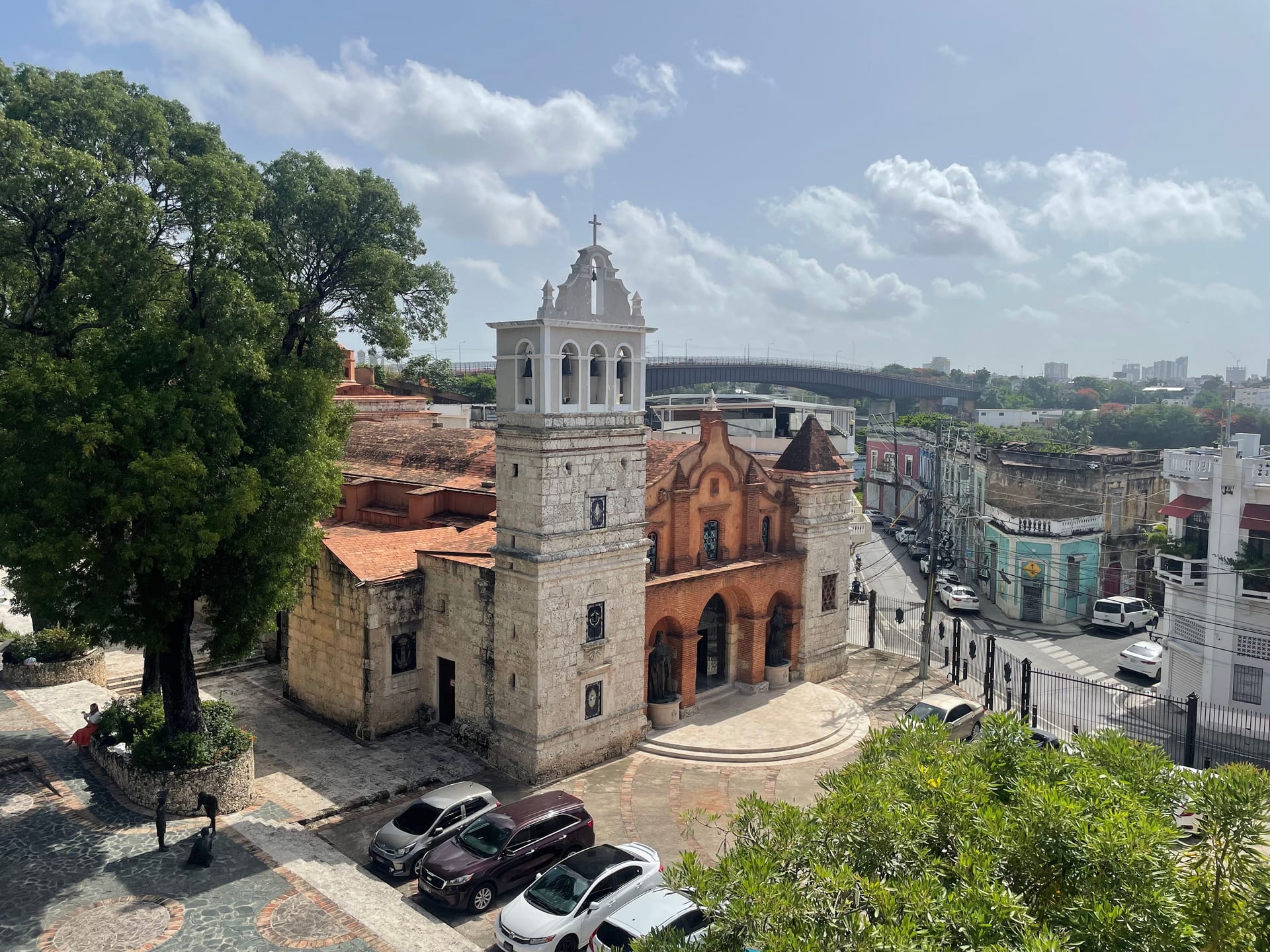
44/100Santo Domingo is lively and littered, dense and unevenly kept, but its Zona Colonial holds the oldest plazas in the Americas and the Malecon runs free along the sea. Daily life is cheap and lived outdoors, with street music and festivals everywhere. The grit is constant; so is the cheap, open vitality.
Safety
40/100A mixed picture. Homicide levels land roughly where Medellín and Panama City sit, better than they once were but still well above European norms, and everyday street safety is only middling, especially after dark. The sharpest concern is the road: traffic safety scores at the bottom, with aggressive driving and weak enforcement making the streets genuinely hazardous.
Healthcare
47/100Private clinics in the capital handle routine needs and many specialist cases at a workable level, and some staff speak English. The system thins out fast, though. Doctor availability per resident is low, emergency-care reliability is shaky, and out-of-pocket costs mean good private insurance is close to essential.
Family life
41/100Family housing is affordable, childcare is reachable, and a warm-weather, outdoor childhood comes naturally with the climate. The weak spots are real: school quality lags regional peers, parental-leave norms are minimal, and day-to-day child safety asks for the same caution as the rest of the city. Families who can afford private schooling cope best.
Career
49/100Local options in Santo Domingo are narrow rather than absent. Pay is low by the wider city comparison, and industry depth is limited, with the startup and technology scene especially thin. English-only roles are limited and remote work is possible, so the city fits outside earners better than someone building a career from scratch.
Culture & food
64/100The cultural pull is local life itself, the music, the dance, the street energy, which holds its own with Medellín and outshines more buttoned-up Panama City. Nightlife is genuinely lively and the colonial old town carries real history. The gaps are in the quieter corners: the café scene is modest, plant-based options are scarce, and the museum circuit stays small.
Ease of integration
63/100Daily life runs in Spanish, and getting by without it is hard, since English reaches only so far beyond tourism and business. The upside is that Dominicans are warm and notably open to foreigners, and cultural adjustment tends to come easily for those willing to learn the language. Socially the culture leans traditional and religious, which shapes the tone of community life.
Connectivity
27/100Where the city tests patience. There are no intercity trains, public transport is limited, internet speeds trail the region, and electricity and utilities can be unreliable enough that backup power is common. Government processes stay largely paper-based. The airport keeps the island reasonably connected to the Americas, and traffic, while heavy, is no worse than the regional norm.
Social values
traditionalConservative and church-shaped. Secular public life, social liberalism, gender equality, and LGBTQ acceptance all score low, more traditional than Mexico City and broadly in line with the wider region. The counterweight is genuine openness to outsiders, with a fair degree of everyday diversity, even as civic trust in institutions stays low.
Relocation ease
51/100Among the easier places to land in the region. Residence rules are relatively forgiving, work authorization is manageable, finding housing is workable, and cultural adjustment tends to be smooth for those who arrive with some Spanish. The friction comes from banking and bureaucracy, which stay slow and paperwork-heavy, so administrative tasks reward patience.
The trade-offs
A year in Santo Domingo
Sep peaks around 32°C, Jan days top out near 29°C, and the year brings roughly 123 bright days.
Can you actually move here?
The hard limits people most often bring to a move, scored against Santo Domingo's data.
Moving with a pet
Bringing a pet into the Dominican Republic is relatively straightforward, on par with much of Latin America. Standard vaccination records and a health certificate generally cover the requirements rather than a long quarantine, though the paperwork leans on official stamps and is best arranged ahead of time.
Who Santo Domingo works for
Answer the questionnaire and see where Santo Domingo lands for you.
Take the free questionnaireWhere else to look
Santo Domingo vs. comparable cities


The cities people weigh against Santo Domingo
Unexpected siblings
Far from Santo Domingo on the map, close across all 14 categories of daily life.


