
Living in Shenzhen
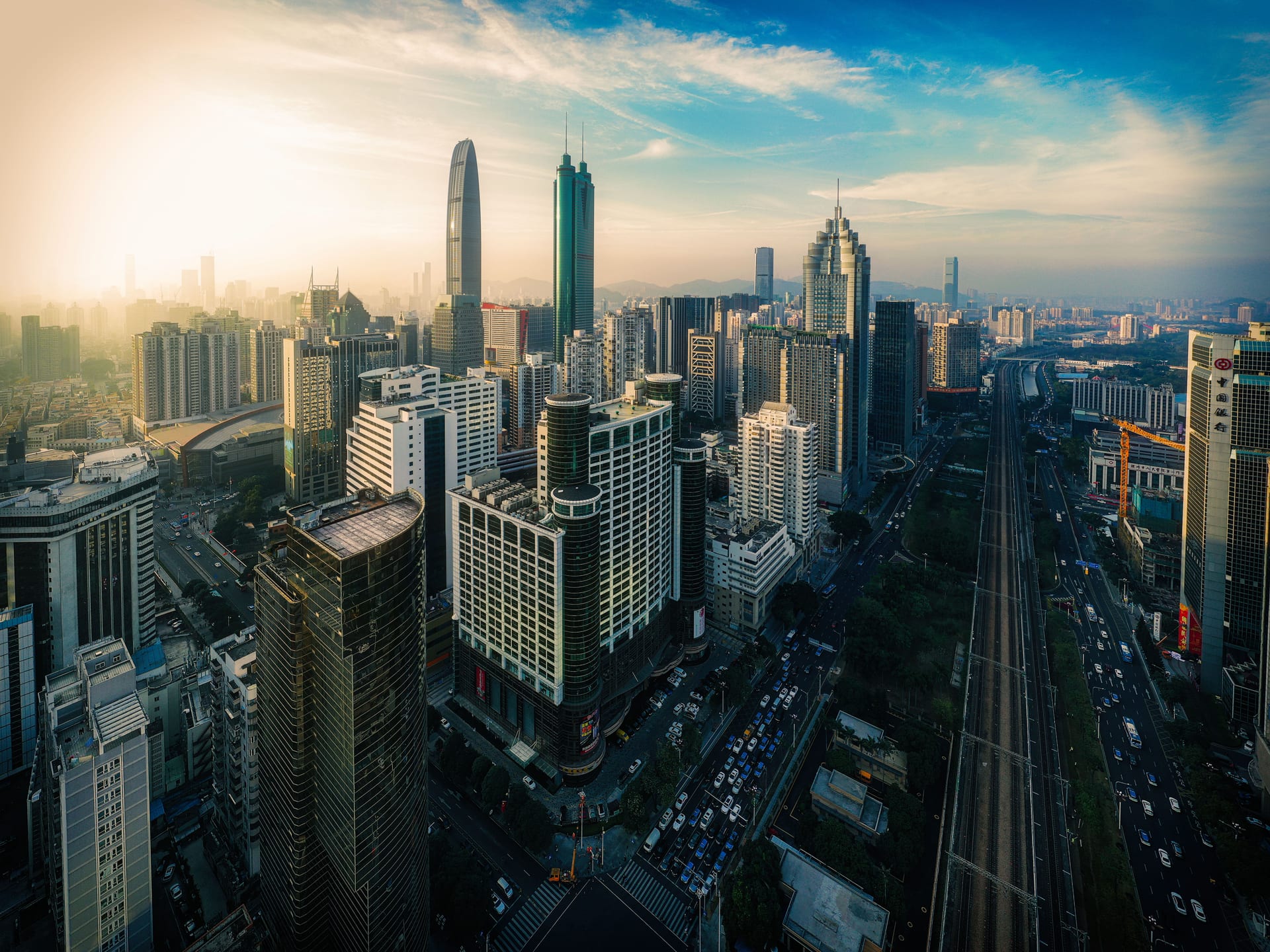
China's tech capital, a city that went from fishing villages to a hardware and startup powerhouse in a single generation. It runs fast and works hard, with cheap living and serious career energy for anyone in technology. The trade is a steep language wall and little of the historic texture you find in older Chinese cities.
Shenzhen at a glance
Vital stats
Shown in USD: the local currency (CNY) moves too fast for stable monthly figures.
Where Shenzhen stands out
The metrics where Shenzhen sits farthest from the middle worldwide, good and bad.
Cheap to arrive, expensive to stay?
A typical one-bedroom in Shenzhen runs $542/mo. That is ~67% of one typical local employee’s mean net pay. This is a solo-newcomer stress test: sitting tenants, shared homes, subsidised housing and informal rents are deliberately outside the numerator.
The fastest way to test a shortlist is to go. A week on the ground tells you things no ranking can.
Partner link
Approved language-learning and international money resources for practical next steps.
Daily life in Shenzhen
How Shenzhen scores
Category by category
Affordability
71/100Shenzhen's open-market one-bedroom rent on a new lease is about $542 per month. That is roughly 67% of one typical employee's mean net pay, a rent burden labelled sharing likely.
Climate
subtropicalShenzhen's winter is mild, but summer is long, hot, and intensely humid, with July averaging about 30°C. Grey rainy weather is common, and bright days are less reliable than the warm climate might suggest. Severe-weather exposure adds a real seasonal risk, so the weather suits heat-tolerant residents more than sun-seekers.
Nature access
alpineBetter served by greenery than its concrete reputation suggests. City parks are plentiful and well kept, and the coastline gives easy beach and seaside access that landlocked megacities can only envy. Hills and hiking trails sit within reach for weekends, though sprawling green space per resident stays thin and true wilderness is a longer trip.
Urban form
megacityShenzhen is a true megacity, with a metro population of about 43 million and a very dense urban core. Its walkable, mixed-use neighbourhoods make daily life workable without a car, but the pace is intense and housing space is notably tight. The scale is convenient in practice, even when it feels relentless.
Public life & spaces
74/100Shenzhen is new, planned and notably clean, a tech megacity built fresh. Its modern parks, plazas and waterfronts are generous, if scaled for cars rather than walkers. Being newer, it's also costlier; the parks and malls are free to roam, but spontaneous street life is thinner.
Safety
79/100Very safe in day-to-day terms. Violent crime is rare, streets feel secure after dark, and pickpocketing is uncommon, putting it among the most physically safe big cities anywhere. The weaker note is at the national level, where political stability and the predictability of rules sit well below what residents of Singapore or Tokyo take for granted.
Healthcare
61/100Hospitals are modern and emergency care is dependable, with overall quality solid if a notch below the regional gold standard in Singapore. The harder parts for an arriving foreigner are navigating insurance and finding English-speaking doctors, which is genuinely difficult. Out-of-pocket costs can add up without good local coverage.
Family life
55/100A safe, park-rich place to raise children, with playgrounds and green corners easy to find. The real strain is the working culture, which is among the most intense anywhere and leaves little room for family time. International schooling exists but is costly, and family-sized apartments are hard to come by at a reasonable price.
Career
76/100Shenzhen has a powerful market in technology, hardware, and manufacturing, supported by deep professional networks and a serious startup scene. Access is the catch: English-language roles are scarce and local employers are rarely remote-friendly. Local employee pay sits below the corpus midpoint, so opportunity depends closely on sector and language.
Culture & food
54/100Eating well is easy, with a strong restaurant scene drawing on Cantonese cooking and migrants from across China. Cafes are plentiful too. What thins out is the cultural depth: as a brand-new city, Shenzhen lacks the museums, music scenes, and lived-in heritage of Beijing or Xi'an, and the language barrier keeps much of local life at arm's length for non-Mandarin speakers.
Ease of integration
52/100Building a local circle takes real effort here. Mandarin is essential and Cantonese is widely heard, while English goes only a short way in daily life. The expat community is small for a city this size, and openness to foreigners is modest, so newcomers who invest in the language and patience tend to fare far better than those expecting to coast in English.
Connectivity
66/100A standout strength. The metro, intercity high-speed rail, and utilities are all excellent and reliable, and even government services lean heavily digital. Getting around the city and across the country is fast and smooth. Internet speeds are solid, though the wider digital experience comes with the filtering that operating online in China entails.
Social values
traditionalSocially conservative in the ways that matter to many movers. Public life is fairly secular and orderly, but social liberalism is limited, LGBTQ acceptance is low, and the city is less internationally minded than its tech-hub image implies. Residents who value liberal, pluralistic norms will feel the gap most sharply.
Relocation ease
34/100One of the tougher landings covered here. Visas and work authorization are hard to secure, the Mandarin language barrier is steep, and bureaucracy and banking carry real friction. Cultural adjustment is significant for most Western arrivals. Going in with an employer sponsor and some language preparation makes the difference between a rough start and a manageable one.
The trade-offs
A year in Shenzhen
Jul peaks around 32°C, Jan days top out near 20°C, and the year brings roughly 161 bright days.
Can you actually move here?
The hard limits people most often bring to a move, scored against Shenzhen's data.
Moving with a pet
Bringing a pet into Shenzhen is moderately difficult. Mainland China's import rules involve vaccination records, paperwork, and the chance of a quarantine period, so plan well ahead and budget time for the process.
Who Shenzhen works for
Answer the questionnaire and see where Shenzhen lands for you.
Take the free questionnaireWhere else to look
Shenzhen vs. comparable cities
The cities people weigh against Shenzhen
Unexpected siblings
Far from Shenzhen on the map, close across all 14 categories of daily life.