
Living in Shanghai
China's commercial capital and one of the planet's largest cities, Shanghai runs at a pace that even rivals Beijing for intensity while staying more cosmopolitan and outward-looking. Daily life is fast, dense, and remarkably cheap for a global metropolis, with world-class transport and food. The trade-off is a serious language wall and a tightly controlled civic environment.
Shanghai at a glance
Vital stats
Shown in USD: the local currency (CNY) moves too fast for stable monthly figures.
Where Shanghai stands out
The metrics where Shanghai sits farthest from the middle worldwide, good and bad.
Cheap to arrive, expensive to stay?
A typical one-bedroom in Shanghai runs $851/mo. That is ~111% of one typical local employee’s mean net pay. That is 28 points above Xiamen, its closest rival among nearby cities. This is a solo-newcomer stress test: sitting tenants, shared homes, subsidised housing and informal rents are deliberately outside the numerator.
The fastest way to test a shortlist is to go. A week on the ground tells you things no ranking can.
Partner link
Approved language-learning and international money resources for practical next steps.
Daily life in Shanghai
How Shanghai scores
Category by category
Affordability
64/100Shanghai's open-market one-bedroom rent on a new lease is about $851 per month. That is roughly 111% of one typical employee's mean net pay, a rent burden labelled solo unlikely.
Climate
subtropicalShanghai has four distinct seasons, but comfort is uneven. January averages about 6°C and July about 29°C, with damp winter conditions and hot, humid summers. Bright, dry days are close to the corpus norm, yet air quality is a more significant drawback than the cloud cover.
Nature access
leafyNature is not Shanghai's strength. Built on a flat river delta, it offers little in the way of mountains, forests, or proper hiking, and beach escapes are distant. There are riverside paths, a scattering of large parks, and decent cycling and running routes, but green space per resident is thin and genuine wilderness requires real travel.
Urban form
megacityThis is dense, vertical, fast-moving urban life of the East Asian megacity kind, closer in feel to Tokyo or Hong Kong than to anywhere in the West. The metro-and-foot lifestyle works well and a car is rarely needed. Neighbourhoods are walkable and mixed-use, the tempo relentless, and apartments tend to be compact.
Public life & spaces
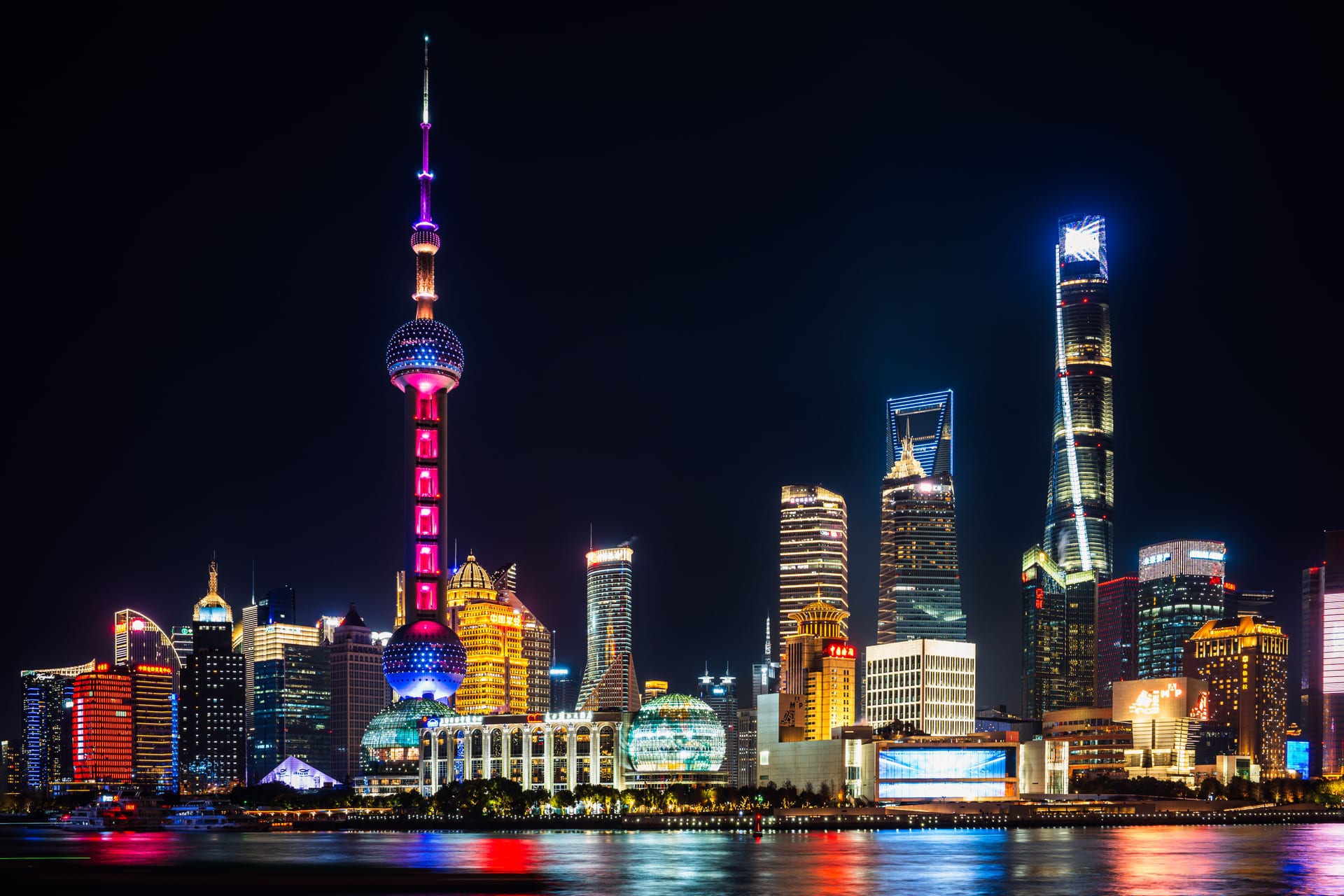
81/100Shanghai keeps its affluent centre fairly clean, even as the older lanes stay dense. The Bund promenade and riverfront are world-class shared space, backed by plazas and parks. It runs pricier than the rest of China, though the Bund itself and the public parks cost nothing.
Safety
79/100On street safety Shanghai is exceptional. Violent crime is rare, petty theft uncommon, and walking alone at night feels secure across most of the city, comparable to Tokyo or Hong Kong. The caveat sits elsewhere: the wider political environment scores poorly for stability and openness, which shapes daily life in less visible ways.
Healthcare
67/100Healthcare is solid if uneven. The best public and private hospitals are genuinely capable, though they trail the top tier of Tokyo and Hong Kong, and doctor availability is stretched given the population. The bigger friction for newcomers is language: relatively few medical staff work comfortably in English, and navigating insurance can be confusing.
Family life
55/100Families find a mixed picture. Children are safe and the schools rate highly, on par with Hong Kong and Singapore, but the broader environment is demanding. The overwork culture leaves little family time, family-sized housing is costly and tight, and outdoor childhood is constrained by limited green space and a long, grey winter.
Career
79/100Shanghai has a deep local market, broad industry base, and strong professional networks. Local pay is below the wider comparison, even as job availability and startup depth are genuine strengths. English-only roles are limited, and remote work is less dependable than the city's office economy.
Culture & food
78/100Food and culture are a major draw. The restaurant and cafe scene rivals the best in Asia, nightlife is lively, and museums, galleries, and a growing art world give the city real depth, edging out Hong Kong on creative energy. The dominant constraint is language: very little day-to-day life runs in English.
Ease of integration
52/100Building a local circle takes real effort. Mandarin dominates, Shanghainese colours local life, and English goes only so far outside expat and business bubbles. There is an established international community to lean on, but local openness to foreigners is middling and social norms are conservative, so deeper integration rewards learning the language and patience.
Connectivity
71/100Infrastructure is a standout. The metro is among the world's largest and best, intercity high-speed rail is superb, the airports connect almost everywhere, and utilities are reliable. The asterisk is digital: raw connection speeds are fast, but heavy internet controls mean many global services need workarounds to use day to day.
Social values
traditionalPublic life is secular and orderly, but socially this is a conservative setting. Liberal attitudes are limited, LGBTQ acceptance lags Tokyo and Hong Kong, and openness to outsiders is moderate at best. Gender equality and everyday diversity register a little better than in some regional peers, yet expression around contentious topics stays guarded.
Relocation ease
33/100Moving here is one of the tougher relocations in the region. Visas and work authorization are harder to secure than in Tokyo or Hong Kong, banking and admin involve real hassle, and the language barrier compounds everything. Cultural adjustment runs deep, and most newcomers lean on an employer or relocation help to land smoothly.
The trade-offs
A year in Shanghai
Jul peaks around 32°C, Jan days top out near 10°C, and the year brings roughly 185 bright days.
Can you actually move here?
The hard limits people most often bring to a move, scored against Shanghai's data.
Moving with a pet
Bringing a pet to Shanghai is on the harder end, with import rules, paperwork, and possible quarantine that demand early planning. It is more involved than relocating with an animal to Tokyo or Hong Kong, so start the process well ahead of the move.
Who Shanghai works for
Answer the questionnaire and see where Shanghai lands for you.
Take the free questionnaireWhere else to look
Shanghai vs. comparable cities
The cities people weigh against Shanghai
Unexpected siblings
Far from Shanghai on the map, close across all 14 categories of daily life.