
Living in Xiamen
A coastal island city in China's southeastern Fujian province, Xiamen is calmer and more relaxed than the mainland giants of Shanghai or Shenzhen, with sea air, palm-lined promenades and a famously easygoing pace. Daily life is cheap and very safe, though the language barrier runs deep and the wider environment can feel closed to outsiders.
Xiamen at a glance
Vital stats
Shown in USD: the local currency (CNY) moves too fast for stable monthly figures.
Where Xiamen stands out
The metrics where Xiamen sits farthest from the middle worldwide, good and bad.
Cheap to arrive, expensive to stay?
A typical one-bedroom in Xiamen runs $426/mo. That is ~83% of one typical local employee’s mean net pay. This is a solo-newcomer stress test: sitting tenants, shared homes, subsidised housing and informal rents are deliberately outside the numerator.
The fastest way to test a shortlist is to go. A week on the ground tells you things no ranking can.
Partner link
Approved language-learning and international money resources for practical next steps.
Daily life in Xiamen
How Xiamen scores
Category by category
Affordability
69/100Xiamen's open-market one-bedroom rent on a new lease is about $426 per month. That is roughly 83% of one typical employee's mean net pay, a rent burden labelled solo unlikely.
Climate
subtropicalMild winters are Xiamen's advantage, while summers are hot and humid. It gets about 186 bright days and 108 rainy-grey days a year, but muggy conditions persist for long stretches. Air quality is another environmental trade-off.
Nature access
coastalThe setting is the draw. Xiamen sits on an island with real beach and ocean access, easy seafront cycling and running routes, and a decent spread of city parks. Inland mountains, forests and proper hiking are more limited, and overall green space per resident is thin, so the appeal is the coast far more than the backcountry.
Urban form
large cityIts urban form is walkable and mixed-use, with relatively low car dependence. The city population is about 4.6 million, while the defined metro population is about 1.7 million, a boundary difference that makes the apparent scale easy to misread. Housing is generally tight.
Public life & spaces
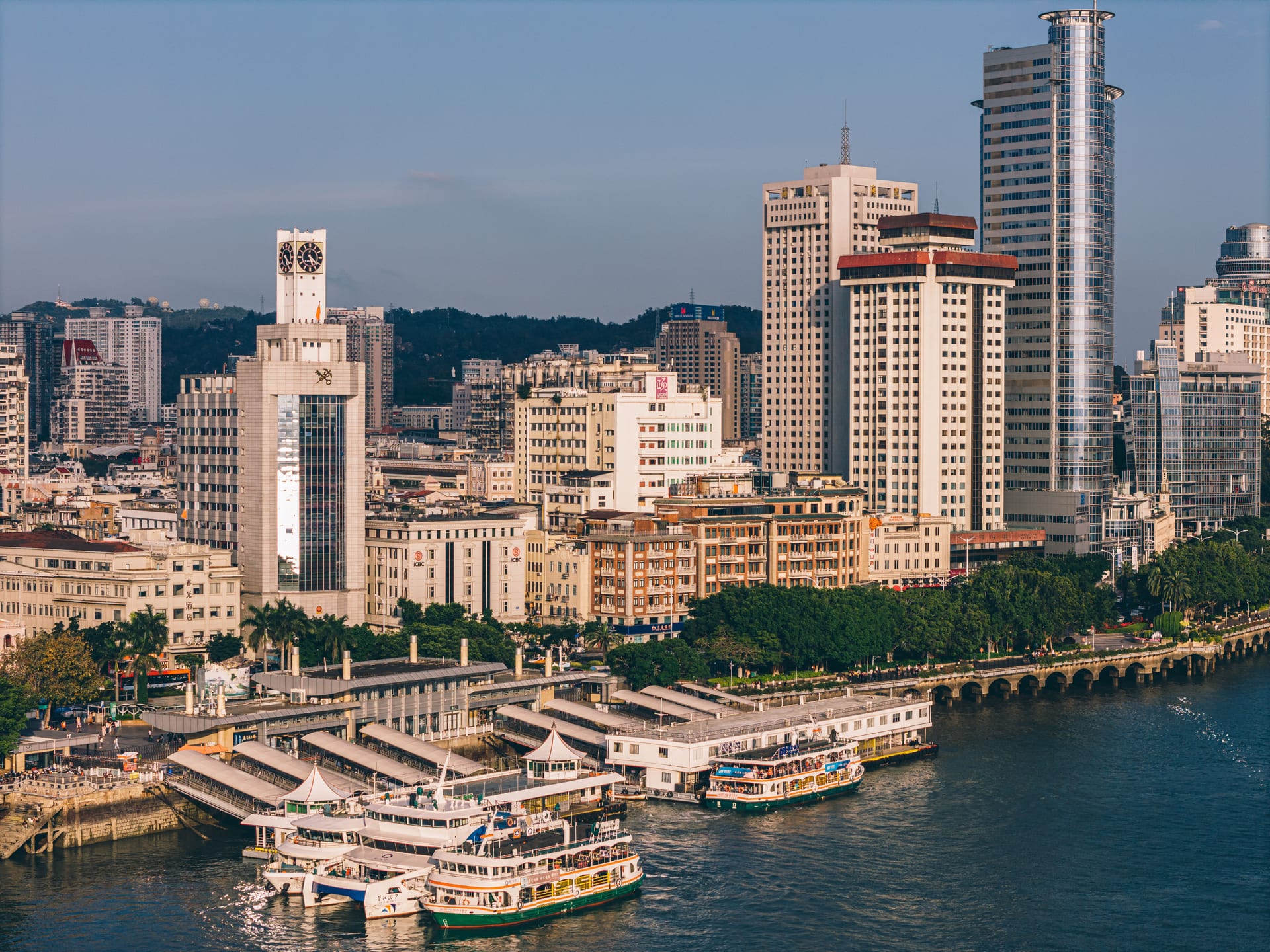
81/100Xiamen is a pleasant, fairly clean coastal city with a well-kept seafront. Gulangyu island, the beach promenades and walkable old streets make for an easy public realm. Living is cheap, the beaches and waterfront are free to enjoy, and the streets stay lively without much spending.
Safety
79/100Extremely safe in daily terms. Violent crime is rare, petty theft is low, and walking around after dark feels secure for most people. The clear weak spot is political stability, which scores poorly: the broader governance environment is tightly controlled and can shift with little warning, a structural reality worth weighing seriously.
Healthcare
58/100Care is functional and broadly accessible, with reliable hospitals and emergency services in line with other large mainland cities. Quality sits a notch below the top-tier hospitals of Shanghai or Hong Kong. The biggest hurdle for newcomers is language: English-speaking healthcare is scarce, so navigating appointments and diagnoses without Mandarin is hard.
Family life
57/100Solid fundamentals for raising children. The city is safe for kids, schools are reasonable, and there are plenty of playgrounds, parks and coastal outdoor space for an active childhood. Where it strains is the adult side of family life: work-life culture is demanding and childcare support is middling, leaving less breathing room than families might hope for.
Career
54/100Xiamen offers a workable local market, but its depth is limited and professional networks are modest. Typical local pay is in the low range across the comparison set, while English-first and remote roles are scarce. It suits a locally anchored job better than a search for a broad international market.
Culture & food
63/100Food is the highlight, with a strong local Minnan cuisine, abundant seafood and a lively cafe and restaurant culture. The arts, music and nightlife scenes are present but quieter than in bigger Chinese hubs. The international community is small and the day-to-day language accessibility is low, so the texture here is distinctly local rather than cosmopolitan.
Ease of integration
44/100Mandarin runs everything, with Hokkien spoken among locals and only patchy English, so building local ties without learning the language is genuinely difficult. The international scene is small and openness to foreigners is moderate at best. Newcomers willing to study Mandarin will find a friendlier path; without it, integration tends to stay surface-level.
Connectivity
59/100A real strength. Public transport is good, cycling infrastructure is excellent by Chinese standards, and intercity high-speed rail connects Xiamen smoothly to the rest of the country. Utilities are reliable and traffic flows better than in the megacities. The major caveat is digital life: connection speeds are fast on paper, but heavy internet censorship sharply limits what is actually usable.
Social values
traditionalSocially conservative and tightly ordered. Public culture is fairly secular, but social liberalism is low, LGBTQ acceptance is limited, and diversity and internationalism are thin compared with Hong Kong or even Shanghai. People who value open self-expression or a pluralistic public sphere will likely find the environment constraining.
Relocation ease
33/100Moving here is hard work. Visas and work authorization are demanding, bureaucracy is heavy, and everyday admin like banking can be slow and opaque. The deepest barrier is language: little English plus a significant cultural adjustment means the first stretch can feel isolating. Housing search is manageable once on the ground, but the overall on-ramp is steep.
The trade-offs
A year in Xiamen
Jul peaks around 32°C, Jan days top out near 19°C, and the year brings roughly 186 bright days.
Can you actually move here?
The hard limits people most often bring to a move, scored against Xiamen's data.
Moving with a pet
Bringing a pet to Xiamen is on the difficult end, in line with mainland China generally. Expect strict import paperwork, vaccination and microchip requirements, and possible quarantine, so start the process well in advance and budget for delays.
Who Xiamen works for
Answer the questionnaire and see where Xiamen lands for you.
Take the free questionnaireWhere else to look
Xiamen vs. comparable cities
The cities people weigh against Xiamen
Unexpected siblings
Far from Xiamen on the map, close across all 14 categories of daily life.