
Living in Guangzhou
A vast manufacturing and trade hub in southern China, Guangzhou runs cheaper and a touch more relaxed than Shanghai while sharing its scale and pace. Living costs stay low against the megacity benchmark, the food is exceptional, and the metro reaches almost everywhere. The flip side is heavy heat, a real language wall, and admin that tests outsiders.
Guangzhou at a glance
Vital stats
Shown in USD: the local currency (CNY) moves too fast for stable monthly figures.
Where Guangzhou stands out
The metrics where Guangzhou sits farthest from the middle worldwide, good and bad.
Cheap to arrive, expensive to stay?
A typical one-bedroom in Guangzhou runs $505/mo. That is ~77% of one typical local employee’s mean net pay. This is a solo-newcomer stress test: sitting tenants, shared homes, subsidised housing and informal rents are deliberately outside the numerator.
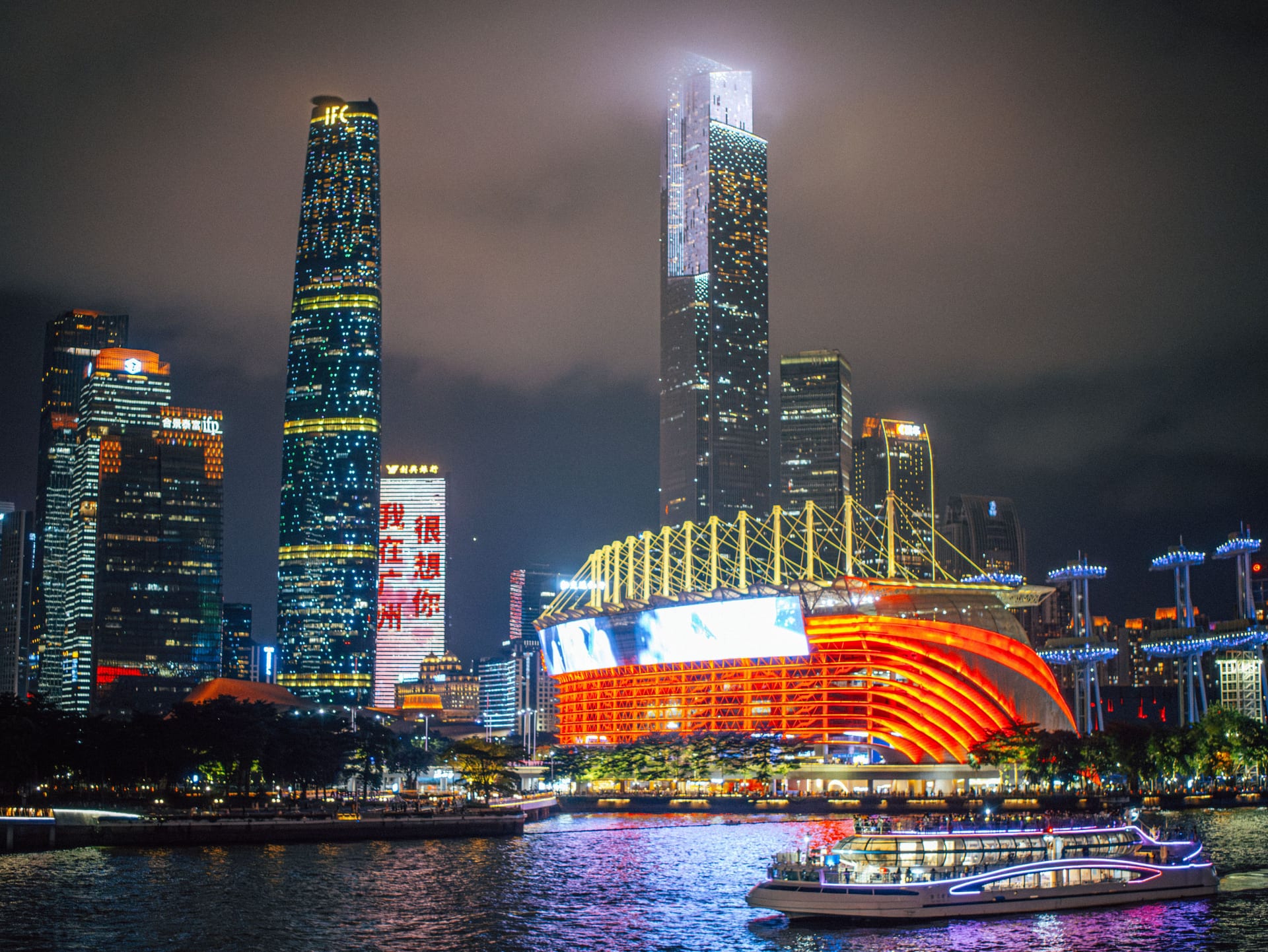
The fastest way to test a shortlist is to go. A week on the ground tells you things no ranking can.
Partner link
Approved language-learning and international money resources for practical next steps.
Daily life in Guangzhou
How Guangzhou scores
Category by category
Affordability
70/100Guangzhou's open-market one-bedroom rent on a new lease is about $505 per month. That is roughly 77% of one typical employee's mean net pay, a rent burden labelled solo unlikely.
Climate
subtropicalGuangzhou has mild winters, but long summers are hot and humid, with about 248 muggy days each year. Bright conditions arrive on roughly 155 days, and grey, wet weather can make the climate feel more wearing than its warmth suggests.
Nature access
forestedNot a city you move to for the outdoors. Green space per resident is thin, the coast is a trip away rather than at the doorstep, and proper mountains, forests, and hiking are scarce compared with Hong Kong or Tokyo. A handful of city parks and the Pearl River give some breathing room, but weekend escapes into nature take real effort.
Urban form
megacityGuangzhou's wider urban area holds roughly 43 million people, while central districts mix homes and work with strong walkability and low car dependence. Space at home is the trade-off, and the city's scale keeps the pace high.
Public life & spaces
70/100Guangzhou is a dense, humid southern metropolis where upkeep varies block to block. The Pearl River waterfront is its best shared space, though the city sprawls and leans car-heavy. Eating out is cheap, the riverside and markets are free, but the polished attractions cost money.
Safety
78/100Very safe in the everyday sense. Violent crime is rare, streets feel secure after dark, and most residents move around at night without much thought, on par with Shanghai. Pickpocketing exists in crowded spots but stays minor. The weaker note is political stability, which sits low and is worth weighing for anyone planning a long horizon.
Healthcare
61/100Solid public hospitals and reasonable access, in line with Shanghai, though doctor availability per resident is stretched and waits in the public system can be long. The bigger hurdle for newcomers is language: English-speaking care is hard to find, and navigating insurance takes patience. Private international clinics exist but cost more.
Family life
51/100A capable place to raise children in some respects. Schools rate well, the city is safe for kids, and there are parks and playgrounds around. What strains families is the work culture, which leans long-hours and leaves little slack, weaker here than what European cities offer. Family-sized housing is tight and pricey relative to incomes.
Career
70/100Guangzhou has a substantial local market in trade, manufacturing, and technology, with solid professional and startup depth. English-language and remote-friendly roles are limited, while typical local pay is below the wider city median. Career fit depends heavily on access to the local economy.
Culture & food
68/100Cantonese cuisine is the headline, and it is world-class: dim sum, fresh seafood, and a deep restaurant culture that rivals Shanghai. Cafes, nightlife, museums, and the arts scene are all respectable without being standout. The hardest part for arrivals is language access, which is low and shapes how much of the cultural life feels open.
Ease of integration
52/100Building a local circle takes work. Mandarin is the working language and Cantonese is widely spoken on the street, while everyday English is limited, so connection depends heavily on picking up the language. Openness to foreigners is middling, the expat community is smaller than Hong Kong's or Singapore's, and integrating as a newcomer is a slow, deliberate process.
Connectivity
69/100This is where Guangzhou shines. The metro is comprehensive, high-speed rail links it to the rest of the country as well as anywhere, and the airport offers wide connectivity. Utilities are reliable and bureaucracy is fairly digitized. The asterisk is the internet: raw speeds are high, but censorship and blocked services cut deeply into how usable it feels for foreigners.
Social values
traditionalPublic life is secular and orderly, but socially conservative in outlook. Attitudes on personal freedoms and LGBTQ acceptance sit low, below even Tokyo or Hong Kong, and gender norms remain fairly traditional. Diversity is modest. Newcomers used to more liberal social environments will feel the gap.
Relocation ease
34/100One of the harder moves to pull off. Visas and work authorization are demanding, bureaucracy is heavy, and opening bank accounts or handling routine admin tests patience, much as in Shanghai. The language barrier compounds all of it, since little gets done in English. Cultural adjustment is steep for those arriving from the West.
The trade-offs
A year in Guangzhou
Jul peaks around 34°C, Jan days top out near 20°C, and the year brings roughly 155 bright days.
Can you actually move here?
The hard limits people most often bring to a move, scored against Guangzhou's data.
Moving with a pet
Bringing a pet into China is demanding. Import rules are strict, paperwork is heavy, and quarantine or documentation requirements make Guangzhou harder than Tokyo or Hong Kong, so plan well ahead and budget time for the process.
Who Guangzhou works for
Answer the questionnaire and see where Guangzhou lands for you.
Take the free questionnaireWhere else to look
Guangzhou vs. comparable cities
The cities people weigh against Guangzhou
Unexpected siblings
Far from Guangzhou on the map, close across all 14 categories of daily life.