
Living in Dar es Salaam
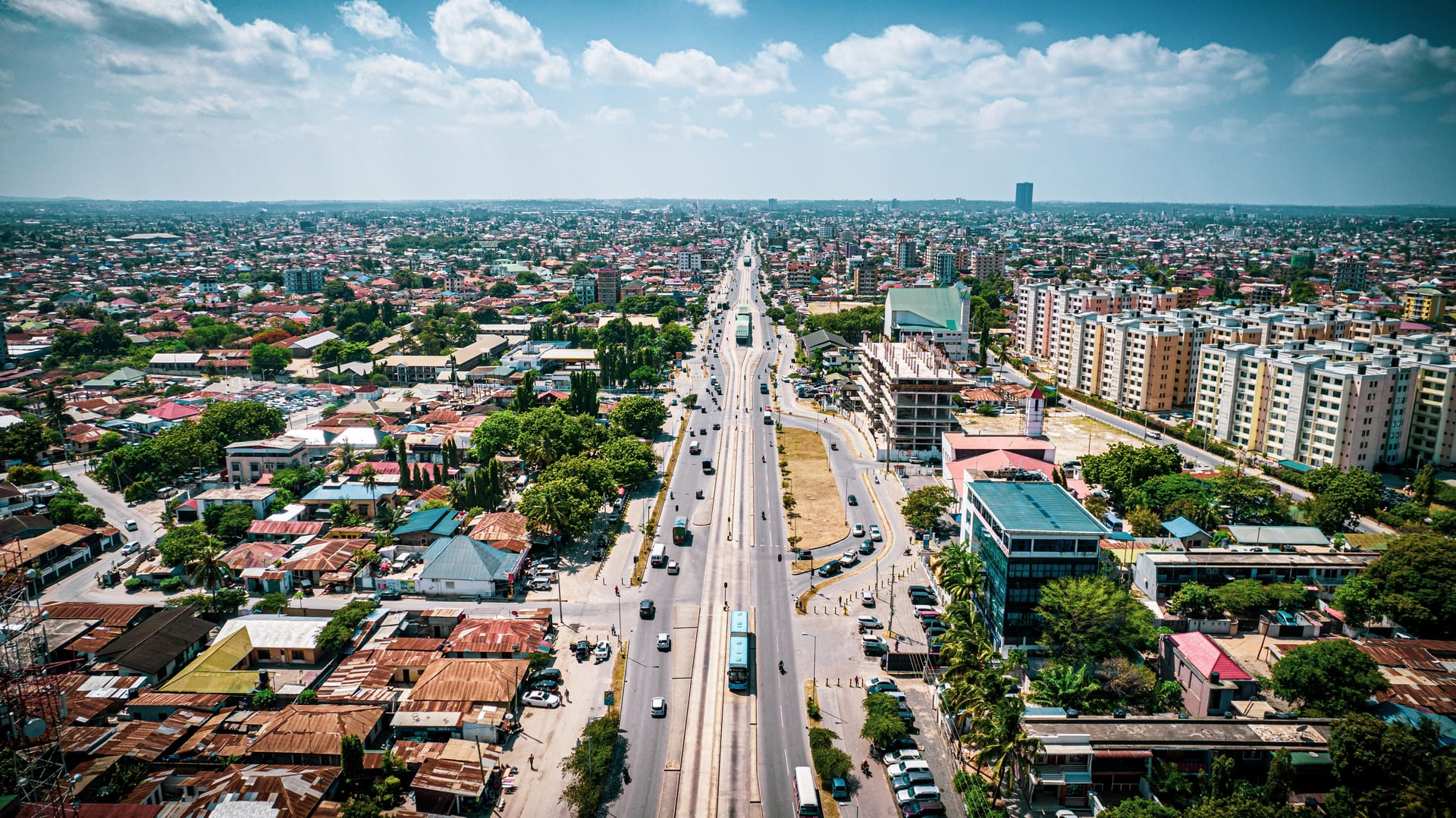
Tanzania's largest city and commercial heart, sprawling along the Indian Ocean with heat, humidity, and a fast-growing, Swahili-speaking energy. It is cheaper and less corporate than regional rival Nairobi, but day-to-day life leans hard on cars, patience with infrastructure, and a tolerance for tropical weather.
Dar es Salaam at a glance
Vital stats
Shown in USD: the local currency (TZS) moves too fast for stable monthly figures.
Where Dar es Salaam stands out
The metrics where Dar es Salaam sits farthest from the middle worldwide, good and bad.
Cheap to arrive, expensive to stay?
A typical one-bedroom in Dar es Salaam runs $196/mo. That is ~110% of one typical local employee’s mean net pay. This is a solo-newcomer stress test: sitting tenants, shared homes, subsidised housing and informal rents are deliberately outside the numerator.
The fastest way to test a shortlist is to go. A week on the ground tells you things no ranking can.
Partner link
Approved language-learning and international money resources for practical next steps.
Daily life in Dar es Salaam
How Dar es Salaam scores
Category by category
Affordability
74/100Dar es Salaam's open-market one-bedroom rent on a new lease is about $196 per month. That is roughly 110% of one typical employee's mean net pay, a rent burden labelled solo unlikely.
Climate
tropicalDar es Salaam is warm all year, with no meaningful dark season and very little seasonal cooling. Light is less consistent than the tropical warmth suggests: about 144 bright days sit alongside roughly 125 rainy-grey days. Humidity is the real test, with muggy conditions present for almost the entire year, especially through the hotter wet period.
Nature access
coastalThe draw here is the ocean and what sits beyond it. The shoreline and beaches are a daily presence, and weekends open onto some of East Africa's best escapes, with Zanzibar a short hop and famous safari country within reach. Inside the city itself, parks and green space are thin, and there is little for hikers or mountain lovers.
Urban form
megacityA vast, low-rise, fast-spreading metropolis where getting around mostly means a car or a crowded daladala minibus. Walkability is poor, distances are long, and neighbourhood quality swings sharply from one area to the next. The pace is busy without being frantic, closer to a working port city than a polished capital.
Public life & spaces
26/100Dar es Salaam is hot, dense and littered, upkeep patchy across a sprawling, half-informal city. Built public space is limited to the waterfront and a few plazas. The pull is the coast and the cost: daily life is cheap and lived outdoors, with street food and seaside hangouts that ask almost nothing of you.
Safety
39/100Homicide is about 4 per 100,000, but that is not the whole safety picture. Petty theft is a common concern, walking alone after dark is uncomfortable, and road danger is high. Political stability adds a wider uncertainty beyond ordinary street safety.
Healthcare
33/100This is one of the city's weakest areas, and it deserves plain language. Doctors are scarce relative to the population, hospital access is limited, and emergency care cannot be relied on the way it can in wealthier hubs. Many residents with means carry private cover and travel to Nairobi or further abroad for anything serious. English is reasonably common in private clinics.
Family life
34/100A demanding place to raise children unless a family has resources. International and private schooling exists but quality across the board is limited, and public services are stretched. The upside is an outdoor, warm-weather childhood and a slower work culture, though playgrounds and safe shared spaces are in short supply.
Career
50/100Dar es Salaam has a narrow local market, with limited industry breadth, modest English-language access, and a young technology scene. Typical local pay is low. Low unemployment sits alongside weak job-market strength, so the city is a better fit for a role already secured or income earned elsewhere.
Culture & food
60/100The real strength is local culture. Swahili coastal identity runs deep here, blending African, Arab, and Indian influences into the food, the music, and the rhythm of the place, and the live music and art scene has genuine character. Restaurants, cafes, and nightlife are present but modest for a city this large, and the international dining found in Nairobi is thinner on the ground.
Ease of integration
63/100Swahili is the language of everyday life, and while English goes a fair way in business and with educated locals, real integration rewards picking up Swahili. Tanzanians have a strong reputation for warmth and openness to outsiders, which softens the landing, though building a deep local network takes time and effort from a newcomer.
Connectivity
28/100Day-to-day infrastructure is one of the harder adjustments. Internet speeds lag well behind regional peers, power and water can be unreliable, and public transport leans on informal minibuses rather than a proper network. Traffic congestion is heavy, the airport connects the city to the world adequately, and admin processes remain largely paper-based.
Social values
traditionalSocially conservative, with religion and tradition holding a visible place in public life. Tanzanians are notably welcoming to foreigners, but liberal social attitudes are not the norm, and the climate for LGBTQ people is openly hostile, among the most restrictive in the region. Gender norms remain traditional.
Relocation ease
39/100Settling in takes persistence. Visas, work authorization, banking, and general bureaucracy are slow and paperwork-heavy, more so than in Nairobi or the Gulf, and much of it happens in person rather than online. The saving grace is that the language gap is manageable, since English carries weight in official and professional settings while Swahili handles the street.
The trade-offs
A year in Dar es Salaam
Feb peaks around 31°C, Jul days top out near 27°C, and the year brings roughly 144 bright days.
Can you actually move here?
The hard limits people most often bring to a move, scored against Dar es Salaam's data.
Moving with a pet
Bringing a pet here is moderately involved. Tanzania requires import permits, vaccinations, and health documentation, and the process is more bureaucratic and slower than in well-organized destinations, so starting paperwork early and using a relocation agent helps.
Who Dar es Salaam works for
Answer the questionnaire and see where Dar es Salaam lands for you.
Take the free questionnaireWhere else to look
Dar es Salaam vs. comparable cities


Objective scores (0–100) for Dar es Salaam and its 4 nearest comparable cities.
The cities people weigh against Dar es Salaam
Unexpected siblings
Far from Dar es Salaam on the map, close across all 14 categories of daily life.


