
Living in Casablanca
Casablanca pairs a bright, mild climate with a local career market of modest depth. It has many bright days and only 29 rainy-grey days, while local pay is low and unemployment is about 9%. The move is more compelling with a clear work opportunity than as a bet on local earning power alone.
Casablanca at a glance
Vital stats
Shown in USD: the local currency (MAD) moves too fast for stable monthly figures.
Where Casablanca stands out
The metrics where Casablanca sits farthest from the middle worldwide, good and bad.
Cheap to arrive, expensive to stay?
A typical one-bedroom in Casablanca runs $352/mo. That is ~62% of one typical local employee’s mean net pay. This is a solo-newcomer stress test: sitting tenants, shared homes, subsidised housing and informal rents are deliberately outside the numerator.
The fastest way to test a shortlist is to go. A week on the ground tells you things no ranking can.
Partner link
Approved language-learning and international money resources for practical next steps.
Daily life in Casablanca
How Casablanca scores
Category by category
Affordability
76/100Casablanca's open-market one-bedroom rent on a new lease is about $352 per month. That is roughly 62% of one typical employee's mean net pay, a rent burden labelled sharing likely.
Climate
mediterraneanCasablanca has a mild climate, with cool winters and summers that avoid punishing heat. The sky is often bright, with about 300 bright days and only 29 rainy-grey days, though coastal humidity can make warm periods feel sticky. It is a good fit for people who value light without severe summer heat.
Nature access
coastalCasablanca's strong card is the ocean, with a long stretch of Atlantic coast and beaches close to hand. Beyond that, nature is thin: little green space per resident, few in-city parks, and mountains, forests, and hiking all sit at a distance. The Atlas country sits much closer to Marrakech than to here.
Urban form
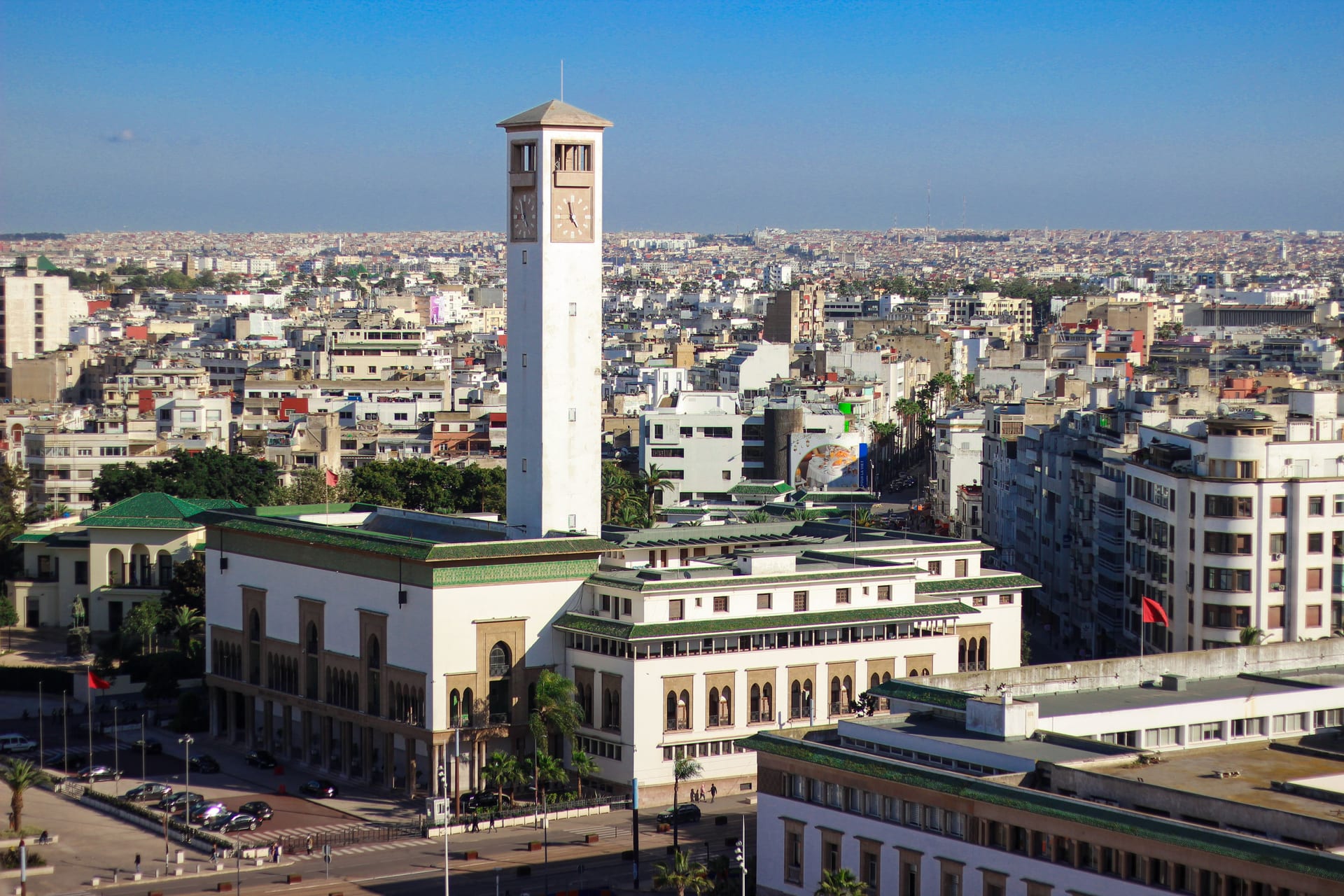
large cityA dense, fast-moving metropolis, the largest in Morocco by a wide margin. The pace is brisk, mixed-use streets are common, and daily life mingles homes with shops and cafes. Walkability, neighbourhood quality, and housing space are middling, though, and getting around often leans on a car.
Public life & spaces
41/100Casablanca is a busy, dusty business city, upkeep mixed and shared space mostly the Atlantic corniche and the vast Hassan II mosque plaza in an otherwise car-bound grid. It is more workplace than promenade. Daily life stays cheap, carried by café culture rather than the constant festivals and street theatre of more touristic Moroccan cities.
Safety
52/100Serious violent crime is rare and the homicide rate is very low, which anchors a steady sense of safety by day. Petty crime and street hassle are more of an issue, with pickpocketing common in crowded areas, and the streets feel less settled after dark. Political stability scores poorly, a backdrop worth weighing.
Healthcare
41/100Casablanca holds the country's better hospitals and specialists, a step up from smaller Moroccan cities, but the baseline is modest across the board. Doctors are stretched thin relative to the population, public care can be slow, and English-speaking practitioners are limited, so French or Arabic helps a great deal when something goes wrong.
Family life
42/100A workable place for families with young children, leaning on community and an outdoor, coastal childhood, with childcare relatively affordable. Schools and family housing are average, playgrounds are scarce, and formal parental leave is minimal. Many newcomer families gravitate toward private or international school options.
Career
57/100Casablanca has some professional breadth, but the market is not especially deep. Unemployment is about 9%, English-only roles are limited, and local pay is low even by the wider set of cities. It is a better landing place with an established role than with an open-ended search.
Culture & food
62/100Strong on everyday culture. Casablanca has a good spread of restaurants and a serious cafe habit where people linger over mint tea, a living local character rooted in Moroccan and French influences, and a more international crowd than most Moroccan cities. Nightlife, museums, and the arts are decent. Vegan and vegetarian choices stay limited.
Ease of integration
63/100Arabic is the language of daily life, with French widely used in business and Berber and some English in the mix, so French-speakers settle in faster. Locals tend to be warm to outsiders, and an established international community gives newcomers a foothold. Real integration takes effort, and traditional social norms shape how quickly arrivals feel part of things.
Connectivity
45/100Connectivity is the bright spot: the country's main international airport and solid intercity rail, including fast trains up the coast, link Casablanca outward well. Locally it is patchier. Public transport is limited, cycling barely exists, traffic is heavy, and home internet lags well behind regional peers like Cape Town. Government paperwork is still barely digitised.
Social values
traditionalCasablanca is the more liberal, outward-looking end of Morocco, but in absolute terms public culture is conservative and religiously framed. Secular attitudes, social liberalism, and gender equality all score low, and LGBTQ acceptance is very limited and not openly expressed. Newcomers from liberal backgrounds should expect a real adjustment.
Relocation ease
49/100Mixed. Visas and finding housing are relatively manageable, but the wider move is harder work. Bureaucracy is heavy and paper-based, banking and tax admin take persistence, and work authorisation is a hurdle without a transfer. The language barrier is real for those without French or Arabic, which is close to essential for offices and leases.
The trade-offs
A year in Casablanca
Jul peaks around 29°C, Jan days top out near 18°C, and the year brings roughly 300 bright days.
Can you actually move here?
The hard limits people most often bring to a move, scored against Casablanca's data.
Moving with a pet
Bringing a pet to Casablanca is moderately involved, neither smooth nor unusually difficult. Expect standard vaccination records, a health certificate, and import paperwork, with the process workable but slowed by Morocco's heavier bureaucracy.
Who Casablanca works for
Answer the questionnaire and see where Casablanca lands for you.
Take the free questionnaireWhere else to look
Casablanca vs. comparable cities


Objective scores (0–100) for Casablanca and its 4 nearest comparable cities.
The cities people weigh against Casablanca
Unexpected siblings
Far from Casablanca on the map, close across all 14 categories of daily life.

