
Living in Dakar
Dakar is Senegal's capital, with warm weather, mild winters, and a long bright season. Local career options are narrow and English-language work is limited, while local pay is very low. It suits people with outside income who value an easy winter climate over a deep local market.
Dakar at a glance
Vital stats
Shown in USD: the local currency (XOF) moves too fast for stable monthly figures.
Where Dakar stands out
The metrics where Dakar sits farthest from the middle worldwide, good and bad.
Cheap to arrive, expensive to stay?
A typical one-bedroom in Dakar runs $203/mo. That is ~92% of one typical local employee’s mean net pay. This is a solo-newcomer stress test: sitting tenants, shared homes, subsidised housing and informal rents are deliberately outside the numerator.
The fastest way to test a shortlist is to go. A week on the ground tells you things no ranking can.
Partner link
Approved language-learning and international money resources for practical next steps.
Daily life in Dakar
How Dakar scores
Category by category
Affordability
69/100Dakar's open-market one-bedroom rent on a new lease is about $203 per month. That is roughly 92% of one typical employee's mean net pay, a rent burden labelled solo unlikely.
Climate
tropicalDakar has a long bright season, with roughly 280 bright days and only about 26 rainy-grey days each year. Winters are mild, while summers stay warm rather than scorching. The trade-off is persistent muggy weather and weak air quality.
Nature access
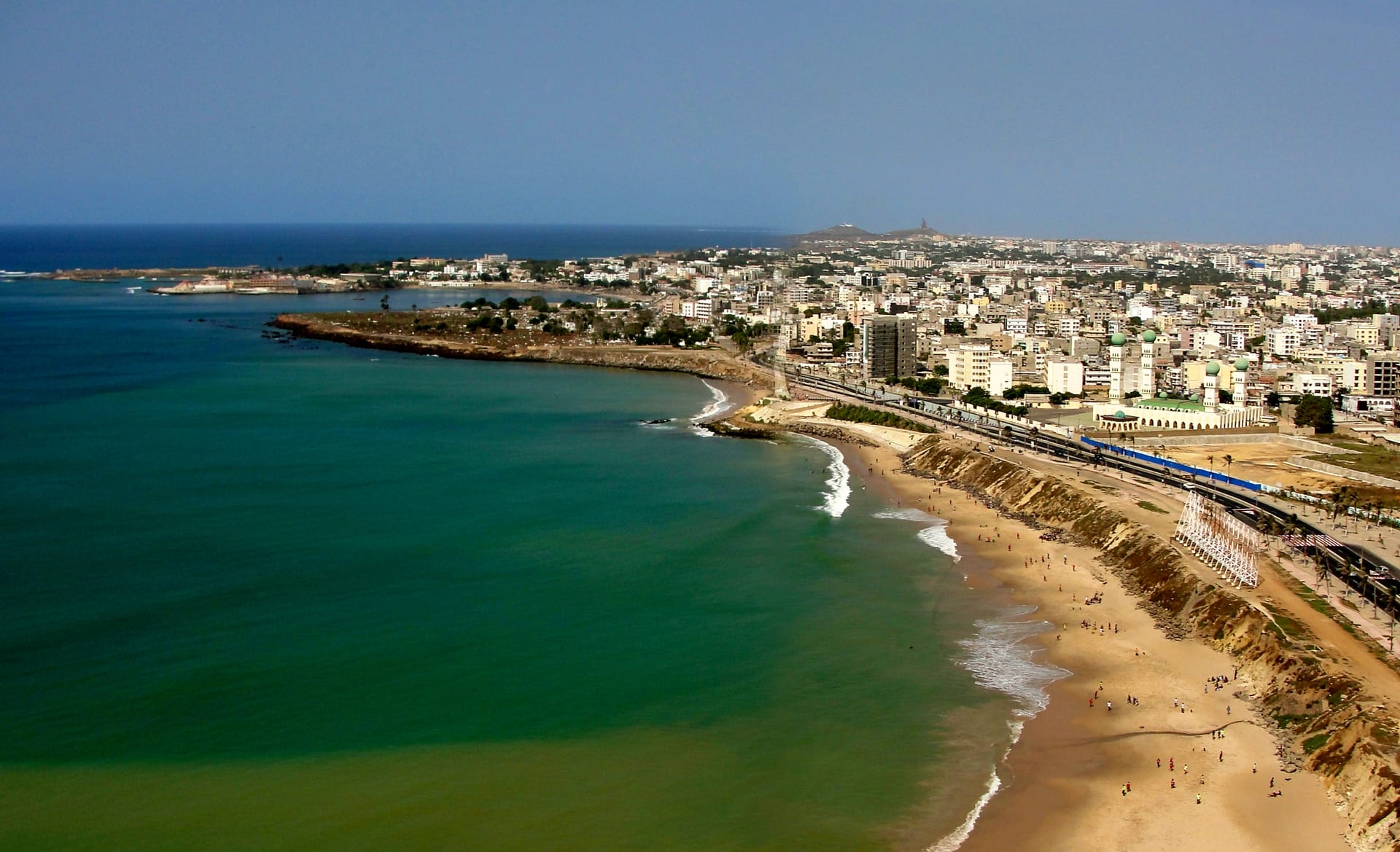
coastalThe ocean is the headline. Dakar is wrapped by Atlantic coastline, with surf and beaches a short reach from the city, and the cape itself juts dramatically into the sea. Inland nature is thin, though. There are no mountains or real forests nearby, green space inside the city is scarce, and serious hiking means traveling far.
Urban form
large cityA dense, sprawling, car-leaning city that grew faster than its planning could keep up. Walkability is limited and getting around usually means a taxi or a crowded minibus rather than a stroll. The pace is busier than Cape Town but calmer than Lagos. Neighbourhood quality and housing space are modest, with the nicer pockets clustered near the coast.
Public life & spaces
44/100Dakar is dusty and unevenly kept, litter blowing along the coast, but the Corniche promenade and a handful of lively squares give the ocean front real presence. Built public space stays thin beyond them. Daily life is cheap and musical, though, with street culture and griot rhythms spilling out almost everywhere for free.
Safety
57/100Dakar's serious-violence picture is calmer than its everyday safety feel suggests, with a homicide rate of about 0.27 per 100,000. Daily caution still matters: petty theft is a real concern, walking after dark is less comfortable, and traffic is hazardous. Political stability is another weaker point.
Healthcare
32/100This is one of Dakar's weakest areas. Hospital access and overall medical quality are limited, specialist care is hard to find, and emergency response is unreliable. Serious conditions often mean evacuation abroad. English is rarely spoken in clinics, so navigating care without French is genuinely difficult. Most foreigners carry international insurance and plan around the gaps.
Family life
42/100A mixed picture. Childcare and domestic help are widely available and affordable, and the outdoor, social rhythm of life suits young kids. Children grow up around extended family and the beach. Schooling is the sticking point, with local public options weak, so most foreign families lean on a small set of international schools, which carry a steep price.
Career
50/100Dakar's local career market is narrow, with limited industry breadth, professional networks, and startup depth. English-language roles are especially scarce, even though unemployment is low. Local pay is very low, so the city works best for people whose income comes from elsewhere.
Culture & food
61/100Where Dakar genuinely shines. The music scene, rooted in mbalax and a deep griot tradition, is one of the most alive in Africa, and local culture is strong, proud and everywhere. Senegalese food, built around thieboudienne and grilled fish, is a real pleasure. Nightlife holds its own. Vegetarians and vegan eaters will find the choices narrow.
Ease of integration
63/100Senegal's famed teranga, its culture of hospitality, makes newcomers feel genuinely welcome, and openness to foreigners runs high. French unlocks most professional and social life, while Wolof is the language of the street and the surest path to real belonging. English goes only so far. Settling in is more about learning the local rhythm than breaking through any coldness.
Connectivity
28/100The shaky foundation under everything else. Internet is slow and patchy, public transport is informal and limited, and there is essentially no cycling network or intercity rail to speak of. Power and utilities can be unreliable. The international airport is a genuine bright spot, with solid connections to Europe and across Africa. Daily admin runs largely on paper.
Social values
traditionalSenegal is a predominantly Muslim, socially conservative society, though one with a notably tolerant and easygoing public culture compared with much of the region. Foreigners are met with warmth and curiosity. That openness has clear limits, though: LGBTQ life faces real legal and social hostility, and gender roles remain traditional.
Relocation ease
40/100Getting in is relatively painless. Many nationalities can enter visa-free or secure residence without much fuss, which is a genuine advantage. The friction comes afterward. Bureaucracy is slow and paper-heavy, banking and admin can drag, and adjusting to a French-and-Wolof, deeply different culture takes patience. Arriving without French makes every errand harder.
The trade-offs
A year in Dakar
Oct peaks around 29°C, Mar days top out near 21°C, and the year brings roughly 280 bright days.
Can you actually move here?
The hard limits people most often bring to a move, scored against Dakar's data.
Moving with a pet
Bringing a pet to Dakar is moderately straightforward, on par with much of the region. Plan on a vaccination and health certificate paperwork trail rather than long quarantine, and line up the documents well ahead, since processing can be slow and paper-based.
Who Dakar works for
Answer the questionnaire and see where Dakar lands for you.
Take the free questionnaireWhere else to look
Dakar vs. comparable cities


Objective scores (0–100) for Dakar and its 4 nearest comparable cities.
The cities people weigh against Dakar
Unexpected siblings
Far from Dakar on the map, close across all 14 categories of daily life.

