Affordability
75/100Alexandria's open-market one-bedroom rent on a new lease is about $191 per month. The rent-to-income measure reaches its 120% ceiling against one typical employee's mean net pay, so the underlying burden may be higher; the band is beyond local pay.
Climate
mediterraneanAlexandria has a mild winter and a long bright season, with about 317 bright days and only 20 rainy-grey days in a year. Summer is warm, and humidity makes it muggy for a substantial part of the year. The clear weakness is air quality, which undercuts otherwise clear weather.
Nature access
coastalThin on green space. The waterfront and Mediterranean beaches are the real draw, giving residents proper sea access that landlocked Cairo and Marrakech simply lack. Beyond the coast there is little: few parks, almost no forest, no mountains or real hiking within reach.
Urban form
megacityA long, dense city strung out along the seafront, packed and busy without quite matching Cairo's relentless intensity, and carrying a brisk everyday pace. Getting around leans heavily on cars and crowded transport, and walkability is patchy. Neighbourhood quality is modest, and apartments run small.
Public life & spaces
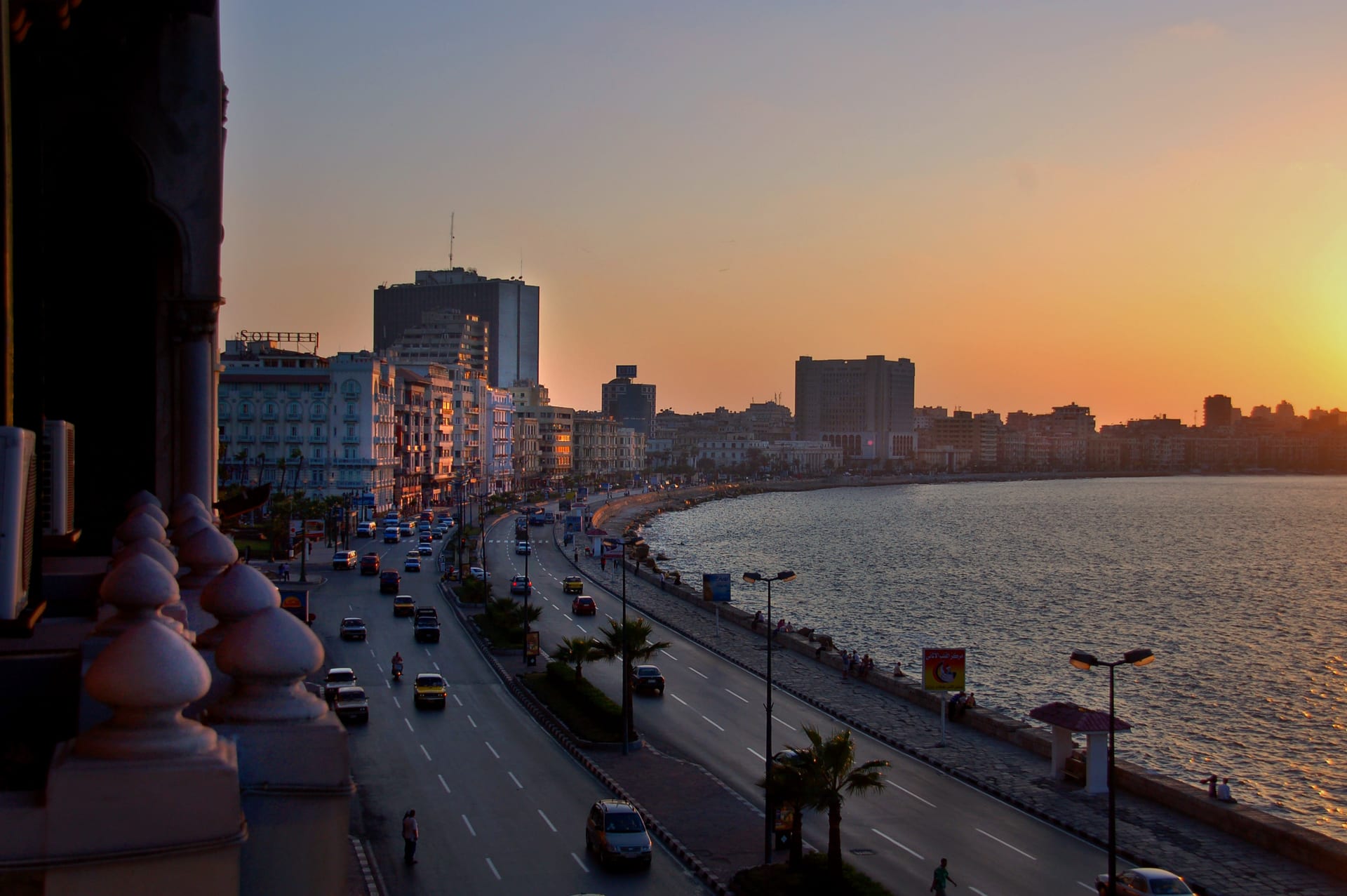
37/100Alexandria trades on faded grandeur, its long Mediterranean corniche and the modern library giving it genuine public sweep even as litter and neglect creep along the edges. Upkeep is patchy. But life here is very cheap and lived outdoors, with seafront cafés and street culture running late for almost nothing.
Safety
50/100Violent crime is low and street-level danger limited, broadly in line with Cairo and far safer than its raw size might suggest. Petty theft and a sense of caution after dark are the everyday concerns. The larger shadow is political stability, which scores poorly and can mean occasional unrest.
Healthcare
35/100The weak spot. Doctors are thin on the ground, hospital quality and access are middling, and emergency care is not something to lean on, much like Cairo. Those with means use private clinics, where some English is spoken, but anyone with serious medical needs should plan carefully.
Family life
35/100Workable but unremarkable for raising children. Childcare is reasonably affordable and the climate makes outdoor time easy, with parks and playgrounds about. Schools rate low, though, and the formal support around parental leave is limited. It functions, with clear gaps to plan around.
Career
40/100Local prospects are narrow, with limited industry breadth and few roles suited to people working in English. Typical local pay is low, while unemployment is 6.8%. Remote work is possible but not a standout advantage.
Culture & food
58/100Where Alexandria comes alive. Centuries of Mediterranean and Levantine layering give it a strong local character, a serious cafe culture, good seafood-led restaurants, and a museum and events scene that holds its own. The international community stays small, though, and nightlife is restrained by regional standards.
Ease of integration
44/100Daily life runs on Arabic, with English useful in tourist and professional circles but far from universal. Locals are warm and genuinely open to outsiders, a trait shared across Egyptian cities. Yet the conservative social fabric and small foreign community mean integrating takes real effort and patience with the language.
Connectivity
27/100Functional but dated. Public transport is limited and cycling is an afterthought, leaving most journeys to congested roads, though traffic moves a touch better than in Cairo. Digital connectivity is slow by global standards, and dealing with officialdom stays paper-heavy and frustrating.
Social values
traditionalSocially conservative and rooted in tradition, much like the rest of Egypt. Public life is religious rather than secular, gender norms are traditional, civic trust is low, and the city is among the least welcoming places anywhere for LGBTQ residents, a genuine safety concern. Newcomers are received hospitably, but local diversity is low.
Relocation ease
41/100The practical landing is uneven. Visas and housing are manageable, but work authorization, bureaucracy, and banking add paperwork. The language barrier and cultural adjustment are substantial. The tax burden is about 19%, although tax complexity still adds friction.