Affordability
74/100Tunis' open-market one-bedroom rent on a new lease is about $269 per month. That is roughly 87% of one typical employee's mean net pay, a rent burden labelled solo unlikely.
Climate
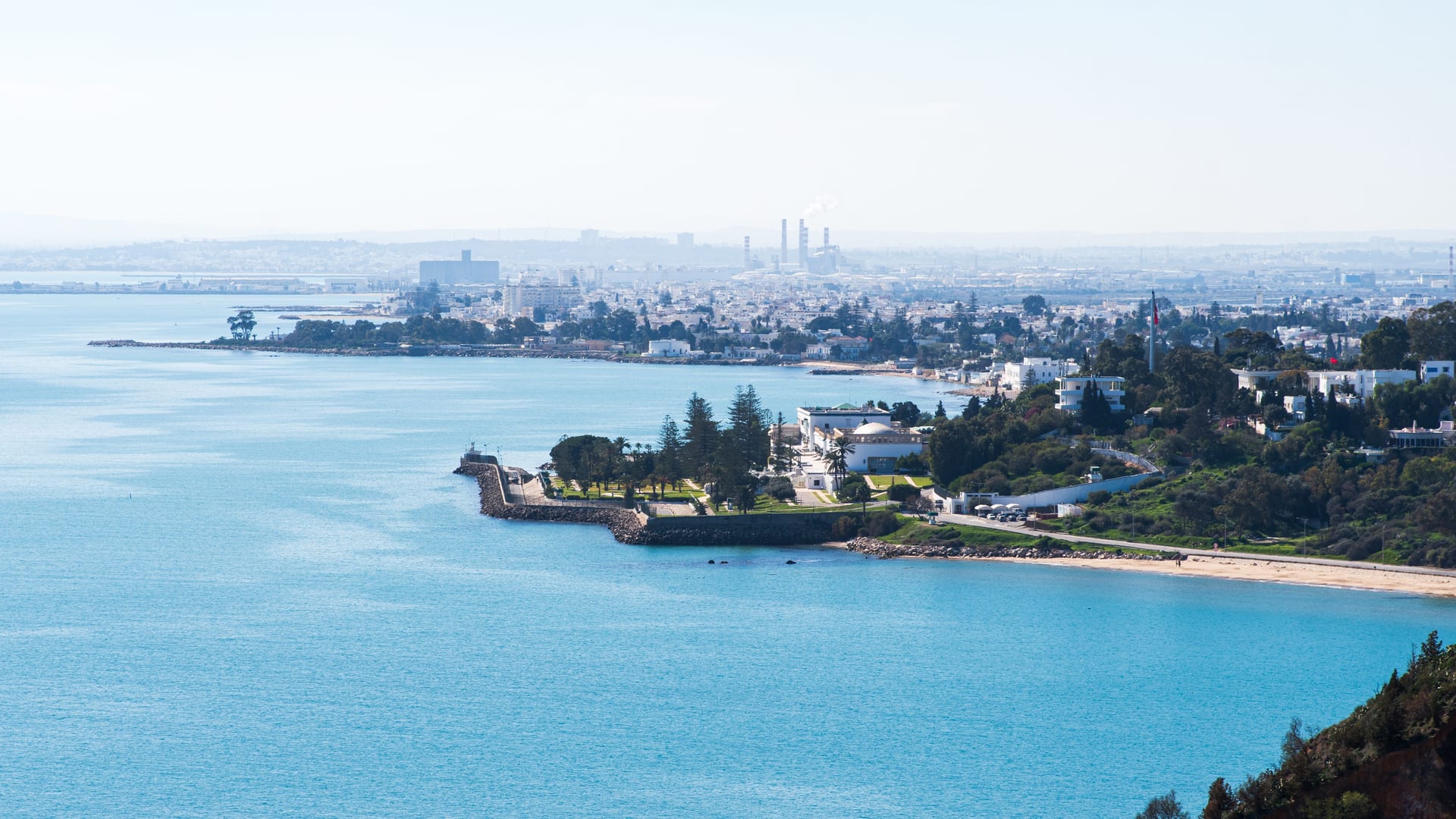
mediterraneanTunis has mild winters and hot summers, with a bright sky for much of the year. About 288 days are bright and only 41 are rainy-grey, while muggy conditions appear during the hotter stretches rather than defining every month. The result is a warm climate with a clear seasonal rhythm.
Nature access
coastalNot the city's strong suit. Parks inside town are limited and green space per resident is thin, so the everyday outdoors feels sparse. The coast is the saving grace, with the sea and beach towns close at hand. Mountains, forests, and serious hiking are a long way off compared with what Morocco offers.
Urban form
mid-sizedA compact, human-scaled capital rather than a sprawling metro. Getting around the central districts on foot is workable, mixed-use streets keep shops and homes tangled together, and the overall tempo is unhurried. It is smaller and lower-key than most North African capitals a reader might picture, which suits people after calm over big-city intensity.
Public life & spaces
52/100Tunis splits between a worn medina and the colonial Ville Nouvelle, upkeep modest across both, with the historic squares and Avenue Habib Bourguiba giving it real public space to stroll. Polish is not the point. Life is very cheap and outdoor, with café culture and street life filling the day for almost nothing.
Safety
57/100Daily life in Tunis is manageable, with violent crime not especially prominent and daytime movement generally comfortable. Yet a homicide rate of about 4.7 per 100,000 means serious violence is not absent. Petty theft and road traffic call for care, while political stability is a more serious long-term concern.
Healthcare
45/100A two-tier picture. Private clinics handle routine and many serious needs at low cost, but doctors per resident are scarce, emergency care can be unreliable, and English in medical settings is limited. Anyone with complex health needs should plan around private cover and expect French or Arabic to matter at the front desk.
Family life
51/100Workable for families on a budget, with cheap housing and affordable childcare, and a culture that leaves room for life outside work. The weaknesses are real: public schools rate poorly, formal parental leave is minimal, and playgrounds and family-friendly green space are scarce. Many expatriate families lean on private or international schooling.
Career
44/100Tunis offers a thin local career market, with unemployment around 15% and limited industry breadth. English-language roles are scarce, professional networks are light, and local pay is very low. Remote work provides some room, but it is not especially easy, so a secured income makes the move much more workable.
Culture & food
65/100Where the city shines. Local culture runs deep and unselfconscious, cafes are everywhere and central to the social day, and the food scene rewards the curious. Museums and events outpace what most regional peers manage. The international community is small, though, and getting by without Arabic or French takes effort.
Ease of integration
52/100Arabic is the everyday language, with French widely used and English far less so, so the language barrier is real for newcomers. Locals tend to be warm and open to foreigners, which helps, but building deep ties usually means picking up at least functional French. The small expatriate circle is easy to find but limited.
Connectivity
37/100The shakiest category. Internet speeds lag well behind even modest regional benchmarks, public transport is basic, and cycling is barely catered for. Bureaucracy is largely paper-bound and utilities are not fully dependable. Road traffic is moderate and the airport offers decent reach, but day-to-day systems demand patience.
Social values
traditionalMore secular and socially relaxed in public life than Marrakech or the Gulf, with comparatively better footing on gender. Still, this is a conservative society overall: social liberalism is limited and LGBTQ acceptance is very low, an important caveat for some. Openness to foreigners, by contrast, tends to be genuine.
Relocation ease
45/100Mixed friction. Getting a visa and finding housing are relatively straightforward, easier on the visa front than much of the region. The drag comes after arrival: heavy bureaucracy, slow banking and admin, and the language gap. Cultural adjustment is gentler than parts of the Maghreb but still asks for flexibility.