
Living in Cairo
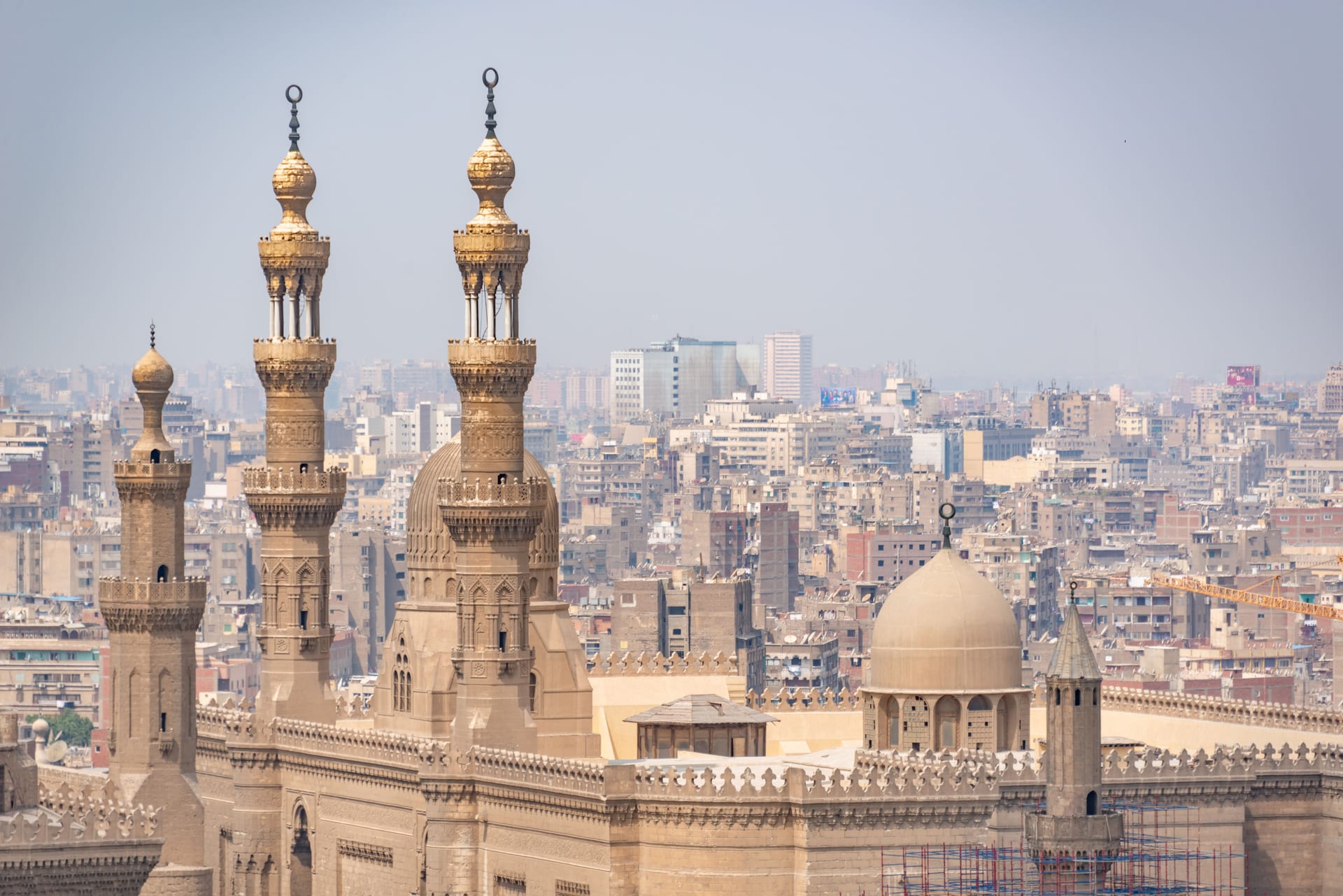
Cairo is a high-energy capital with mild, bright winters and about 351 bright days a year. Life is inexpensive, but typical local pay is low and the local job market is thin. It rewards people seeking intensity and culture who can handle traffic and uneven services.
Cairo at a glance
Vital stats
Shown in USD: the local currency (EGP) moves too fast for stable monthly figures.
Where Cairo stands out
The metrics where Cairo sits farthest from the middle worldwide, good and bad.
Cheap to arrive, expensive to stay?
A typical one-bedroom in Cairo runs $239/mo. That is beyond the mean net pay of a typical local employee. This is a solo-newcomer stress test: sitting tenants, shared homes, subsidised housing and informal rents are deliberately outside the numerator.
The fastest way to test a shortlist is to go. A week on the ground tells you things no ranking can.
Partner link
Approved language-learning and international money resources for practical next steps.
Daily life in Cairo
How Cairo scores
Category by category
Affordability
74/100Cairo's open-market one-bedroom rent on a new lease is about $239 per month. The rent-to-income measure reaches its 120% ceiling against one typical employee's mean net pay, so the underlying burden may be higher; the band is beyond local pay.
Climate
mediterraneanCairo has almost no rainy-grey days, with about 351 bright days each year. Summer is the cost of that clear sky: heat discomfort is high, and muggy conditions run for roughly 105 days. Air quality is a serious weakness, with dust and urban pollution compounding the heat.
Nature access
lakes & riversGreen space is in short supply here. Parks are scarce and small, there is no coastline or mountains within easy reach, and forests are effectively absent. Weekend escapes to the desert or the Red Sea exist for those willing to drive, but daily access to nature is not what Cairo offers. People come for the city, not the outdoors.
Urban form
megacityThis is a vast, dense, car-leaning metropolis that never quite slows down, far busier than Marrakech. Walkability is patchy and most neighbourhoods are built around driving or grabbing a taxi, and the sheer scale can overwhelm newcomers. The energy and pace draw some people in, but anyone wanting a calm, human-scaled urban fabric will find Cairo a stretch.
Public life & spaces
11/100Cairo is dusty, congested and grubby, litter constant and cared-for public space scarce beyond a few historic squares and the Nile corniche. The sprawl is chaotic. But daily life here is very cheap and lived outdoors: cafés, markets and intense street culture cost almost nothing and run deep into the night.
Safety
45/100On serious violent crime Cairo scores well, with homicide rates low and the streets generally safe to move through, and road safety holds up better than much of the region. Petty crime and the everyday sense of order are more mixed. The bigger caveat is political stability, which sits at the weak end and can colour the broader mood of daily life.
Healthcare
39/100Healthcare is a genuine weak spot. Doctor availability is very thin relative to the population, and the quality and reliability of public care lag well behind what a wealthier country would offer. Private clinics are the realistic route for newcomers, and English-speaking care is easier to find than in Marrakech, but emergency reliability and overall system depth stay limited.
Family life
31/100For families, Cairo is a mixed proposition. Childcare costs are manageable and child safety is reasonable, but schools and public family services score below average, pushing many families toward private and international options. Outdoor childhood is constrained by the climate and the lack of green space, so family life here leans heavily on indoor and community settings.
Career
58/100Cairo's local market is shallow for many newcomers. Typical local pay is low, while job-market depth, English-language roles, and remote-work conditions are all limited. Unemployment is 6.8%, and the city is a better fit for transferred or external income than for building from scratch on local pay.
Culture & food
75/100This is where Cairo shines. Few cities in the region match its depth of history, museums, and living local culture, and its arts and music scene outpaces most North African neighbours including Marrakech. Cafes and restaurants are plentiful and good for the price. The international layer is thinner, but for anyone who values heritage and a distinct local identity, Cairo delivers.
Ease of integration
56/100Arabic is the language of daily life, and English alone goes only so far outside tourist and business circles, so picking up some Arabic matters for real integration. Egyptians are widely regarded as warm and welcoming to outsiders, on par with Marrakech, which helps newcomers find their footing. The society leans traditional, though, so building deeper local ties takes patience and a willingness to meet the culture on its terms.
Connectivity
35/100Infrastructure is uneven. Cairo's airport keeps it strongly connected internationally and intercity rail beats Marrakech, both real pluses. On the ground things are harder: public transport is limited for a city this size, road congestion is a daily fact, and digital infrastructure is notably weak. Utility reliability and government digitisation are functional but dated, and patience helps.
Social values
traditionalCairo is socially conservative, and it is honest to say so, more so than Marrakech. Secular public culture, social liberalism, and gender equality all score low, and the climate for LGBTQ residents rates at the very bottom, where life is openly difficult. People are personally hospitable to foreigners, but the prevailing public values lean firmly traditional, a poor fit for anyone wanting a liberal social environment.
Relocation ease
39/100Cairo is relatively easy to enter, with manageable visa and housing steps, but the move becomes slower once paperwork begins. Bureaucracy and banking are cumbersome, cultural adjustment is substantial, and work authorisation is not effortless. The headline tax burden is about 19%, a relative bright spot.
The trade-offs
A year in Cairo
Jul peaks around 36°C, Jan days top out near 19°C, and the year brings roughly 351 bright days.
Can you actually move here?
The hard limits people most often bring to a move, scored against Cairo's data.
Moving with a pet
Bringing a pet to Cairo is moderately straightforward, with import requirements on par with Marrakech and a touch simpler than Cape Town. Expect standard vaccination and paperwork rather than long quarantine, but line up the vet documentation early and confirm current airline and entry rules ahead of the move.
Who Cairo works for
Answer the questionnaire and see where Cairo lands for you.
Take the free questionnaireWhere else to look
Cairo vs. comparable cities


Objective scores (0–100) for Cairo and its 4 nearest comparable cities.
The cities people weigh against Cairo
Unexpected siblings
Far from Cairo on the map, close across all 14 categories of daily life.


