Affordability
74/100Da Nang's open-market one-bedroom rent on a new lease is about $272 per month. That is roughly 94% of one typical employee's mean net pay, a rent burden labelled solo unlikely.
Climate
tropicalDa Nang stays warm through winter, but the tropical label comes with a long stretch of sticky weather. July averages about 30°C and conditions are muggy on almost every day of the year. The sky is the bigger drawback, with only around 100 bright days and a long rainy-grey season. Air quality is no longer a clear advantage.
Nature access
coastalThe headline draw is the coast, a long sandy beach right in the city and ocean access that beats almost any peer in the region. Forested hills and the Marble Mountains sit close by, and weekend trips into the countryside come easily. Inside the city itself, parks and green space are scarce.
Urban form
large cityA compact, low-rise city that feels relaxed next to the sprawl of Ho Chi Minh City. The pace is gentle and neighbourhoods are pleasant, but getting around means a motorbike or car. Walkability is modest and the city is built around riding rather than strolling.
Public life & spaces
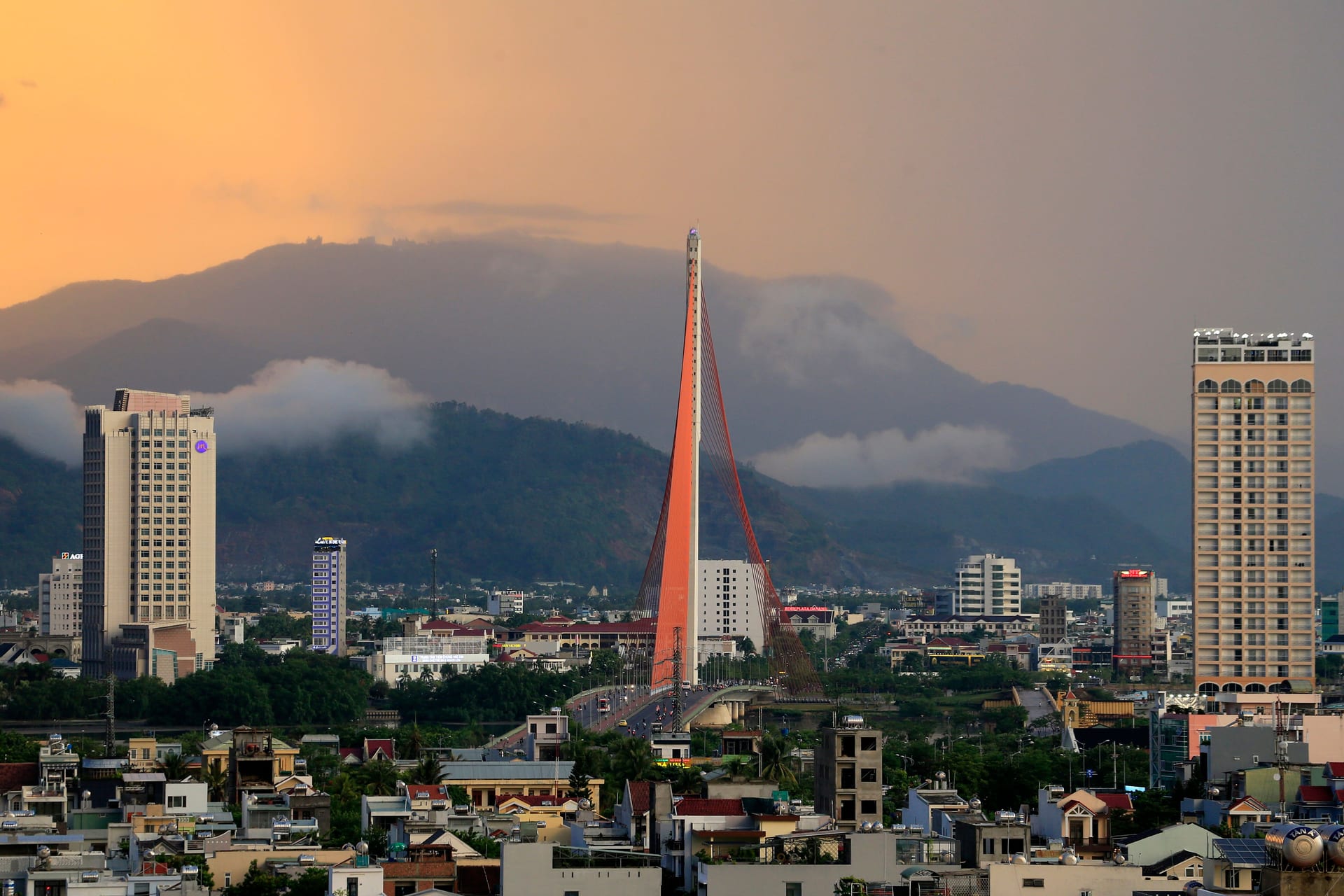
70/100Da Nang is newer and more orderly than its Vietnamese peers, its long beachfront and the Han riverside promenade kept genuinely clean. The Dragon Bridge and waterfront give it more built public space than most. Living is cheap, the beaches and festivals free; it just lacks the deep street-life density of Hanoi.
Safety
68/100Violent and serious crime are very rare, and people generally feel safe walking around, including after dark. Petty theft exists but stays low by big-city standards. The serious caveat is traffic: roads are chaotic and accident rates are high, on par with Bangkok, so the streets are the real daily risk.
Healthcare
46/100The weakest part of living here. Local hospitals and clinics handle routine care, but quality, specialist depth, and the number of doctors all lag well behind regional hubs. English-speaking care is limited, and many residents travel to Ho Chi Minh City, Bangkok, or Singapore for anything serious.
Family life
52/100A safe, outdoor-friendly place to raise young children, with the beach, an unhurried rhythm, and affordable childcare working in its favour. Schooling is the soft spot: options are limited and international schools are fewer than in the bigger Vietnamese cities, so families with school-age kids may feel the gap.
Career
57/100Da Nang has low unemployment, but local career options are narrow, especially for English-language work and network-building. Local pay is low by the wider benchmark, and the small startup base offers limited breadth. Remote work is a much better fit for people earning from abroad.
Culture & food
65/100Vietnamese food culture is the strength here, with excellent local restaurants and an outstanding cafe scene that rivals anywhere in the country. Street eating is cheap and very good. Where it falls short is the wider cultural offering: museums, live music, and the arts are modest compared with Ho Chi Minh City or Bangkok.
Ease of integration
59/100Vietnamese dominates daily life and English is far from universal, so the language barrier is real and slows down forming local ties. Locals tend to be warm and open to foreigners, and a growing expat and digital-nomad scene makes it easy to find an international circle. Integrating deeply, though, takes patience and some Vietnamese.
Connectivity
39/100Public transport is essentially nonexistent, with no metro and minimal buses, so a motorbike is close to mandatory. Intercity rail is slow and limited. On the upside, internet is fast and reliable, road congestion stays low for a Vietnamese city, and the airport offers decent regional connections.
Social values
mixedSocially moderate and broadly secular in everyday life, more relaxed than Manila but more traditional than Bangkok or a European capital. Attitudes toward foreigners are welcoming, while openly progressive politics and visible diversity are limited under a one-party state. Day-to-day life feels easygoing rather than ideological.
Relocation ease
44/100Settling in is a mixed bag. Finding housing is quick and informal, but visas, work authorization, banking, and bureaucracy all take effort and patience, and the language barrier compounds the paperwork. The cultural adjustment for many newcomers is manageable, helped by an established foreign community already navigating the same hurdles.