Affordability
77/100Goa (Panaji)'s open-market one-bedroom rent on a new lease is about $259 per month. That is roughly 88% of one typical employee's mean net pay, a rent burden labelled solo unlikely.
Climate
tropicalGoa's winter is warm and bright, but the climate is humid almost year-round rather than simply pleasant. The wet season brings a long stretch of rain and grey skies, with about 144 rainy-grey days. Heat stays oppressive through the warmer months. Air quality is a real drawback, while seasonal darkness is barely an issue.
Nature access
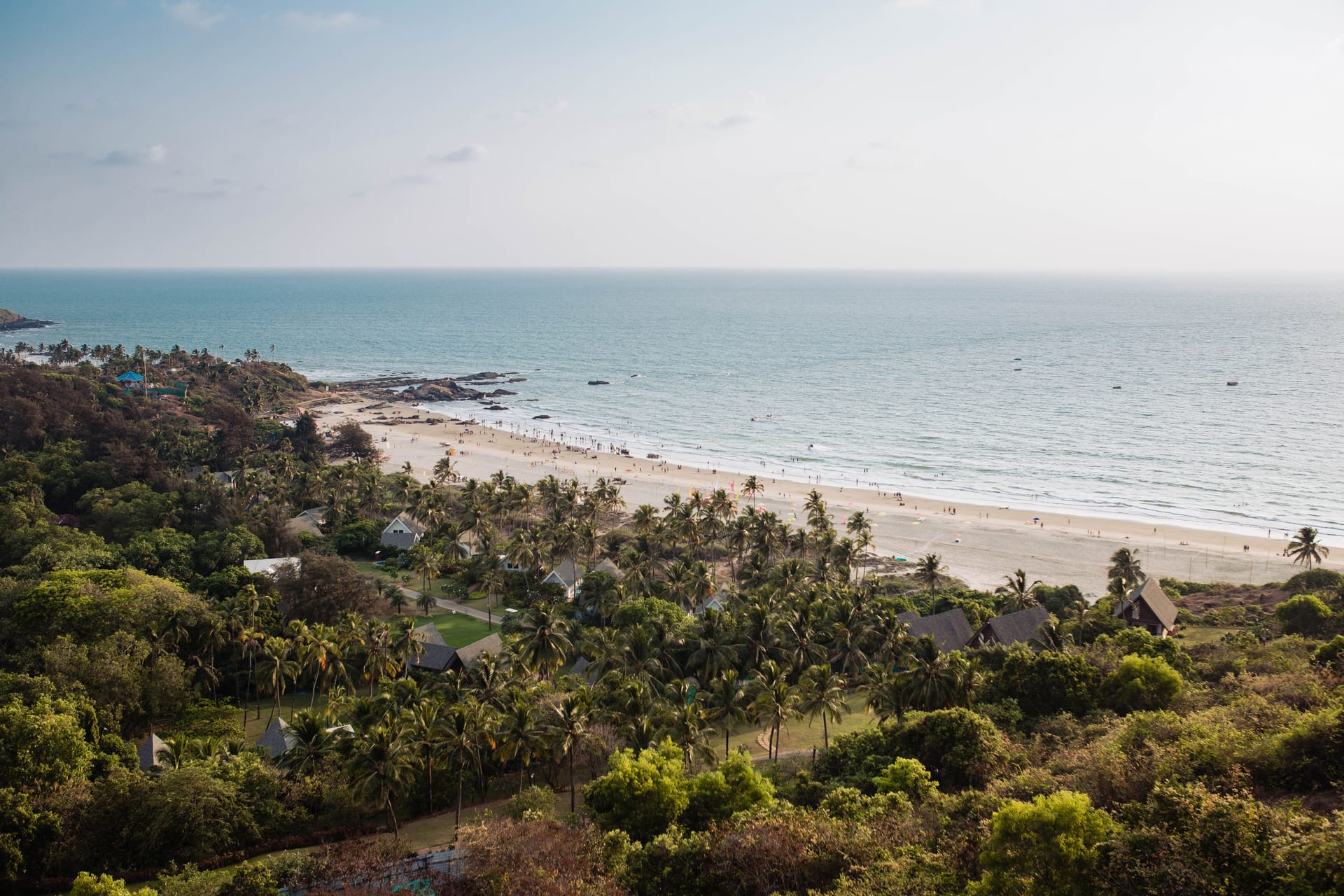
coastalThis is Goa's headline. The coastline and beach access rank with the best on the list, and the surrounding Western Ghats put forest, rivers, and weekend hiking within easy reach. The weak spot is inside town, where formal parks and green space per resident are sparse.
Urban form
small cityPanaji is small in metropolitan terms, with a city population of about 114,000. Its low-density feel comes with poor walkability and heavy car dependence. Homes offer more space, but daily errands are rarely built around walking.
Public life & spaces
63/100Goa breathes easier than the mainland metros — beach and tourist zones stay tidier, the density lower. Its public life is the coast itself, plus Portuguese-era squares, churches and seafront promenades. Best of all it's cheap and outdoors: free beaches, night markets, festivals and a live-music scene cost next to nothing.
Safety
59/100Violent crime is low and the general sense of personal safety is solid, better than most large Indian cities. Petty theft and night-time caution are worth keeping in mind, as in any tourist-heavy place. The broader national backdrop of political stability is the weakest element here.
Healthcare
43/100Care is serviceable rather than excellent, with decent private hospitals for routine needs but a real thinness of doctors relative to demand. For anything serious, people often travel to larger Indian cities. One clear plus is that English is widely spoken in clinical settings, which removes a major barrier.
Family life
49/100The outdoor, beach-and-nature childhood is the strongest argument for raising kids here, helped by relaxed work-life rhythms and affordable childcare. Schooling is the soft point, with limited high-quality options compared to the big metros, where international schools cluster. Many expat families end up weighing exactly that trade-off.
Career
49/100Local career options are narrow, with a small job market and limited industry depth. Typical local pay is low in the wider comparison, so building income locally is difficult despite relatively low unemployment. Remote work is the clearer route, though the local professional network remains thin.
Culture & food
79/100The food and going-out scene punches above the town's size, from beach shacks and serious restaurants to a long-running nightlife reputation along the coast. Vegetarian eating is effortless. The Indo-Portuguese local culture gives it a character distinct from the rest of India, though formal museums and high-art venues are limited.
Ease of integration
63/100English goes a long way here, and between Konkani, Hindi, and a large foreign and out-of-state population, newcomers connect more easily than in many Indian cities. Goa is unusually open to outsiders and less socially conservative than the mainland norm, so the long-stay and digital-nomad crowd finds a ready-made circle.
Connectivity
40/100This is the practical weak link. Public transport barely exists, cycling infrastructure is minimal, and utilities can be patchy, so independent transport is close to mandatory. On the upside, there is none of the gridlock that defines Bengaluru or Mumbai, and the airport gives reasonable regional and seasonal international links.
Social values
mixedGoa leans more secular and socially liberal than most of India, a legacy of its mixed Catholic and Hindu, Portuguese-influenced heritage. It is visibly open to foreigners and relatively relaxed on gender and lifestyle by national standards. Civic orderliness and institutional trust remain middling.
Relocation ease
41/100The language hurdle is light, and visas and housing are manageable enough. Work authorization and administration take patience, since bureaucracy, tax complexity, and banking are all demanding. The tax burden is relatively light at about 19%, but the practical setup remains slow.