
Living in Lima
Lima pairs mild coastal weather with surprisingly few rainy-grey days and a fair amount of bright weather, though humidity and clammy conditions remain part of daily life. The local market is modest, and local pay is very low by international standards, so the city suits remote earners who can accept uneven safety.
Lima at a glance
Vital stats
Shown in USD: the local currency (PEN) moves too fast for stable monthly figures.
Where Lima stands out
The metrics where Lima sits farthest from the middle worldwide, good and bad.
Cheap to arrive, expensive to stay?
A typical one-bedroom in Lima runs $502/mo. That is ~104% of one typical local employee’s mean net pay. That is 7 points above Bogotá, its closest rival among nearby cities. This is a solo-newcomer stress test: sitting tenants, shared homes, subsidised housing and informal rents are deliberately outside the numerator.
The fastest way to test a shortlist is to go. A week on the ground tells you things no ranking can.
Partner link
Approved language-learning and international money resources for practical next steps.
Daily life in Lima
How Lima scores
Category by category
Affordability
68/100Lima's open-market one-bedroom rent on a new lease is about $502 per month. That is roughly 104% of one typical employee's mean net pay, a rent burden labelled solo unlikely.
Climate
tropicalLima's coastal climate is mild rather than hot, with small temperature changes across the year. The sky is clearer than its old grey reputation suggests, with bright days and very few rainy-grey ones. Humidity still makes the air feel clammy, and air quality is a genuine drawback.
Nature access
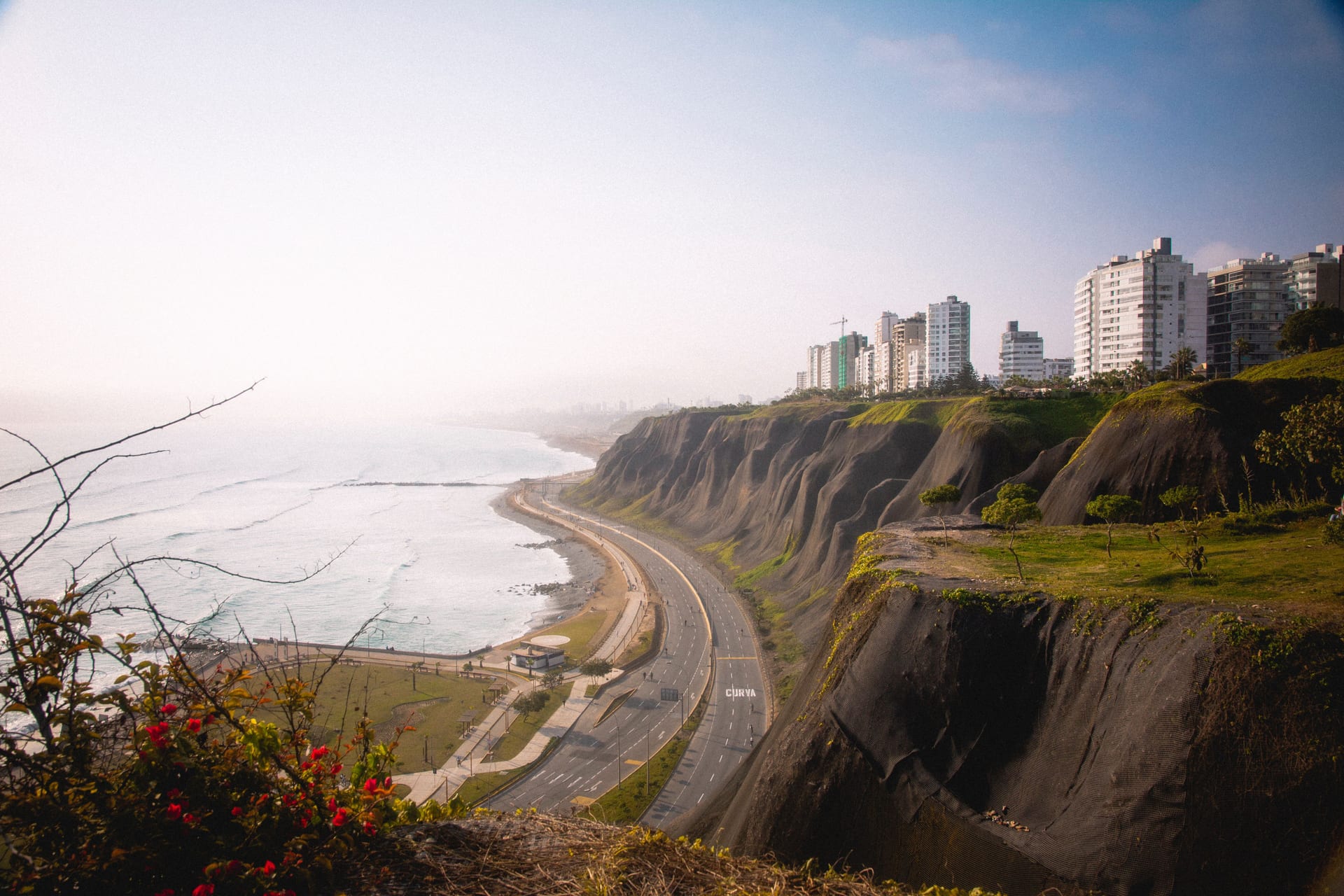
coastalThe Pacific is right there, with surf breaks and clifftop promenades a short trip from much of the city, and weekend escapes into the Andean foothills are within reach. Green space inside Lima itself is thin, though, and parkland is unevenly spread. Forests, lakes, and proper hiking trails take more effort to reach than the coastline does.
Urban form
megacityThis is a vast, low-slung sprawl rather than a compact core, and it shows in the daily commute. Walkability and density are middling, neighbourhoods vary a lot in quality from one district to the next, and getting around without a car or a taxi app is awkward in most areas. The pace itself is fairly brisk, on a par with Bogotá.
Public life & spaces
44/100Lima is dusty and worn, traffic-choked and grimy once you leave the kept districts. The redemption is the coast: Miraflores' clifftop malecón and parks run for miles above the Pacific, free to anyone. Street food and festivals cost almost nothing here, but the upkeep beyond the tourist core is rough.
Safety
40/100Safety needs a clear-eyed read. A homicide rate of about 11 per 100,000 sits alongside high petty-crime exposure, low confidence after dark, and weak political stability. Residents adapt routes and routines accordingly, so the city does not feel as easygoing after sunset as its mild climate might suggest.
Healthcare
43/100Care in Lima is workable rather than reassuring. Private clinics in the better districts are decent and reasonably accessible, and some English-speaking staff can be found there, but doctor availability across the city is stretched thin. Emergency reliability is uneven, and navigating insurance takes some legwork.
Family life
40/100Lima can be done with kids, but it asks a lot of parents. Childcare is reasonably available and affordable, yet schools, child safety, and the surrounding work-life culture all sit on the weaker side. Family-sized housing is reachable but no easier than in Bogotá or Mexico City, and the coast gives children somewhere to burn energy when the fog lifts.
Career
49/100Lima is more workable for remote earners than for people relying on the local market. The job market and industry mix are modest, English-language roles are limited, and typical local pay is very low by international standards. Remote work is possible, but the local career runway remains narrow.
Culture & food
61/100Food is where Lima genuinely shines and arguably leads the continent, with a dining scene that ranges from celebrated tasting menus to ceviche counters and Nikkei kitchens. Beyond the table there are strong museums, a lively music and arts life, and good cafes and nightlife. The main friction for outsiders is language, since the cultural world here runs largely in Spanish.
Ease of integration
56/100Limeños tend to be warm and fairly open to foreigners, and there is an established expat presence in the coastal districts. The real gatekeeper is language: this is a deeply Spanish-speaking city, English goes only so far, and integrating beyond an expat bubble means committing to the local tongue. Civic trust runs low, which can make institutional life feel impersonal at first.
Connectivity
30/100The basics are patchy. Internet and digital connectivity are reasonable, and the airport links Lima well across the Americas, but public transport is improvised and overstretched, there is effectively no intercity rail in Peru, and traffic congestion is heavy. Bureaucracy stays paper-heavy and utilities can be unreliable, so a degree of improvisation comes with the territory.
Social values
traditionalLima reads as moderately open and curious about outsiders, more welcoming to foreigners than its overall conservatism might suggest. On gender equality, secular public life, and LGBTQ acceptance it remains fairly traditional, more so than Mexico City, shaped by a strong Catholic culture, and day-to-day orderliness and civic trust are weak. Newcomers from more liberal places will notice the gap.
Relocation ease
53/100Settling in Lima is moderately friendly on the formalities, with a reasonably navigable residence path and manageable work authorization. The bigger frictions are everyday ones: heavy paper bureaucracy, a clear Spanish-language barrier, and a banking and admin system that tests patience. Cultural adjustment is gentle enough, and finding housing is no worse than average.
The trade-offs
A year in Lima
Feb peaks around 25°C, Jul days top out near 19°C, and the year brings roughly 211 bright days.
Can you actually move here?
The hard limits people most often bring to a move, scored against Lima's data.
Moving with a pet
Bringing a pet to Lima is relatively straightforward, among the easier moves in the region. Plan on the standard health certificate, vaccinations, and an import permit, with the paperwork best lined up well before travel.
Who Lima works for
Answer the questionnaire and see where Lima lands for you.
Take the free questionnaireWhere else to look
Lima vs. comparable cities


The cities people weigh against Lima
Unexpected siblings
Far from Lima on the map, close across all 14 categories of daily life.

