
Living in São Paulo
São Paulo has a mild subtropical climate with warm summers and cooler winters, but bright spells share the year with frequent rainy-grey and muggy periods. Its local market is broad and well connected, though local pay is low by international standards and English-only work is less dependable. Career opportunity is real, but local income remains the central constraint.
São Paulo at a glance
Vital stats
Shown in USD: the local currency (BRL) moves too fast for stable monthly figures.
Where São Paulo stands out
The metrics where São Paulo sits farthest from the middle worldwide, good and bad.
Cheap to arrive, expensive to stay?
A typical one-bedroom in São Paulo runs $577/mo. That is ~106% of one typical local employee’s mean net pay. That is 12 points above Asunción, its closest rival among nearby cities. This is a solo-newcomer stress test: sitting tenants, shared homes, subsidised housing and informal rents are deliberately outside the numerator.
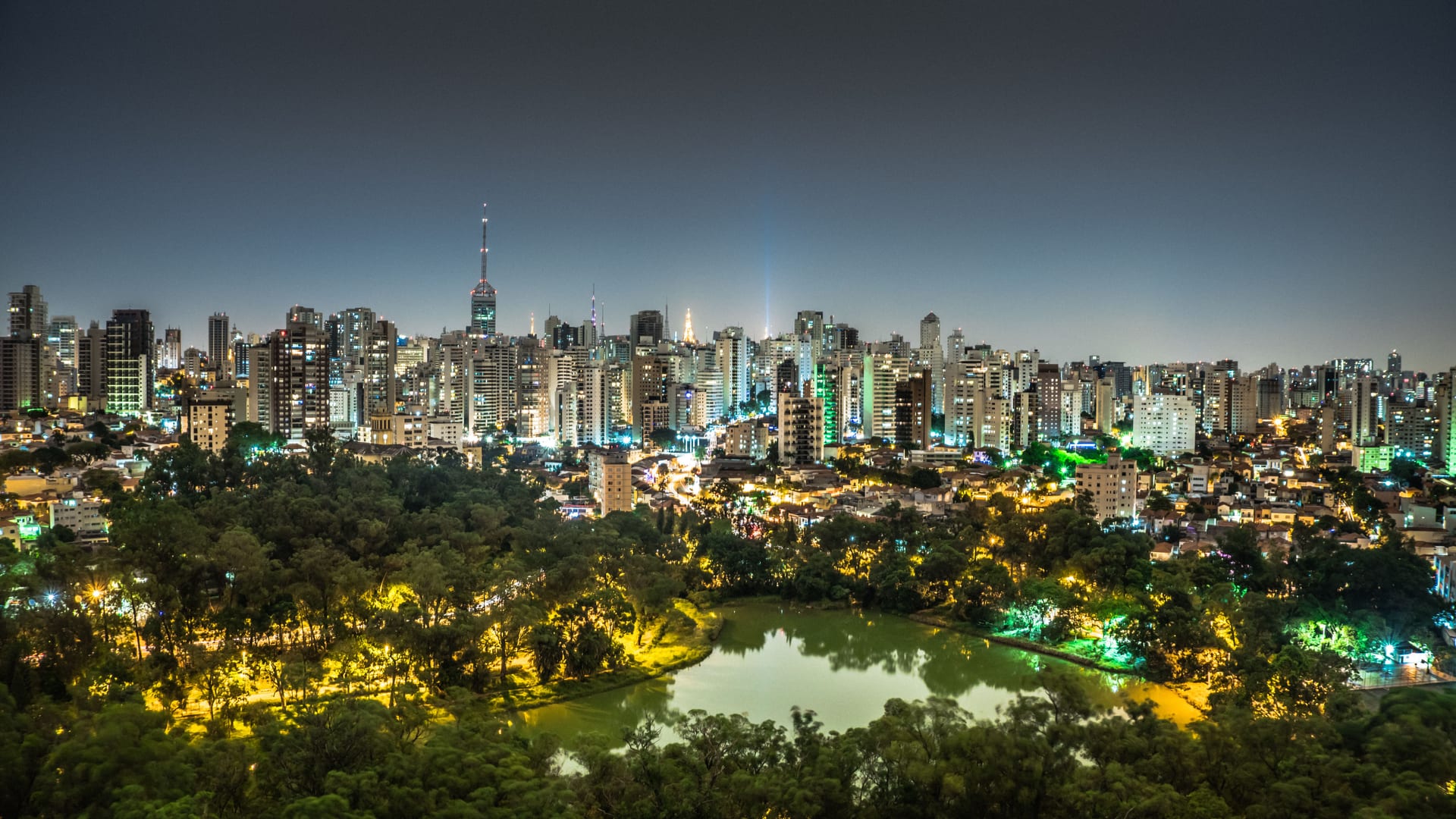
The fastest way to test a shortlist is to go. A week on the ground tells you things no ranking can.
Partner link
Approved language-learning and international money resources for practical next steps.
Daily life in São Paulo
How São Paulo scores
Category by category
Affordability
70/100São Paulo's open-market one-bedroom rent on a new lease is about $577 per month. That is roughly 106% of one typical employee's mean net pay, a rent burden labelled solo unlikely.
Climate
temperateSão Paulo has a mild subtropical rhythm rather than tropical extremes, with warm summers and cooler winters. The sky is mixed, with bright spells interspersed with rainy-grey stretches. Muggy conditions arrive through much of the year, and air quality is a less appealing part of the picture.
Nature access
forestedNature is the weak spot. Green space per resident is thin, and the concrete runs in every direction, with only a handful of decent parks breaking it up. Beaches, mountains and proper hiking all sit some distance away rather than on the doorstep, so escaping the grey usually means a weekend trip out of the city.
Urban form
megacityThis is one of the densest, most relentlessly built-up cities in the Americas, and it feels it. The pace is quick, mixed-use neighbourhoods are walkable in pockets, but the sheer scale means car dependency and sprawl shape daily life. Where Rio is defined by its coastline, São Paulo is defined by its endless verticality and energy.
Public life & spaces
52/100Sao Paulo is huge and gritty, graffiti and traffic everywhere, with only pockets genuinely kept. Yet its free culture is deep: the SESC centres, free museums, Ibirapuera's lawns and Avenida Paulista's Sunday crowds. The public space is strong where it lands. Living costs, though, run higher than much of the region.
Safety
44/100Safety is a serious concern and honesty matters here. While the homicide picture has improved markedly, street crime, phone-snatching and a real wariness after dark are part of the rhythm, and perceived safety stays low. Political and institutional stability also feels shakier than residents would like. Locals adapt with habits and street smarts rather than relaxing.
Healthcare
63/100Healthcare is middling. The best private hospitals are genuinely good and broadly accessible to those who can pay or carry insurance, but the public system is stretched, doctor availability is tight, and navigating coverage takes effort. English-speaking care exists in the private tier but cannot be assumed everywhere.
Family life
45/100São Paulo is a demanding place to raise children. Safety worries weigh on family life, schools and parks are uneven, and the intense, long-hours work culture leaves little breathing room. Childcare is available but the overall package for families trails what the city offers single professionals and couples.
Career
77/100São Paulo has a broad local market, with strong job options and unusually dense professional networks. A substantial startup scene adds another route, while English-only work is less dependable. Typical local pay is low by international standards, so opportunity is more convincing than local income.
Culture & food
88/100Culture and food are the city's crown. The restaurant scene is among the best in Latin America, the nightlife runs deep and late, and there is a constant churn of music, art, museums and events feeding off a large international crowd. Eating and going out well here is easy and rewarding. The main barrier is language, with English thinning quickly outside professional and expat circles.
Ease of integration
70/100Portuguese is essential for real integration, and English goes only so far once daily life begins. Paulistanos are warm and open to foreigners, and the city's diversity and international scene help newcomers find footing. Social attitudes lean liberal and welcoming, though building a genuine local circle takes the language and some patience.
Connectivity
54/100Infrastructure is a mixed bag. The metro and airport connections are solid and the city stays plugged in, but traffic congestion is notorious, digital admin and bureaucracy lag, and intercity rail is essentially absent, so travel between Brazilian cities means flying or long road trips. Day-to-day utilities hold up reasonably well.
Social values
progressiveSocially, São Paulo is among the more progressive corners of Brazil. It is notably open to the LGBTQ community, comfortable with diversity and welcoming to outsiders, with a broadly secular and liberal public life. Civic trust and a sense of everyday order run lower, which colours how smoothly things function.
Relocation ease
48/100Moving here is moderately involved. Visa and work routes are relatively navigable, but bureaucracy and tax paperwork are heavy going, and getting set up with housing and banking takes persistence. The language barrier is the real hurdle, since so much of officialdom runs in Portuguese.
The trade-offs
A year in São Paulo
Jan peaks around 28°C, May days top out near 23°C, and the year brings roughly 180 bright days.
Can you actually move here?
The hard limits people most often bring to a move, scored against São Paulo's data.
Moving with a pet
Bringing a pet into Brazil is relatively straightforward, with a clear vaccination and health-certificate process rather than the long quarantines some countries impose. Plan the paperwork ahead, but expect a manageable rather than stressful move for animals.
Who São Paulo works for
Answer the questionnaire and see where São Paulo lands for you.
Take the free questionnaireWhere else to look
São Paulo vs. comparable cities
Objective scores (0–100) for São Paulo and its 4 nearest comparable cities.
The cities people weigh against São Paulo
Unexpected siblings
Far from São Paulo on the map, close across all 14 categories of daily life.


