
Living in Quito
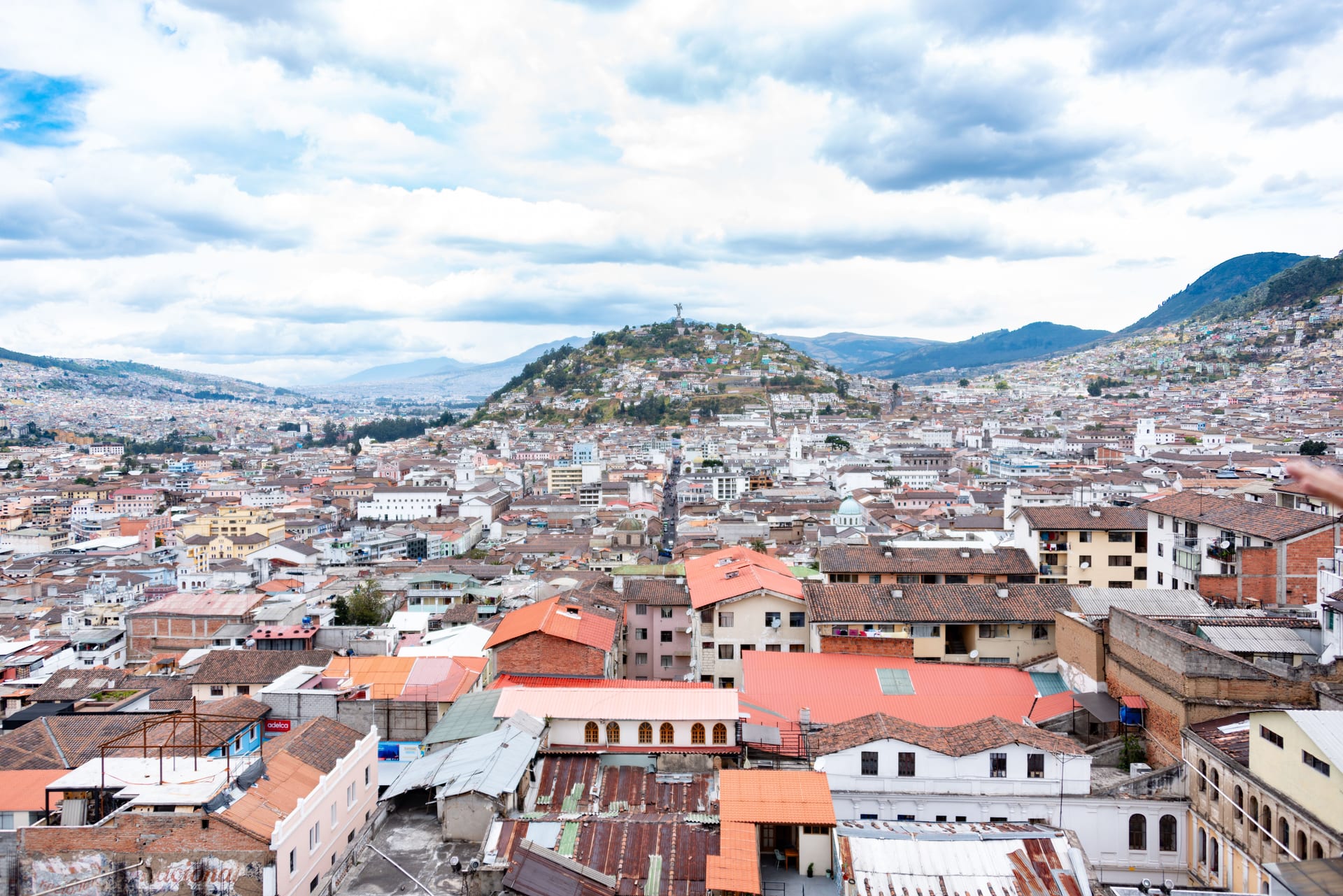
Ecuador's capital sits high in the Andes, where the altitude buys a mild spring-like climate all year and the cost of living stays among the gentlest of any major Latin American city. It is cheaper and slower than Bogotá or Lima, with mountains on every horizon, though safety and career prospects are real soft spots.
Quito at a glance
Vital stats
Where Quito stands out
The metrics where Quito sits farthest from the middle worldwide, good and bad.
Cheap to arrive, expensive to stay?
A typical one-bedroom in Quito runs $430/mo. That is ~84% of one typical local employee’s mean net pay. This is a solo-newcomer stress test: sitting tenants, shared homes, subsidised housing and informal rents are deliberately outside the numerator.
The fastest way to test a shortlist is to go. A week on the ground tells you things no ranking can.
Partner link
Approved language-learning and international money resources for practical next steps.
Daily life in Quito
How Quito scores
Category by category
Affordability
71/100Quito's open-market one-bedroom rent on a new lease is about $430 per month. That is roughly 84% of one typical employee's mean net pay, a rent burden labelled solo unlikely.
Climate
coldMild temperatures hold through the year, with little seasonal heat. The real compromise is the sky: only about nine bright days a year sit against roughly 318 rainy-grey days. Humidity is high, but muggy heat is not the issue; long clouded spells are.
Nature access
alpineThe Andes are the headline. Hiking, mountain access and weekend trips into national parks and cloud forest are all close, more so than for most Latin American capitals. What it lacks is water and breathing room inside the city: there is no coast within easy reach, and green space per resident is thin.
Urban form
large cityQuito stretches out as a long, low-rise city draped across the valleys, so density is modest and getting around often means leaning on a car. Neighbourhoods and mixed-use streets are workable but walkability is uneven. It feels less compact and less frenetic than Bogotá, with a calmer everyday pace.
Public life & spaces
59/100Quito's UNESCO old town is magnificent, plaza after plaza of colonial churches and squares, though the dense fabric around them shows uneven upkeep and altitude grit. Dollarized prices keep daily life cheap, and the plaza events cost nothing. Grand public space, then, set against streets that stay rough at the edges.
Safety
46/100Serious street awareness is still necessary in Quito. The homicide rate is about 9 per 100,000, while violent and petty crime remain prominent and people do not feel comfortable walking late at night. Traffic is another genuine hazard, and the political backdrop adds uncertainty to daily life.
Healthcare
50/100Care is serviceable rather than excellent. Costs are reasonable and private hospitals in the capital are decent by regional standards, but the supply of doctors is stretched and specialist or emergency care can be uneven. English-speaking practitioners exist but are not the norm outside private clinics.
Family life
49/100Family life here is a mixed bag. Childcare and outdoor time for kids are workable, and parks are within reach. Schools and child safety lag, however, and the broad work-life and parental-leave culture offers less support than families might expect, so much depends on the specific neighbourhood and budget.
Career
48/100Local employment is the hard part. The job market is thin, English-language roles are scarce, and the startup scene has limited depth. Local pay is low, but unemployment is low. Remote work offers a more workable base for residents who bring income from elsewhere.
Culture & food
62/100Quito carries one of South America's best-preserved colonial old towns and a genuine local culture rooted in Andean and Ecuadorian traditions. Cafes, museums and a steady arts scene give it texture. The dining and nightlife range is solid without rivalling the breadth of Buenos Aires or Lima, and vegetarian options are still catching up.
Ease of integration
59/100Daily life runs in Spanish, with Quechua woven through Andean culture and English only patchy, so arriving without the language makes connection harder. Locals are reasonably open to foreigners and an expat circle exists, but real integration rewards those who put in the Spanish. Newcomers who do tend to find a warm, family-centred social fabric.
Connectivity
37/100Infrastructure is functional but dated. Public transport, utilities and the airport cover the basics, and traffic is heavy without being paralysing. Digital connectivity and the digitization of bureaucracy lag, cycling provision is minimal, and intercity rail is effectively non-existent, so longer trips mean buses, flights or the road.
Social values
mixedSocially Quito leans moderate and fairly traditional, shaped by a strong Catholic heritage. There is real openness to foreigners and LGBTQ acceptance is middling for the region, but civic trust, secular public life and progressive social attitudes are more muted than in the continent's more liberal capitals.
Relocation ease
53/100Moving here is comparatively smooth. Visa and residence pathways are relatively accessible, finding housing is manageable, and the use of the US dollar removes a layer of currency hassle. The main friction is language and the day-to-day bureaucracy, which still leans analogue and slow.
The trade-offs
A year in Quito
Sep peaks around 19°C, Jan days top out near 17°C, and the year brings roughly 9 bright days.
Can you actually move here?
The hard limits people most often bring to a move, scored against Quito's data.
Moving with a pet
Bringing a pet to Ecuador is relatively straightforward by international standards: expect the usual vaccination records, health certificate and import paperwork rather than long quarantine, so most owners can plan the move with manageable lead time.
Who Quito works for
Answer the questionnaire and see where Quito lands for you.
Take the free questionnaireWhere else to look
Quito vs. comparable cities

The cities people weigh against Quito
Unexpected siblings
Far from Quito on the map, close across all 14 categories of daily life.


