
Living in Karachi
Pakistan's largest city and commercial engine, a sprawling port on the Arabian Sea that runs at a faster, harder pace than inland Lahore or the orderly capital, Islamabad. Daily life is remarkably cheap and the food scene is a genuine draw, but heat, patchy infrastructure, and real safety concerns shape the experience.
Karachi at a glance
Vital stats
Shown in USD: the local currency (PKR) moves too fast for stable monthly figures.
Where Karachi stands out
The metrics where Karachi sits farthest from the middle worldwide, good and bad.
Cheap to arrive, expensive to stay?
A typical one-bedroom in Karachi runs $223/mo. That is beyond the mean net pay of a typical local employee. This is a solo-newcomer stress test: sitting tenants, shared homes, subsidised housing and informal rents are deliberately outside the numerator.
The fastest way to test a shortlist is to go. A week on the ground tells you things no ranking can.
Partner link
Approved language-learning and international money resources for practical next steps.
Daily life in Karachi
How Karachi scores
Category by category
Affordability
72/100Karachi's open-market one-bedroom rent on a new lease is about $223 per month. The rent-to-income measure reaches its 120% ceiling against one typical employee's mean net pay, so the underlying burden may be higher; the band is beyond local pay.
Climate
tropicalKarachi has an easy winter, with mild, dry conditions and bright skies, but summer is punishing. July averages about 30°C, muggy conditions keep the heat sticky, and the city has roughly 270 muggy days a year. Air quality is a major downside, while severe-weather exposure adds another concern.
Nature access
urbanGreen space is scarce and parks are few, so this is not a city for anyone who wants forests, hills, or hiking on the doorstep. The Arabian Sea coast is the one real outdoor asset, giving residents beaches and an open horizon. Beyond that, weekend escapes into nature take real planning and distance.
Urban form
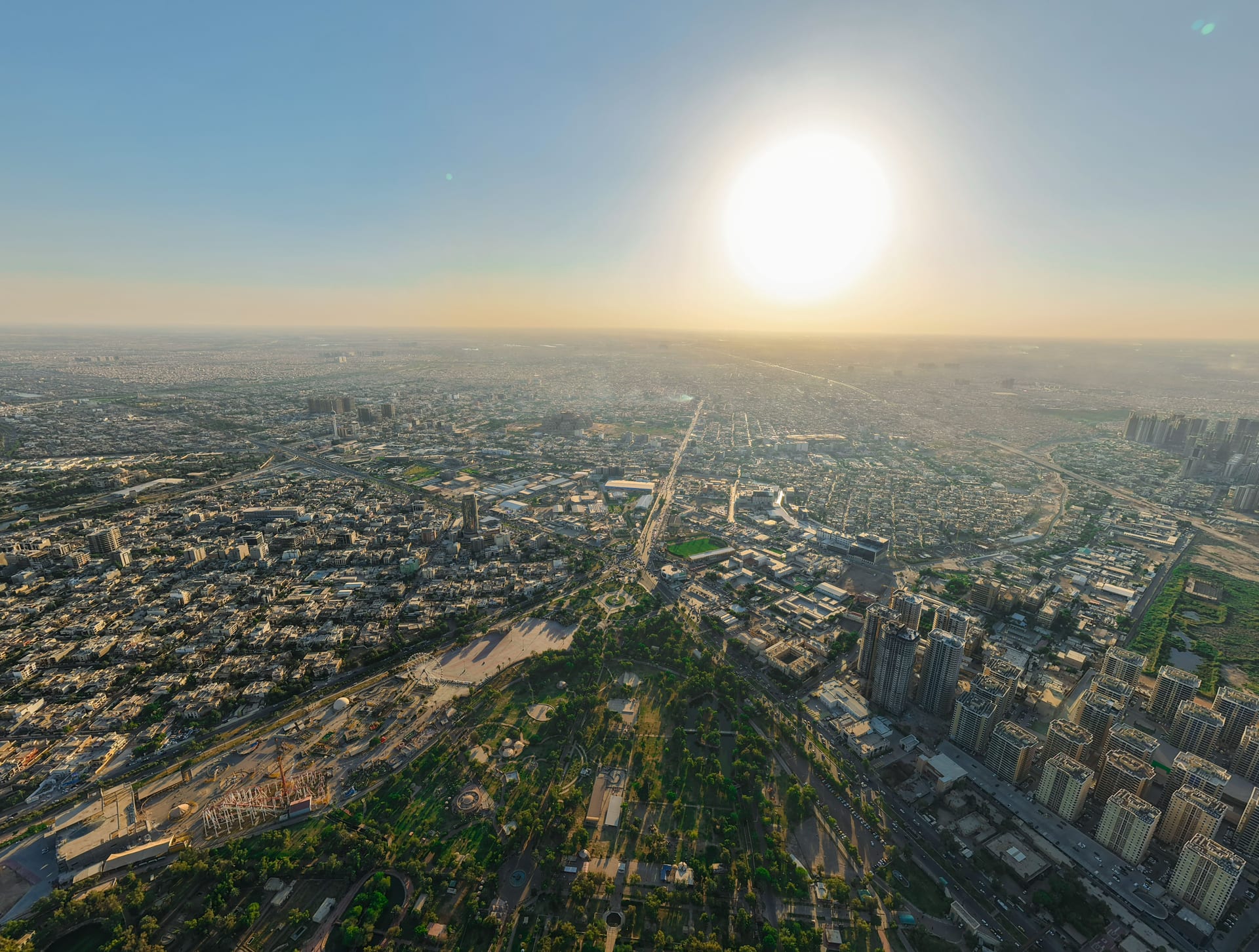
megacityAn enormous, densely packed metropolis on the scale of Bangkok's metro, with the relentless tempo of a commercial capital. It is built around the car, walkability is low, and neighbourhood quality varies sharply from one district to the next. Expect noise, crowds, and constant motion rather than calm, ordered streets.
Public life & spaces
11/100Karachi is a sprawling megacity where garbage, dust and neglected infrastructure define the upkeep. Public space is mostly chaotic, though Clifton's seafront offers a real promenade. Living is cheap and the beaches and bazaars are free — but security concerns quietly fence in how freely that street life can actually be enjoyed.
Safety
36/100Safety is one of the harder realities. Perceived safety is low, going out at night feels risky to many residents, and petty crime is common. Pakistan's fragile political situation adds a layer of unpredictability that weighs on daily life. Violent crime, while present, has eased from its worst years, and the homicide rate is not the outlier some expect.
Healthcare
39/100Care is uneven. Top private hospitals in the city are reasonable and English is widely spoken in them, and out-of-pocket costs stay low by global standards. But doctors are thin on the ground per resident, public facilities are stretched, and emergency reliability is patchy. Many residents lean on private insurance and a trusted hospital they know.
Family life
26/100A tough environment for raising children by most measures here. Child safety, school quality, and outdoor childhood options all score low, and the local work culture leaves little room for family time. Domestic help and childcare are affordable and easy to find, which softens the load, but day-to-day life with kids takes effort and care.
Career
55/100Some English-language work exists in Karachi, but the market is narrow for newcomers and concentrated in a few sectors. Professional networks and the technology base are limited, and remote work is a poor fit. Local pay is very low, making local earning power the central career constraint.
Culture & food
60/100Food is the city's strongest card. The local cuisine runs deep and the restaurant scene is genuinely good, better than Manila and on a level with much larger cities. Local culture is vivid and proud. Nightlife, by contrast, is quiet by design given the conservative setting, and the international cultural circuit stays thin.
Ease of integration
63/100Urdu is the lingua franca, with Sindhi widely heard and English common in business and educated circles, so the language barrier for an English speaker is lower than in much of the region. Pakistani hospitality is warm and people are welcoming, but the society is conservative and the established expat community is small, so building a local circle rewards patience and openness.
Connectivity
20/100This is a weak spot across the board. Public transport is thin and informal, cycling barely exists, and internet speeds lag far behind regional norms. Power and water supply can be unreliable, and getting things done through official channels is slow. The airport keeps the city reasonably connected internationally, but everyday systems demand workarounds.
Social values
traditionalKarachi is socially conservative and religion shapes public life heavily. Secular public culture and social liberalism both rank near the bottom, gender norms are traditional, and the city is among the least safe places anywhere for LGBTQ residents, who face real legal and social risk. People can be personally friendly to outsiders, but the prevailing values are firmly traditional.
Relocation ease
37/100Settling in is demanding. Visas and work authorization are harder to secure than in most regional hubs, bureaucracy is heavy and largely paper-based, and banking and admin take persistence. The cultural adjustment is significant for many newcomers. The one bright spot is language, since widespread English smooths a lot of the early friction.
The trade-offs
A year in Karachi
May peaks around 32°C, Jan days top out near 22°C, and the year brings roughly 314 bright days.
Can you actually move here?
The hard limits people most often bring to a move, scored against Karachi's data.
Moving with a pet
Bringing a pet is moderately manageable, roughly in line with Dubai and a touch easier than some European destinations. Expect import permits, vaccination records, and health certificates, plus patience with paperwork that is rarely digitized.
Who Karachi works for
Answer the questionnaire and see where Karachi lands for you.
Take the free questionnaireWhere else to look
Karachi vs. comparable cities

The cities people weigh against Karachi
Unexpected siblings
Far from Karachi on the map, close across all 14 categories of daily life.