
Living in Colombo
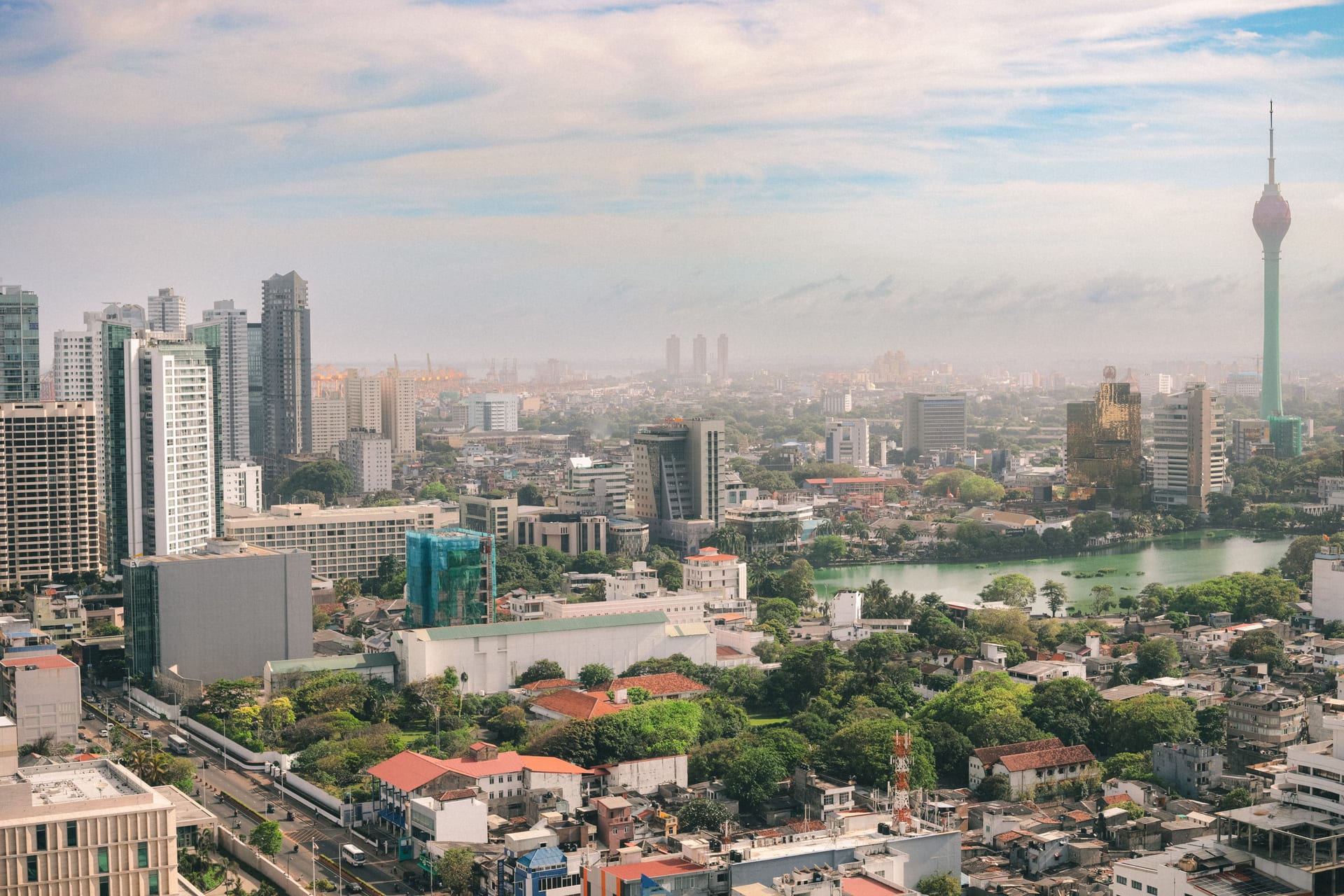
Colombo stays warm year-round, with little seasonal darkness but frequent rainy-grey weather and muggy conditions. Its local market is narrow and pay is exceptionally low, so the city suits residents with portable income who can accept a wet, humid climate rather than depend on local hiring.
Colombo at a glance
Vital stats
Shown in USD: the local currency (LKR) moves too fast for stable monthly figures.
Where Colombo stands out
The metrics where Colombo sits farthest from the middle worldwide, good and bad.
Cheap to arrive, expensive to stay?
A typical one-bedroom in Colombo runs $248/mo. That is beyond the mean net pay of a typical local employee. This is a solo-newcomer stress test: sitting tenants, shared homes, subsidised housing and informal rents are deliberately outside the numerator.
The fastest way to test a shortlist is to go. A week on the ground tells you things no ranking can.
Partner link
Approved language-learning and international money resources for practical next steps.
Daily life in Colombo
How Colombo scores
Category by category
Affordability
70/100Colombo's open-market one-bedroom rent on a new lease is about $248 per month. The rent-to-income measure reaches its 120% ceiling against one typical employee's mean net pay, so the underlying burden may be higher; the band is beyond local pay.
Climate
tropicalColombo stays warm year-round, with temperatures around 27°C in both January and July. Seasonal darkness is hardly an issue, but bright days are limited and rainy-grey weather is common. Humidity is the constant cost, with muggy conditions essentially every day.
Nature access
coastalThe ocean is the headline here, with easy beach access and the whole of Sri Lanka, hill country, tea estates, national parks, within weekend reach, which makes Colombo a strong base for nature. Inside the city itself green space is thin on the ground, with only a handful of parks, so the appeal is what lies beyond the urban edge rather than within it.
Urban form
mid-sizedColombo has a small, dense core that feels more like a compact port city than a sprawling metro, calmer in pace than Bangkok. It leans heavily on cars and tuk-tuks, walkability is poor, and homes tend to be cramped. The outer suburbs are unremarkable. Getting around mostly means accepting traffic and a car-first layout.
Public life & spaces
56/100Colombo feels cleaner than India's metros, its upkeep slowly improving since the war. Galle Face Green and the seafront promenades are the real public draw, alongside faded colonial squares. Daily life stays cheap and lived outdoors, though the recent crisis sent prices lurching upward in ways that still bite.
Safety
56/100Day-to-day safety is reasonably comfortable, with serious violence and petty crime both contained and most people able to move around without constant caution. Traffic is the practical hazard, while the wider political environment is less predictable. A homicide rate of about 3.3 per 100,000 reinforces that this is safe enough, not risk-free.
Healthcare
50/100Healthcare is middling. There is a free public baseline and private hospitals that hold up reasonably, and English is widely used in clinical settings, which eases things for newcomers. But doctors are stretched thin relative to the population, emergency care can be unreliable, and anything serious often means leaning on private care or travelling for treatment.
Family life
42/100A mixed bag for families. Childcare is affordable and the work-life rhythm is gentler than in the harder-driving Asian capitals, both helpful. On the other hand schools are average, public playgrounds and parks are scarce, and formal parental leave support is thin. Families tend to manage well with private schooling and domestic help, which the low costs make feasible.
Career
56/100Colombo has some English-language and remote-friendly work, but the local market is small, with limited industry depth and thin professional networks. Local pay is exceptionally low, so outside income or a portable role is a much stronger proposition than relying on local hiring.
Culture & food
68/100Sri Lankan food and culture are the strength here, distinctive, deeply rooted, and easy to dip into when so many people speak English. The restaurant scene is decent and vegetarian eating is well catered for. Where Colombo thins out is the higher-end cultural layer: nightlife, live music, museums and the arts are quieter than in the bigger regional capitals.
Ease of integration
67/100Sinhala is the main language, with Tamil and a lot of English alongside it, and that English plus a genuinely warm openness to outsiders makes it relatively easy for a newcomer to find footing and build local connections. Cultural adjustment is gentler than in much of Asia. Social attitudes are on the conservative side, which can shape how quickly some newcomers feel fully at home.
Connectivity
31/100Infrastructure is one of the harder parts of life here. Public transport is limited and dated, cycling is barely catered for, and internet speeds lag well behind the region. Government processes are largely undigitised and slow, and utilities can be unreliable. Traffic is heavy but, by South Asian standards, not the worst of it.
Social values
traditionalColombo is socially conservative. Public culture is shaped by religion and tradition, social liberalism is limited, and LGBTQ acceptance is low, with little legal protection. The redeeming note is a real openness and friendliness toward foreigners and a degree of everyday diversity. People weighing progressive social freedoms should go in clear-eyed about the prevailing norms.
Relocation ease
46/100Settling in is eased considerably by how much English is spoken, so the language barrier is low and cultural adjustment tends to be smooth. The friction shows up in the admin: visas, work authorisation, banking and bureaucracy are slow and paperwork-heavy, and little of it is digitised. Patience with offices and queues is part of the deal.
The trade-offs
A year in Colombo
Feb peaks around 31°C, Jun days top out near 29°C, and the year brings roughly 70 bright days.
Can you actually move here?
The hard limits people most often bring to a move, scored against Colombo's data.
Moving with a pet
Bringing a pet to Colombo is moderately demanding, easier than several regional hubs but still involving import permits, vaccination records and quarantine-related paperwork. Planning the documentation well ahead of the move is the main thing.
Who Colombo works for
Answer the questionnaire and see where Colombo lands for you.
Take the free questionnaireWhere else to look
Colombo vs. comparable cities

Objective scores (0–100) for Colombo and its 4 nearest comparable cities.
The cities people weigh against Colombo
Unexpected siblings
Far from Colombo on the map, close across all 14 categories of daily life.