
Living in Macau
A tiny, very dense former Portuguese colony turned casino capital on the Pearl River Delta, an hour by ferry from Hong Kong and tied to it as China's other special administrative region. Life here is compact and walkable, exceptionally safe, low-tax, and shaped by an economy that revolves almost entirely around gaming and tourism.
Macau at a glance
Vital stats
Shown in USD: the local currency (MOP) moves too fast for stable monthly figures.
Where Macau stands out
The metrics where Macau sits farthest from the middle worldwide, good and bad.
Cheap to arrive, expensive to stay?
A typical one-bedroom in Macau runs $663/mo. That is ~33% of one typical local employee’s mean net pay. This is a solo-newcomer stress test: sitting tenants, shared homes, subsidised housing and informal rents are deliberately outside the numerator.
The fastest way to test a shortlist is to go. A week on the ground tells you things no ranking can.
Partner link
Approved language-learning and international money resources for practical next steps.
Daily life in Macau
How Macau scores
Category by category
Affordability
74/100Macau's open-market one-bedroom rent on a new lease is about $663 per month. That is roughly 33% of one typical employee's mean net pay, a rent burden labelled manageable solo.
Climate
subtropicalMacau keeps winter mild, but summer heat and humidity dominate the year, with about 274 muggy days. The sky is bright on roughly 161 days, while weather disruption remains a recurring complication.
Nature access
coastalThe weak spot. Macau is built up almost wall to wall, with little green space per person and few parks to spread out in. There is some coastline on Coloane and a handful of trails, but mountains, forests, rivers and lakes are essentially absent, and weekend escapes mean crossing into mainland Guangdong or hopping to Hong Kong.
Urban form
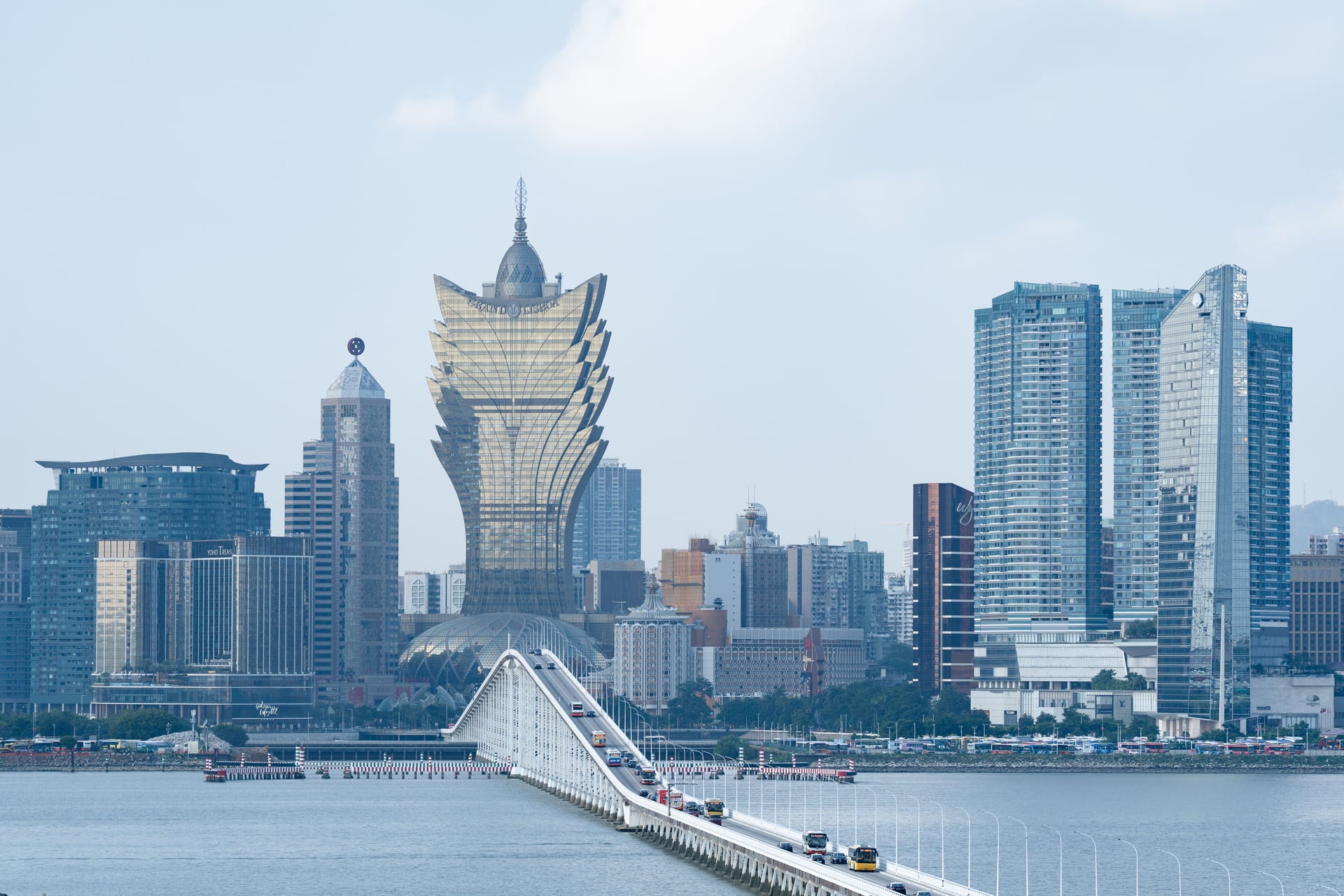
mid-sizedMacau's built-up core is exceptionally dense, with about 21,000 residents per square kilometre, and its wider urban area reaches roughly 2.25 million people. Mixed-use streets and strong walkability make car-free routines easy. Homes are the trade-off, with limited space.
Public life & spaces
70/100Macau is wealthy and well-maintained, its Portuguese historic core around Senado Square genuinely charming. The old plazas and tiled streets are a pleasure, though the casino sprawl dominates everything else. It's a pricey city built to take your money — only the historic squares come free.
Safety
90/100Genuinely one of the safest places a person could live. Violent crime is rare, walking home late feels fine, and the streets stay orderly. Traffic is calm and the territory is politically stable. For anyone who ranks safety near the top, Macau delivers it about as completely as anywhere in the region.
Healthcare
62/100Solid core hospital care and dependable emergency services, broadly on par with what the region offers. The strains show in thin doctor numbers relative to the population and in patchy English at the point of care, so non-Cantonese speakers may need to lean on private clinics or seek treatment across the border in Hong Kong.
Family life
47/100Children grow up extraordinarily safe here, and schools are decent, with international options for expatriate families. The harder parts are practical: family-sized housing is expensive and tight, the long-hours work culture leaves little room, and parental leave is thin. Outdoor space for kids is limited by how built-up the territory is.
Career
48/100Macau's job market is concentrated rather than broad, with especially little room for startup or tech careers. Unemployment is very low, yet English-language and remote-friendly options are limited. Local pay sits around the wider comparison's middle, so career fit depends heavily on access to the local economy.
Culture & food
68/100This is where Macau punches above its size. Four centuries of Portuguese and Chinese mingling produced a food culture and a built heritage found nowhere else, from egg tarts to the old colonial quarter. Restaurants are strong and local identity runs deep. The live music, art and nightlife scenes, though, stay modest next to Hong Kong's.
Ease of integration
59/100Cantonese is the language of daily life, with Portuguese lingering officially and Mandarin and English heard around the casinos and tourist trade. Newcomers find a moderately open society and a workable language gap, helped by the international hospitality workforce, though building genuinely local friendships takes patience and effort outside that expat-heavy world.
Connectivity
58/100Fast internet and reliable utilities anchor the basics. Day to day the small footprint means most things are close, but the public transport network is thin compared to Hong Kong or Singapore, cycling is barely catered for, and the airport handles limited routes, leaving Hong Kong's hub to carry most long-haul travel.
Social values
traditionalSocially conservative and traditional in tone, sitting close to Hong Kong and Singapore rather than to liberal Europe. Public life is fairly secular and civic order is strong, but LGBTQ acceptance and broader social liberalism lag, so newcomers from more progressive places should expect a more reserved, conventional public culture.
Relocation ease
49/100Among the trickier moves in the region. Visas and work authorization are hard to secure without an employer sponsor, and finding housing is a slog in such a tight market. The upside is a simple tax system and manageable banking. The language gap is real but not severe, and cultural adjustment is moderate.
The trade-offs
A year in Macau
Jul peaks around 31°C, Jan days top out near 19°C, and the year brings roughly 161 bright days.
Can you actually move here?
The hard limits people most often bring to a move, scored against Macau's data.
Moving with a pet
Bringing a pet to Macau is moderately demanding, roughly on par with Hong Kong: expect import permits, vaccination records and possible quarantine depending on the animal's origin. Start the paperwork well ahead of the move.
Who Macau works for
Answer the questionnaire and see where Macau lands for you.
Take the free questionnaireWhere else to look
Macau vs. comparable cities


The cities people weigh against Macau
Unexpected siblings
Far from Macau on the map, close across all 14 categories of daily life.
